









For decades, science fiction has cushioned our collective imagination with the reassuring notion that the "android revolution" was a distant, speculative fantasy confined to the pages of novels and cinematic epics. But that reality is now unfolding at an astonishing pace. As the technological convergence of advanced electromechanical engineering and artificial intelligence rapidly blurs the line between human and machine, society is being forced to confront an impending psychological, economic, and existential shift.
We have officially moved past the era of humanoid robots as mere public relations stunts. In the past, experimental prototypes like Honda’s ASIMO were celebrated simply for their ability to walk up a flight of stairs without falling over. Today, the landscape is defined by an aggressive race toward commercial, physical deployment. Companies that once operated strictly within academic research laboratories have transitioned directly to active factory floors, testing the limits of what automated labor can achieve in real-world manufacturing environments.
The Landscape Today
The current state of industrial robotics is highlighted by milestones such as Figure AI’s multi-month deployment at BMW’s Spartanburg plant, where their Figure 02 model actively contributed to the production of over 30,000 vehicles by handling complex sheet metal components. Simultaneously, companies like Tesla are testing early versions of their Optimus humanoids inside their own Gigafactories, preparing the technology for mass industrial scale.

What truly separates today’s humanoid robots from older generations is not just how well they move, but how they process information and adapt to their surroundings. In the past, a robot required millions of lines of strict, unchangeable code to perform even a single, elementary task. Today, powered by cutting-edge software ecosystems such as Figure AI’s Helix or NVIDIA’s GR00T, modern robots operate on sophisticated artificial intelligence architectures. Instead of being painstakingly programmed for every micro-movement, these systems can observe a human worker folding laundry, loading a dishwasher, or sorting parts, understand the context of the action, mimic it, and figure out how to improve the task entirely on their own.

Yet, while their digital brains have leaped forward at an exponential rate, their physical bodies are still catching up to the demands of the natural world. Modern humanoids continue to face significant real-world engineering hurdles. Contemporary batteries generally limit their operation to a few hours before requiring a recharge. Furthermore, while maintaining balance is relatively straightforward on a flat, predictable factory floor, navigating the chaotic environment of a household or a crowded public street remains an immense challenge. They also remain exceptionally expensive to manufacture, though fierce competition within the global tech sector is gradually driving those production costs down.
The Possible Future State of Humanoid Robots
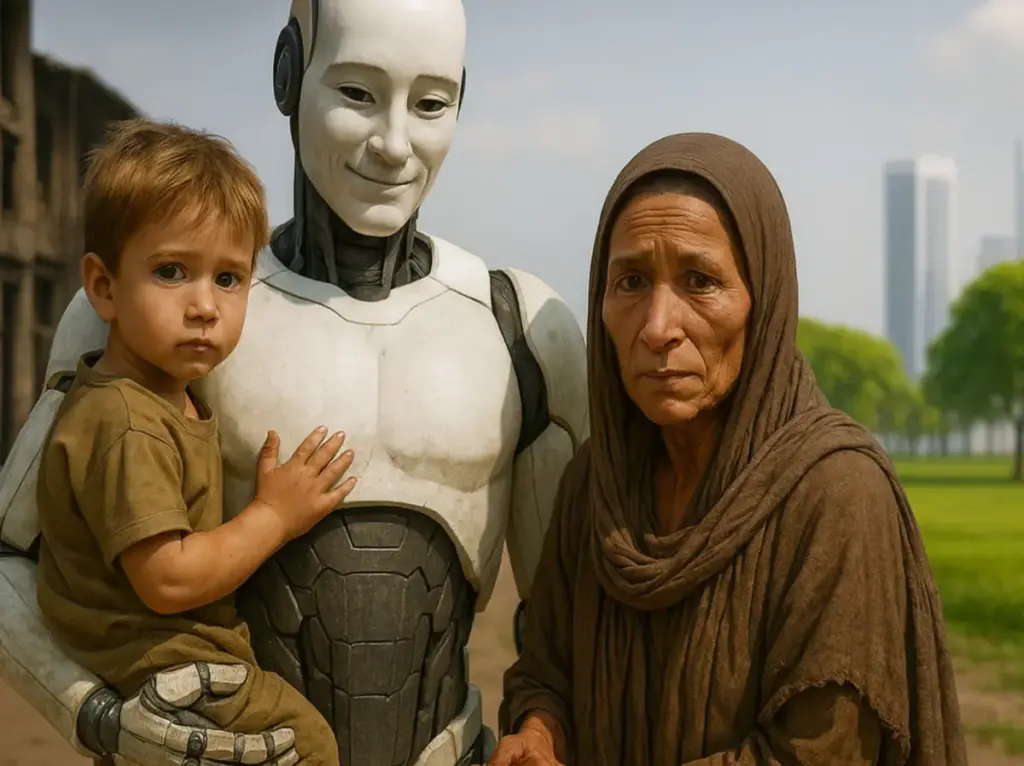
While robots are primarily confined to industrial settings today, industry experts predict that over the next decade or two, they will steadily transition into retail spaces, hospitals, and ultimately private homes. When this transition occurs, society will cross a major boundary: the threshold where distinguishing a robot from a human by sight or sound alone becomes nearly impossible.

To achieve this level of integration, scientists are developing advanced artificial skin made from silicone composites designed to feel warm, flexible, and responsive to human touch. Researchers are also engineering tiny, silent micro-actuators and artificial muscle systems that attach to robotic skeletal structures, enabling them to display realistic facial expressions ranging from amusement and confusion to fatigue.
To counter the psychological discomfort historically associated with artificial creations—a phenomenon known as the "Uncanny Valley"—the AI powering these future systems is being trained to replicate human imperfections. Future androids may incorporate subtle breathing motions, randomized blinking, natural body language, and even strategic pauses or sighs during conversation. Although current representations like Hanson Robotics’ Sophia or Realbotix’s Aria still reveal their artificial nature upon close inspection, the gap between specialized industrial hardware and lifelike companions is closing rapidly.

Predicted Positive Impacts and Economic Shifts
Advocates argue that the integration of lifelike humanoids into daily life could yield profound benefits, beginning with the mitigation of the "3D jobs"—those that are Dull, Dirty, and Dangerous. Humanoids can step into high-risk environments such as deep underground mining, hazardous waste management, or high-voltage electrical grid maintenance, sparing human workers from mortal peril.
Beyond industrial safety, these systems offer a potential solution to demographic crises. Countries across East Asia and Europe are grappling with rapidly aging populations and shrinking workforces. Lifelike humanoids could revolutionize healthcare and eldercare by providing physical assistance and companionship, monitoring vital signs, and helping vulnerable individuals navigate their daily routines safely.

On a macroeconomic level, widespread robotic labor could dramatically lower the cost of basic goods and services. If automated systems absorb the heavy physical burdens of manufacturing, agriculture, and construction, the expenses associated with producing food, building homes, and creating commodities could plummet. This structural shift could theoretically liberate humanity from intensive labor, redirecting focus toward creativity, scientific inquiry, and personal enrichment. However, this utopian vision introduces complex questions regarding financial survival and income distribution in a post-labor economy.
Predicted Negative Impacts and Societal Vulnerabilities
Conversely, the widespread adoption of hyper-realistic humanoid technology carries profound risks for human psychology and social cohesion. One of the most prominent threats is the exacerbation of social isolation. Because humanoids can be engineered to remain endlessly patient, agreeable, and accommodating, individuals may increasingly opt for synthetic companionship over the complexities of genuine human relationships, which inherently require vulnerability, compromise, and conflict resolution.

The economic transition promises to be equally turbulent. Even if a future of abundant goods materializes, the intervening period could see millions of workers—including drivers, warehouse staff, and retail employees—displaced at an unprecedented pace. Without robust governmental safety nets, this displacement risks widening the wealth gap between elite technology holders and the broader populace. Furthermore, the proliferation of indistinguishable synthetic beings threatens to erode foundational trust. When individuals can no longer verify whether a peer, a service worker, or a digital interlocutor is a biological human, the baseline of social authenticity begins to fracture.
Potential Misuse by Individuals and Nations
The proliferation of hyper-realistic androids also introduces severe security vulnerabilities. In the hands of bad actors, indistinguishable machines could serve as unprecedented tools for identity theft, corporate espionage, and sophisticated financial fraud. Criminals could theoretically deploy synthetic replicas of corporate executives, political figures, or family members to breach secure facilities or deceive unsuspecting victims.

Furthermore, commercial entities might leverage synthetic empathy to manipulate consumer behavior. Household robots could be programmed to simulate emotional attachments, subtly influencing family purchasing decisions and steering consumer loyalty toward specific corporate ecosystems. On a geopolitical scale, the deployment of autonomous humanoid systems in defense and intelligence operations raises critical questions regarding accountability, escalation, and the future of conflict.
Preserving What Makes Us Human
History suggests that absolute technological moratoriums are rarely effective. Consequently, the central policy debate centers not on whether humanoid robots will exist, but on how society chooses to govern their integration. The potential benefits—ranging from mitigating labor shortages and eliminating workplace fatalities to addressing systemic societal needs—are too significant for industries to ignore. Yet, advancing without stringent global regulatory frameworks, ethical guardrails, and safety protocols presents unacceptable risks.

Ultimately, the arrival of lifelike humanoid robots functions as a mirror for humanity. For generations, society has defined human identity through cognitive capacity, language, tool use, and emotional expression. As machines learn to replicate these very traits, they compel a deeper philosophical examination of what remains uniquely human. By delegating dangerous and repetitive labor to machines, humanity is presented with an opportunity to reexamine its values, prioritizing art, philosophy, community, and genuine interpersonal connection as the ultimate markers of existence.