








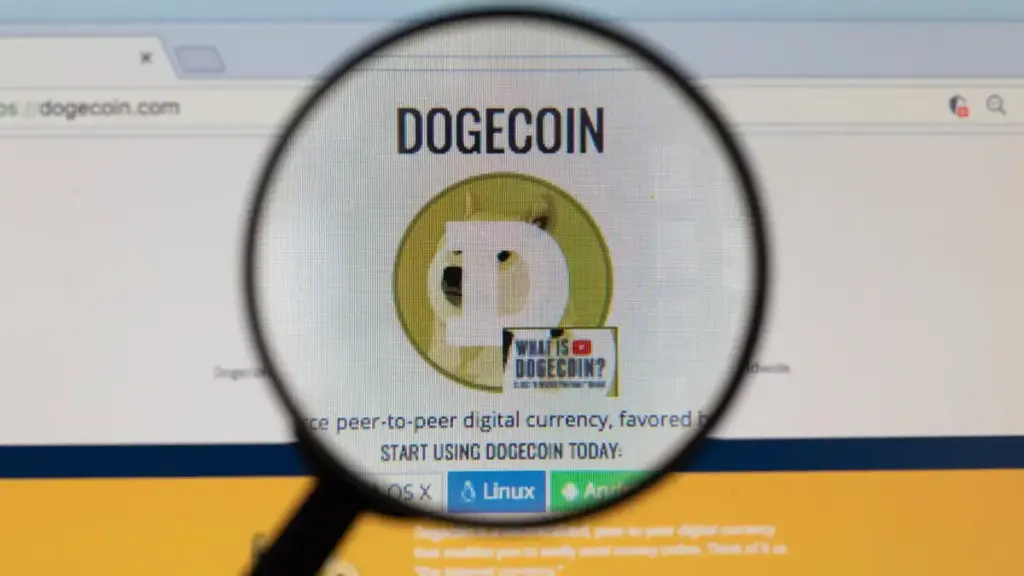
Dogecoin, the world’s most famous meme-inspired cryptocurrency, is taking a significant step toward shedding its image as a purely speculative asset. On Wednesday, the development team behind DogeOS officially launched a public test network, marking a bold attempt to bring decentralized finance (DeFi)—including lending, borrowing, and Ethereum-style trading—directly to the Dogecoin ecosystem.
The initiative aims to transform the utility of DOGE, which currently boasts a market capitalization of approximately $13 billion but remains largely dormant in investor wallets. By providing a platform for sophisticated financial applications, the creators of DogeOS hope to offer holders a compelling reason to engage with their assets beyond mere price speculation or simple peer-to-peer payments.
Bridging the Gap to Decentralized Finance
The newly launched DogeOS testnet is fully Ethereum-compatible, a strategic design choice intended to lower the barrier to entry for developers. By leveraging familiar development tools and standards, the team hopes to attract a robust ecosystem of applications. The initial trial phase is already hosting projects ranging from decentralized lending services and trading platforms to a prototype for a cryptocurrency-backed stablecoin. During this testing period, participants are using test DOGE to facilitate transaction fees, simulating how the network would function in a live, real-world environment.
However, the architecture of the current system highlights the technical challenges of bringing complex financial logic to a blockchain that was never designed to handle it. Dogecoin’s base layer is inherently optimized for simple value transfers—moving DOGE from one wallet to another—rather than executing the complex smart contracts required for DeFi. To circumvent this, DogeOS operates as a separate system. Users can bridge their DOGE into this environment to interact with various applications, necessitating a high degree of trust in the system to maintain accurate and immutable records.
The Challenge of Security and Decentralization
To mitigate the inherent risks of a separate network, the DogeOS team is relying on a combination of mathematical proofs and specialized hardware. These "compact pieces of data" serve as evidence that transactions were processed according to predefined rules, theoretically allowing the system to prove its integrity without requiring users to manually verify every action.
In its current state, however, the network is far from fully decentralized. It functions as a permissioned system where a "sequencer"—an authorized operator—is tasked with determining the order of transactions. These updates are then checked by a network of validators alongside a "trusted execution environment," a secure, isolated section of computer hardware designed to verify the mathematical proofs. Oversight is provided by a "Security Council," which manages the system’s governance.
While this structure provides a functional framework for the testnet, it highlights a critical reality: users are currently relying on a centralized group of operators and hardware providers rather than the collective power of the Dogecoin mining community. The DogeOS team acknowledges this limitation and is working toward a future where the security of these applications is inextricably linked to the main Dogecoin network.
Betting on a Core Upgrade
The ultimate goal for DogeOS is to shift the verification process away from selected operators and toward the decentralized strength of Dogecoin miners. To achieve this, the team is advocating for a significant upgrade to Dogecoin Core, the fundamental software that powers the Dogecoin blockchain.
The proposed upgrade, known as OP_CHECKZKP, would introduce a new rule allowing the Dogecoin network to natively verify proofs. Essentially, it would enable miners to confirm that calculations performed on the DogeOS side-layer were executed correctly. The proposal, which was first introduced in July 2025, remains in the draft stages. A subsequent implementation submitted in December 2025 includes a placeholder for a proof checker, but significant technical development is still required before such an upgrade could realistically be considered for activation on the main network.
A New Case for Institutional Adoption
The push for DogeOS is being spearheaded by the team behind the MyDoge wallet, a prominent player in the ecosystem. Jordan Jefferson, founder of DogeOS, has been vocal about the necessity of this pivot. According to Jefferson, while the ease of purchasing DOGE has never been in question, the asset lacks the structural utility required to attract institutional capital.
This concern has been underscored by the lukewarm reception of Dogecoin-focused financial products. In the United States, three exchange-traded funds (ETFs) dedicated to Dogecoin have struggled to find their footing. Over a ten-month period, these funds collected a combined total of roughly $12 million in net inflows—a stark contrast to the billions of dollars attracted by rival crypto funds. On many trading days, these Dogecoin ETFs recorded zero net flows, and the Bitwise-backed fund was shuttered with less than $700,000 in assets under management.
For Jefferson, the path to sustained growth lies in building a "real economy" around the coin. "No other digital asset has Dogecoin’s combination of liquidity, community and cultural reach, and its potential has barely been tapped," Jefferson stated. "With DogeOS, developers can finally build applications on Dogecoin, and with MyDoge, they will be able to put those apps in front of users from day one." He remains optimistic that building a utility-driven ecosystem is the key to finally pushing the asset’s value to the long-sought "$1" milestone and beyond.
Learning from the Past
The ambition to bring DeFi to memecoins is not new, and previous attempts have served as cautionary tales. In 2022, the launch of Dogechain promised a similar integration, allowing holders to move DOGE to a separate network for trading and financial services. While it saw an initial surge of $4.6 million in deposits, interest quickly waned; current data from DeFiLlama indicates that less than $300 remains in its associated applications.
Similarly, the Shibarium network, launched in 2023 by the developers of the Shiba Inu token, also aimed to foster a financial and gaming ecosystem. Despite its high-profile launch, activity has dropped significantly, with tracked financial applications holding approximately $140,000, down from a peak of $6.4 million.
DogeOS is attempting to differentiate itself through its institutional backing and its philosophical alignment with the original Dogecoin project. Unlike Dogechain, which was disavowed by the Dogecoin Foundation at its inception, DogeOS has received an endorsement from Timothy Stebbing, a director at the foundation. Stebbing framed the project as a viable method for expanding the utility of the network without necessitating changes to the underlying base layer of Dogecoin.
Despite this support, the path forward remains uncertain. With no official date for a mainnet launch and the required Dogecoin Core upgrades still in the draft phase, the project remains in an experimental period. Whether DogeOS can successfully navigate the technical hurdles and community skepticism that hindered its predecessors will be a defining question for the future of the Dogecoin ecosystem.