The United Kingdom has officially imposed sweeping economic sanctions against Cryptomus, a high-profile cryptocurrency payment processor that has long served as a critical financial lifeline for a vast ecosystem of cybercrime. By targeting the platform—which has operated under a variety of guises, including Certa Payments and Xeltox Enterprises—British authorities aim to sever a major artery providing the Russian government and its financial institutions a pathway to circumvent international economic restrictions.
The sanctions, enacted on October 8, 2026, go beyond a mere diplomatic gesture. They mandate the immediate freezing of any assets associated with Cryptomus held within the United Kingdom. Furthermore, the directive bars all British companies from engaging in business with the platform, effectively cutting off its access to the U.K. market and its financial infrastructure. The move reflects an escalating global effort to dismantle the shadowy networks supporting Russia’s wartime economy, with the U.K. Treasury specifically identifying Cryptomus as a primary facilitator for transactions involving ransomware, narcotics, darknet market activity, and sophisticated fraud schemes.
The U.K. government did not act in isolation. The sanctions also targeted other virtual payment platforms suspected of similar illicit activities, including VexPay, TokenSpot, and the Tsunami Payments service. Together, these entities have formed a digital "shadow banking" system that allows bad actors to move funds across borders with relative impunity, shielding them from the reach of traditional law enforcement.
The Evolution of a Digital Fugitive
The history of Cryptomus is a study in corporate obfuscation. Since its emergence in 2022, the platform has demonstrated a remarkable ability to vanish and reappear under new branding whenever regulatory pressure mounts. This "chameleonic" strategy was most recently on display when the platform pivoted to the name "Heleket." This rebranding occurred in the wake of a record-breaking CAD $176 million fine levied by Canadian authorities against the company for egregious anti-money laundering (AML) violations.
The pattern is well-documented. As noted in a December 2024 investigation, Cryptomus established itself as a go-to processor for numerous Russian cryptocurrency exchanges and websites specializing in cybercrime services. Despite the heavy fines in Canada, the platform’s operations remained largely intact, suggesting that financial penalties alone are insufficient to deter entities that operate outside the bounds of international law.
Blockchain analysis firm Chainalysis underscored the severity of the threat in an October 8 blog post, noting that the sanctions target the very foundation of the infrastructure supporting Russia’s war efforts. Chainalysis highlighted that Cryptomus and its successor, Heleket, had evolved into massive payment hubs. Their data indicates that these services collectively processed a higher volume of illicit funds than many known "mixers"—the specialized software tools often used by hackers to obscure the origins of stolen cryptocurrency. According to the firm, the number of illicit counterparties utilizing these platforms surged to more than 900 in a single month in late 2025.

The "Five Eyes" Sanction Precedent
The decision by the U.K. to sanction Cryptomus is being hailed by investigators as a landmark moment in international regulatory enforcement. Richard Sanders, a veteran blockchain analyst who has spent months mapping the complex payment infrastructure of these platforms, emphasized that the U.K. action carries a weight that the Canadian fines lacked.
"A fine doesn’t stop a cryptocurrency payment processor from processing payments," Sanders remarked in a recent LinkedIn post. "Sanctions kill the operation. The distinction matters."
Beyond the operational impact, the U.K. sanctions are historically significant for another reason: they represent the first known instance of a "Five Eyes" nation—a intelligence-sharing alliance comprising Australia, Canada, New Zealand, the U.K., and the U.S.—sanctioning a cryptocurrency operation that was incorporated within another Five Eyes jurisdiction. This signals a newfound willingness among allied nations to treat crypto-based financial facilitators as major threats to national security, rather than merely as administrative or regulatory nuisances.
A Global Trail of Illicit Transactions
The sheer scale of the operation is staggering. In April 2026, TRM Labs, a prominent blockchain intelligence firm, released findings suggesting that Cryptomus had processed more than $7 billion in transactions since its inception in 2022. The nature of these transactions was far from benign; they included payments tied to the distribution of child sexual abuse material (CSAM), large-scale terrorist financing networks, and international human trafficking operations.
TRM Labs also observed a notable shift in the platform’s tactics. Following the Canadian fines, Cryptomus briefly implemented stricter "know your customer" (KYC) protocols, which led to a predictable, sharp decline in transaction volume. However, the platform responded by launching Heleket, a parallel service that reverted to the "no-KYC" model, allowing criminals to continue processing payments anonymously. This tactical pivot demonstrates the platform’s commitment to maintaining its criminal client base despite the scrutiny of global regulators.
The physical presence of these companies has proven equally elusive. Previous investigations revealed that Cryptomus listed a Vancouver address that it shared with dozens of other foreign currency dealers and money transfer businesses—none of which appeared to have a genuine, functional office at that location. This "ghost" office structure is a hallmark of the company’s broader strategy to appear legitimate while operating entirely in the shadows.

The Fiction of Regulatory Authority
One of the most bizarre aspects of the Cryptomus story is the origin of its supposed legitimacy. The platform, along with its parent company Certa Payments, relied on a complex web of fake financial institutions and a phony regulatory body to project an aura of legality.
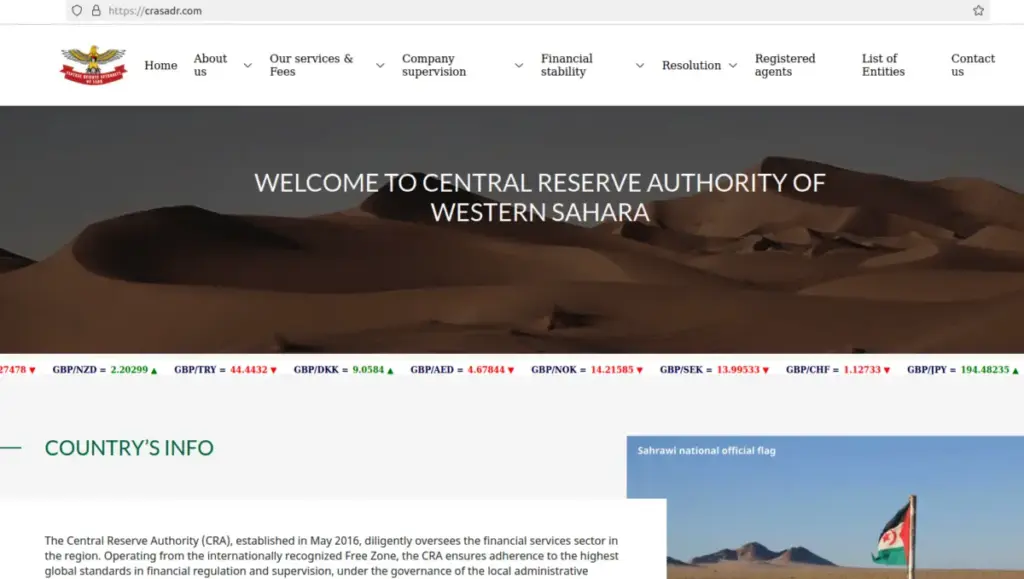
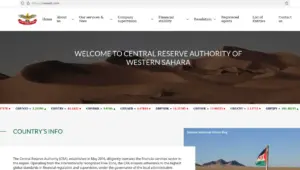
Investigations into the corporate structure of Certa Payments point toward a 25-year-old Ukrainian woman, who served as the sole shareholder. She also headed the "WS Management and Advisory Corporation," an entity that claimed to act as the sole regulatory body for cryptocurrency, foreign exchange, and online gaming businesses incorporated in the Western Sahara—a disputed region in northwest Africa.
The entity’s website, crasadr.com, marketed itself as a portal for businesses to obtain banking setups, gaming licenses, and foreign exchange authorizations. Further digital forensic evidence revealed that one of Certa Payments’ former websites shared a server with 12 other domains, including one tied to the "Central Reserve Authority of the Western Sahara." This elaborate fabrication allowed the platforms to point to a "regulatory" body to satisfy the basic due diligence questions of unsuspecting partners, even though the body itself existed only as a web portal designed to provide a veneer of respectability to illicit financial operations.
As of early October 2026, the impact of the U.K. sanctions was already becoming visible. Reports surfaced of Cryptomus support bots on Telegram informing users that the platform was suddenly unable to process transactions, a sign that the combination of international pressure and asset freezing is finally beginning to degrade the platform’s ability to operate. Whether this will lead to the permanent dissolution of the Cryptomus/Heleket network or simply force it to retreat into even darker corners of the internet remains to be seen. For now, however, the U.K.’s move has provided a significant blow to a service that has spent years profiting from the world’s most dangerous criminal activities.