












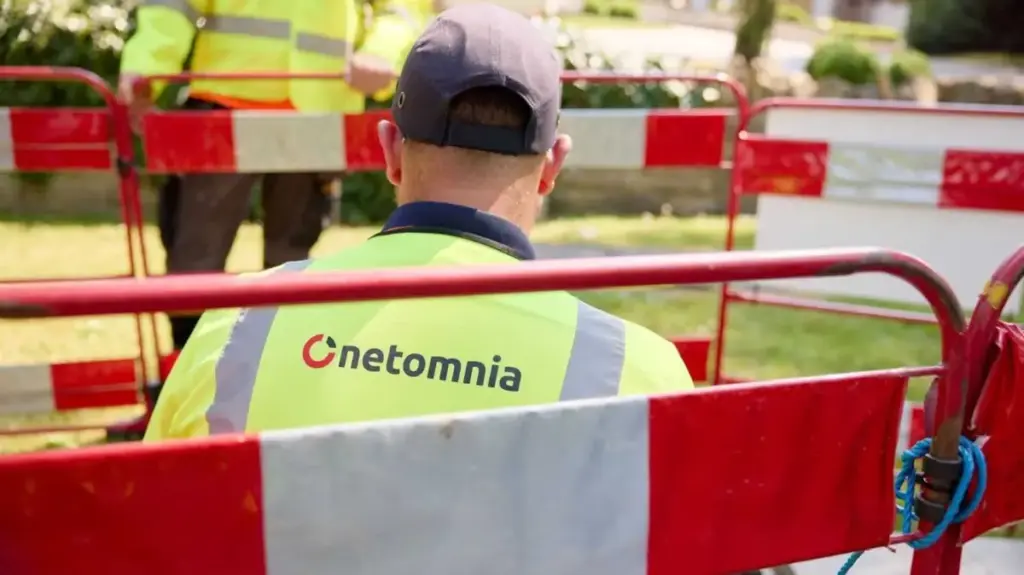
The landscape of the United Kingdom’s telecommunications sector is facing heightened regulatory scrutiny following a major intervention by the country’s antitrust authority. The UK’s Competition and Markets Authority (CMA) has indicated in a newly published interim report that the proposed acquisition of Substantial Group by nexfibre would likely result in a substantial lessening of competition within the nation’s wholesale telecommunications market.
The competition regulator has officially opened a formal consultation regarding its preliminary findings, providing industry stakeholders, competitors, and the merging parties an opportunity to respond before the consultation period concludes on October 23. At the center of the regulatory review is Substantial Group, the parent entity of Netomnia, a prominent wholesale fiber provider that has aggressively expanded its footprint across the country, boasting more than 3 million premises marked as ready for service. On the other side of the transaction is nexfibre, a heavily backed joint venture established by Virgin Media O2 (VMO2) parent companies Liberty Global and Telefónica, alongside infrastructure investment firm InfraVia.
The CMA’s provisional conclusions have immediately drawn sharp pushback from the corporate backers behind the nexfibre venture. In an emailed statement responding to the interim findings, nexfibre’s shareholders argued that the regulatory assessment fundamentally misreads the commercial and competitive dynamics currently shaping Britain’s fast-evolving fiber market. According to the shareholders, the interim report fails to properly prioritize the urgent fiber investment that the country desperately requires, while also undermining the creation of a scaled, sustainable challenger capable of applying meaningful competitive pressure to the dominant market incumbent, Openreach.

Executives within the VMO2 and nexfibre ecosystems have previously warned that blocking the transaction would deal a heavy blow to broader UK fiber investment goals. They maintain that combining resources and expanding operational scale is vital for accelerating full-fiber rollouts to millions of households and businesses that currently rely on legacy copper networks or lag behind in digital connectivity.
CityFibre strikes back
The regulatory inquiry has also illuminated fierce behind-the-scenes maneuvering among rival infrastructure providers vying for dominance in the UK altnet (alternative network) landscape. One of the most ardent and vocal critics of the proposed transaction is fellow UK fiber wholesaler CityFibre, which has consistently campaigned against the merger across multiple regulatory and public platforms.
According to revelations contained within the CMA’s interim report, CityFibre was itself an active participant in the bidding process for the network. The regulatory findings state that the altnet challenger would have most likely emerged as the successful buyer had nexfibre not stepped forward with its own acquisition bid. This revelation adds a new layer of competitive tension to the ongoing debate over consolidation in the UK fiber market.
In an emailed statement sent to media organizations following the publication of the CMA’s report, CityFibre welcomed the regulatory stance while intensifying its calls for a complete block on the transaction. The company stated that the CMA is entirely correct in its assessment that the proposed deal would significantly reduce competition and introduce severe risks to the tangible benefits currently being delivered to UK consumers, including faster broadband speeds, greater service innovation, and lower overall prices. Having recognized the potential market harm, CityFibre asserted that it is now vital for the competition watchdog to take the definitive next step and formally block the deal.
A1 launches network slicing for businesses
Beyond the high-stakes merger battles unfolding in the UK, European telecommunications operators are actively rolling out advanced digital services tailored to enterprise and specialized organizational customers. In Austria, major telecom operator A1 has officially launched "Super SIM," a specialized connectivity service explicitly designed for businesses and organizations that manage significant, mission-critical connectivity needs.
The newly introduced service is targeted heavily at critical infrastructure operators, emergency services, and various public authorities that require absolute reliability and strict prioritization of data traffic. To achieve this, A1 is leveraging advanced network slicing technology, which allows the operator to dynamically segment its network and prioritize selected traffic streams originating from specific enterprise customers. Furthermore, the service offers organizations the flexibility to seamlessly integrate virtual private network (VPN) and access point name (APN) solutions, ensuring enhanced security and dedicated bandwidth for operations where network failure or latency spikes could have severe real-world consequences.

SFR expands cybersecurity offering
In France, Altice-owned operator SFR is working to bolster its enterprise service portfolio even as rumors swirl regarding its potential future breakup and carve-up by rival mobile network operators (MNOs). The French operator is significantly expanding its dedicated cybersecurity offerings aimed squarely at medium-sized businesses, a market segment increasingly targeted by sophisticated digital threats.
The enhanced cybersecurity portfolio is anchored by a newly established Security Operations Center (SOC) located in Paris. Under the banner of its new "SmartSOC Expert" offer, SFR is providing businesses with comprehensive monitoring and protective measures specifically tailored for widely used enterprise ecosystems, such as Microsoft 365 products. Additionally, the service includes proactive threat intelligence capabilities designed to continuously analyze the organization’s digital surface area and identify potential vulnerabilities before malicious actors can exploit them.
Sateliot expands satellite constellation
Meanwhile, the space-based telecommunications sector continues to experience rapid development, driven by the growing demand for ubiquitous Internet of Things (IoT) connectivity. Spain-headquartered satellite operator Sateliot has successfully launched five new satellites into orbit, marking a major step forward in its ongoing efforts to boost its 5G non-terrestrial network (NTN) infrastructure.
This latest successful rocket launch brings Sateliot’s operational constellation to a total of 11 low-Earth orbit (LEO) satellites. The expanded constellation is designed to provide seamless, standard-based 5G connectivity directly to standard IoT devices operating in remote and rural areas where terrestrial cellular coverage is unavailable or economically unviable. The milestone comes as Sateliot continues to forge strategic partnerships with major telecom groups, such as Telefónica, and pursues aggressive fundraising efforts to fuel its long-term space-based 5G ambitions.
State of digital inclusion in Belgium
On the societal front, new data from Belgium has shed light on the persistent challenges surrounding digital equity and modern technology literacy. The Belgian King Baudouin Foundation has issued a comprehensive report examining the current state of digital inclusion across the country, revealing that 39% of Belgians aged 16 to 74 faced notable digital vulnerabilities in 2025.
According to the foundation’s findings, these vulnerabilities stem primarily from two distinct factors: individuals who lack internet access entirely, and those who possess insufficient digital skills to navigate modern online environments safely and efficiently. The digital divide grows significantly wider when examining older demographics, with the vulnerability rate jumping sharply to 81% among individuals in the 75 to 89 age bracket.
The organization’s research highlights a fundamental shift in the nature of digital inequality in recent years. While basic internet access was once the primary metric for digital inclusion, modern challenges are increasingly defined by digital literacy hurdles. Specifically, the foundation pointed out that navigating online safety, recognizing cyber threats, and possessing the critical thinking skills required to spot sophisticated AI-generated content now play a much larger role in determining an individual’s digital vulnerability.
Interestingly, the report also highlighted the rapid adoption of new technologies, noting that 42% of survey respondents reported using artificial intelligence tools within the preceding three months. However, the data revealed stark generational divides, with wide gaps in AI usage frequency and familiarity heavily dependent on the age of the user.