










U.S. federal investigators are widening their net in a high-stakes probe into the prolific hacking collective known as ShinyHunters. Recent developments have uncovered a troubling symbiosis between the criminal organization and the very firms hired to help victims navigate ransomware attacks. According to sources close to the investigation, federal authorities have identified senior executives at two separate ransomware negotiation firms who maintained intimate, often illicit, relationships with the extortionists. In at least one instance, a U.S.-based executive is alleged to have actively assisted the group in maintaining an extortion portal designed to pressure victims into meeting ransom demands.
The ShinyHunters group has been a persistent menace since emerging in 2019, initially operated by cybercriminals based in France. Following a string of arrests and the subsequent incarceration of several original members, leadership of the brand shifted to a teenage hacker based in Amman, Jordan, known by the alias "Rey." This transition did not dampen the group’s activity; rather, it intensified. According to FBI estimates, the organization has successfully extorted over $70 million from its targets within the current calendar year alone.
The group’s brazen nature reached a fever pitch in late September when they successfully breached the FBI’s own recruitment portal, fbijobs.gov. The attackers taunted the federal agency by threatening to leak a cache of highly sensitive data, including Social Security numbers, home addresses, medical and psychological records, and detailed information regarding employee specializations and unit assignments.

This escalation prompted an aggressive response from the FBI. The agency has moved with remarkable speed to detain and interrogate individuals suspected of communicating with Rey or other core members of the ShinyHunters infrastructure. Reports from Reuters on October 3 confirmed that Rey had been detained by authorities in Jordan and was actively cooperating with federal investigators.

The path to identifying these connections began in the Netherlands. On September 15, 2026, Dutch police conducted a dramatic raid to arrest Pepijn van der Stap, a convicted hacker and suspected senior member of the ShinyHunters group. Reports indicate that police utilized flash-bang grenades to disorient Van der Stap while he was actively logged into his digital accounts. Critically, authorities were able to access his Signal instant messaging history, which served as a digital roadmap to his network of contacts—including prominent ransomware negotiators in the United States and Canada.
Sources familiar with the investigation suggest that the messages extracted from Van der Stap’s device were instrumental in unraveling a potential murder-for-hire plot. Reports from the Dutch outlet RTL revealed that these communications contained orders for two hits to be carried out abroad. While there is no evidence that these orders were executed, the discovery added a grave layer of criminality to the already complex investigation.
The investigation into these digital ties led to the October 9 arrest of Edward Dubrovsky, a 54-year-old Canadian cybersecurity executive. Dubrovsky, who recently authored a book on cyber extortion that advocated for engaging with attackers, now faces federal charges including interfering with interstate commerce through extortion and threatening to disclose stolen data. Court records indicate that prosecutors have requested he remain in custody as the case proceeds under seal.
Investigations suggest that Dubrovsky was in frequent contact with Van der Stap. Perhaps most damning, evidence indicates that these executives were often privy to details of new breaches before the victims themselves were aware of their compromised status. Furthermore, sources allege that Dubrovsky was aware of the breach of FBI servers but failed to alert the bureau, opting instead to remain silent while ShinyHunters publicly threatened the agency.

The Infrastructure of Extortion: Shinywire
A central focus of the federal probe is the operation of "shinywire[.]com," a now-defunct website used to host ransom demands. Investigators believe that at least one executive at a prestigious U.S.-based consulting firm played an active role in the site’s management. While the firm, which employs over 1,000 associates, has not yet been publicly named or charged, the discovery highlights the deep infiltration of criminal infrastructure into the professional services sector.
Operating from May 3 until its shutdown on October 16, the Shinywire site cataloged nearly 100 organizations targeted by the group. Each entry served as a pressure tactic, providing samples of stolen data and outlining payment terms, with the explicit threat that failure to comply would result in the public dissemination of sensitive files. The site acted as a centralized hub for victims to communicate with their extortionists, creating a veneer of legitimacy over criminal activity.
The case of Intuitive Surgical, an American medical technology firm compromised in March 2026 via a targeted phishing attack, exemplifies the platform’s role. Following the initial breach, the company was listed on the Shinywire portal, where the hackers demanded payment under the threat of releasing confidential records. For victims, the choice was often presented as a seven-day ultimatum: negotiate and pay, or face the permanent exposure of their proprietary and private data on a secondary shaming blog accessible via the Tor network.
Questions of Collateral and Character
The arrest of Edward Dubrovsky has brought to light existing tensions within the cybersecurity industry. Earlier this year, Dubrovsky filed a lawsuit in Ontario against Daniel Tobok, the former CEO of the firm Cypfer. In court filings, Dubrovsky claimed he was being framed by a former business partner in an attempt to destroy his reputation. Tobok, in turn, filed a counterclaim alleging that Dubrovsky engaged in unfair competition and unauthorized access to confidential information.

The background of Daniel Tobok has also drawn scrutiny from investigators. Former colleagues have alleged that Tobok was known in cybercriminal circles as "Ghostbyte." Evidence suggests that as far back as 2018, during a campaign by the Dharma ransomware group, victims were directed to contact a "Ghostbyte" alias at a Canadian IT firm to guarantee that their data would be restored if a ransom was paid. While it remains unproven whether Tobok utilized this specific alias, data from the breach-tracking service Constella Intelligence shows that an email address frequently used by Tobok is linked to accounts registered under the "ghostbyte" username.
Cypfer has officially distanced itself from the current allegations. In an October 14 statement, a spokesperson for the company emphasized that they do not facilitate ransom payments and were unaware of Dubrovsky’s arrest prior to the media reports. The company further noted that it maintains no overlap in leadership or operations with the firms associated with the ongoing investigations.
Misaligned Incentives and Professional Risks
The broader cybersecurity industry is now grappling with the ethical and legal implications of these findings. While paying a ransom is not inherently illegal in the United States—provided the group is not sanctioned by the Treasury Department—the practice is increasingly viewed with skepticism by experts.
The industry structure itself creates significant moral hazards. When insurance providers direct victims to specific incident response firms, those firms often operate under a fee structure that incentivizes the payment of ransoms. If a firm takes a percentage of the final payout, they are financially motivated to reach an agreement rather than pursue defensive strategies or law enforcement intervention.

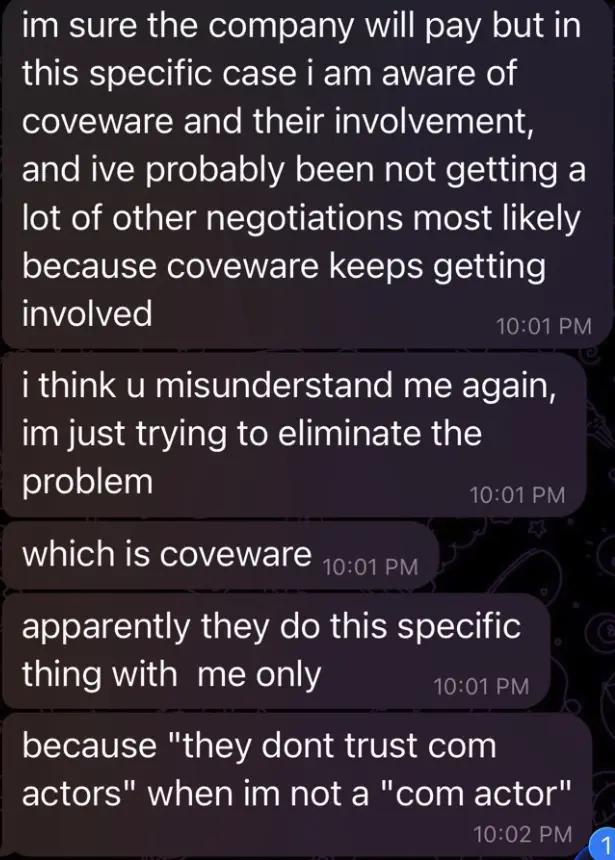
This conflict of interest has not gone unnoticed by the threat actors themselves. Internal communications between ShinyHunters members, intercepted by investigators, reveal deep frustration with firms like Coveware and Unit 221B, which consistently advise victims against paying. In one April 2026 message, the operator of the ShinyHunters account explicitly stated they were looking to "eliminate the problem," referring to the advice provided by these firms.
Industry leaders, such as Mark Camillo of CyberAcuView, argue that the current landscape lacks necessary transparency. "There needs to be more transparency in the process, as no one in the ecosystem should be profiting purely on the size of the ransomware transaction," Camillo stated, advocating for a shift away from percentage-based fee models that may misalign the interests of the negotiator and the client.
As federal authorities continue to peel back the layers of this extortion network, the Department of Justice has signaled a renewed commitment to rooting out corruption within the mediation industry. Recent prosecutions, such as the case of Zohar Pinhasi of MonsterCloud and the sentencing of Angelo Martino, indicate that the government is no longer content to view ransomware negotiators as neutral parties. With investigations into the ShinyHunters group ongoing, the case serves as a stark reminder of the fragile boundary between security services and the criminal underworld they are meant to defend against.