







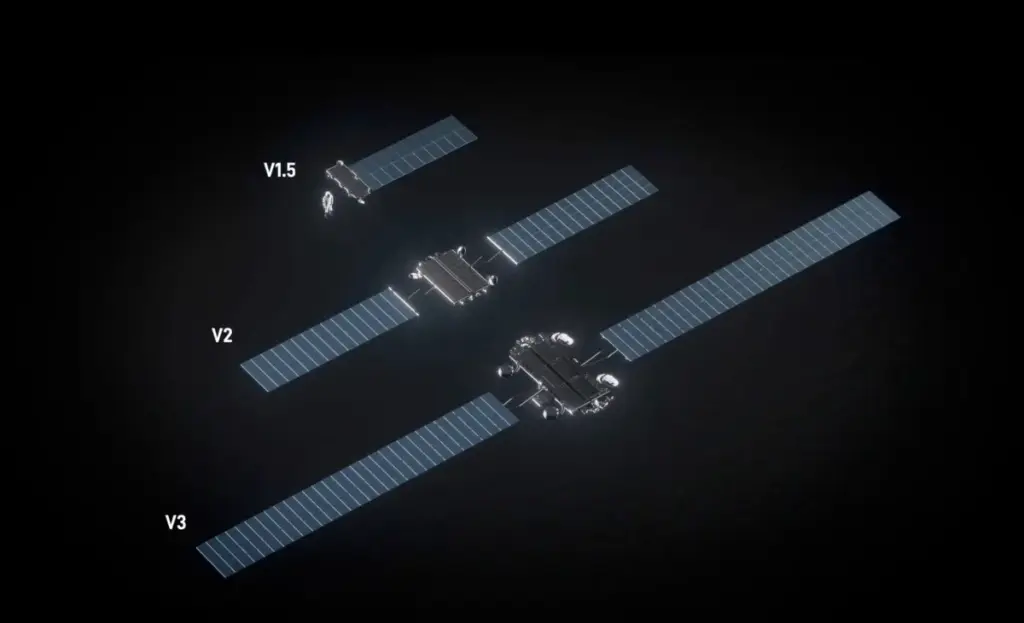
The global race to populate low Earth orbit is running headlong into a sobering terrestrial reality. Tech giants and aerospace heavyweights have laid out staggering ambitions for the coming years: Amazon wants more than 5,000 satellites in orbit, Blue Origin has proposed another 5,400, Chinese firms have filed plans for vastly larger constellations, and Elon Musk has frequently discussed building a network numbering one million spacecraft.
Yet, as the industry gears up for an unprecedented expansion that could see up to 70,000 new satellites join the roughly 19,000 already operating in low Earth orbit (LEO), a fundamental issue threatens to ground these grand designs: simply building them.
The rush to scale is colliding directly with severe shortages of specialized components and raw materials, suppliers who are struggling to keep pace with demand, and intense new market competition from the booming artificial intelligence industry. This multifaceted squeeze is forcing satellite developers to rethink hardware designs, accept painful launch delays, and confront deeper, more existential questions about what timelines are actually achievable.
Competition for scarce resources amid surging industrial demand is forcing difficult trade-offs across the aerospace sector. These pressures threaten to delay schedules, push smaller companies out of the market entirely, and accelerate industry-wide consolidation.
"Companies right now are just looking at where they might be able to take additional risk," said Steve Jordan Tomasweski, vice president of space systems for the Aerospace Industries Association (AIA). Tomasweski participated in an in-depth supply chain analysis conducted earlier this year with audit firm PricewaterhouseCoopers (PwC), a project that involved interviewing dozens of industry representatives to map out operational vulnerabilities.
According to Tomasweski, these supply chain hurdles are driving companies to explore where they can potentially compromise on space-qualification standards. Manufacturers might consider substituting parts or accepting a year-long wait for a specific type of critical valve if they know it is an absolute requirement for mission success.
The comprehensive 54-page analysis isolated nine critical components contributing to major supply chain bottlenecks due to an inability to scale production alongside demand. These components range from mechanical valves and actuators to electrical switchgears and transformers. The findings incorporated insights from roughly 30 professionals operating across various tiers of the satellite manufacturing supply chain.
Industry experts note that while some companies have managed to secure short-term supplies, the sheer scale of the upcoming demand wave will only exacerbate existing bottlenecks. As space companies simultaneously face escalating competition from Earth-based artificial intelligence data centers for the minerals and materials required to construct megaconstellations, something ultimately has to give. Observers warn that relief will likely manifest as further delays, corporate mergers, material substitutions, or proactive government policy interventions. Furthermore, amid increasing global instability, sudden industry shocks could prove severe.
Unstable Rare Earth and Mineral Supplies
A primary source of vulnerability stems from fragile access to the rare earth minerals and advanced materials crucial for high-performance electronic components.
Carla Filotico, partner and managing director at the European consulting firm Novaspace, expressed deep concern over materials like gallium nitride (GaN) and germanium, both of which are essential for manufacturing high-efficiency solar cells. By contrast, Filotico noted that for common structural materials like aluminum, the possibility of running out is less immediate.
"If we assume an average of 500 kilos of mass per satellite, and we make a pure calculation of the amount of aluminum necessary, we can say that, from the primary aluminum production that is currently quite large globally, this space sector is still a niche," Filotico explained.

However, the dynamic is vastly different for advanced electronic materials. Space applications account for only a few percentage points of total market demand for gallium nitride, leaving Western companies highly vulnerable given China’s dominant chokehold over roughly 98 percent of production. China also stands as a dominant producer of germanium, where space applications claim an even larger share of the market. Filotico warned that any sudden export restrictions on gallium could trigger an acute shortage for the space sector at any time.
Even traditional metals like aluminum have experienced tightened availability and escalating costs amid shipping disruptions, such as those caused in the Strait of Hormuz.
"Supply chain resilience has been a topic that has been very popular since COVID, but it’s just accelerated with more and more of these conflicts and disruptions," said Doug Anderson, a partner at PwC’s Operations and Supply Chain Services practice who collaborated on the joint AIA report released in March. "The Strait of Hormuz has impacted aluminum, has impacted helium. These are things that are very important for the space supply chain."
While the industry faces this dangling threat without a clear systemic solution, the past year has seen initial efforts to establish alternative mineral supply pipelines. Notable developments include a May agreement between defense prime RTX and Emirates Global Aluminum to initiate gallium production in Abu Dhabi. Nevertheless, Filotico projects that the worst of the resource squeeze will be felt over the next five years, with the planned peak of the new constellation launch wave set to hit by 2030.
A sudden trade restriction or geopolitical crisis disrupting access to gallium nitride and germanium "could certainly cause space sector shortage," Filotico said. These risks are magnified by the sheer scale of megaconstellations, which require frequent replenishment cycles. Given that satellites in low Earth orbit must typically be replaced every four to five years, a single company operating a megaconstellation may require thousands of satellites annually, translating to tens of thousands of individual solar panels.
Key Subcomponents and Supplier Reluctance
Beyond raw materials, the PwC-AIA analysis revealed that parts shortages are driven not merely by production capacity limits, but occasionally by a deliberate unwillingness among traditional suppliers to take on aerospace work.
The report highlighted instances where suppliers passed up bidding opportunities on space contracts, citing excessively high complexity requirements paired with a low return on effort. In one specific case, a legacy supplier opted against re-bidding on the manufacturing of composite overwrapped pressure vessels—vital components used to store high-pressure gases—because the production demands would consume roughly one-third of the firm’s available engineering time while generating only low single-digit revenue.
Speaking at the Air Force Association’s Air Space & Cyber conference, Gurpartap "GP" Sandhoo, director of the Space Development Agency, acknowledged that his organization continues to grapple with throughput and quality control challenges as it builds out national security missile-tracking and data-transport constellations.
"We have had a demand signal, but the quality control and being able to produce things at scale has been a challenge," Sandhoo said, pointing to optical communications hardware and focal-plane arrays as areas where suppliers struggle with manufacturing consistency and durability against launch stresses.
Compounding these manufacturing hurdles is a heavy reliance on single-source suppliers for critical parts, creating dangerous single points of failure. This precarious ecosystem must now contend with a massive surge in external customer competition from the AI industry.
During an episode of SpaceNews’ Space Minds podcast, Ken Stoler, a space business development lead for Arrow, noted that demand for commercial data centers has escalated dramatically even in the months following the release of the supply chain report. Data center developers represent a vastly more attractive, high-volume customer base for critical electrical components than satellite constellation builders.

For essential components like switchgears and transformers, the report found that AI infrastructure companies are acquiring hardware at a scale that creates years-long backlogs.
"For a space company to come in and say, ‘Hey, we want to buy 10 of these for a new factory’—compare that to a big artificial intelligence company or data center company buying 10,000 of these things," Tomasweski said. "The scale of it, even with the surge in space, isn’t big enough to kind of change the trajectory of where those electrical boxes are going."
Measurement Challenges and Policy Options
A major hurdle in addressing these vulnerabilities is the lack of a consistent, real-time mechanism to monitor available industrial resources. Tomasweski pointed out that there is no guarantee the nine critical components isolated in March remain the top bottlenecks today, nor is there an easy way for industry or government to track shifting choke points.
"It’s been the problem with space that there hasn’t been kind of consistent awareness of where those issues are across programs, across national security space, civil space, and commercial space," Tomasweski said.
Gathering comprehensive supply data could pave the way for targeted policy interventions. For instance, Tomasweski has proposed establishing a "skip the line" authority that would allow the space industrial base to secure priority access to constrained components ahead of commercial data centers and other competing sectors.
"If we want to deliver on all these great capabilities from space and explore the solar system and beat China back to the moon, we might need to make sure that space is prioritized amongst all the other national priorities that we have," he argued.
While Tomasweski expressed encouragement regarding proactive steps taken by the federal Office of Space Commerce to bring government and industry stakeholders together to strategize, he emphasized that institutional responsibility remains fragmented.
"One big thing I think really still needs to get figured out is where the belly button is for fixing supply chain issues, especially at different government agencies," he said. "Supply chain is a challenge because it is everybody’s problem, but it’s also nobody’s problem."
Ultimately, industry veterans acknowledge an unspoken reality: a significant portion of the ambitious megaconstellation launch plans announced in recent years simply will not materialize in their original forms. Market watchers anticipate a surge in vertical integration, with larger aerospace firms absorbing more of their supply chains in-house, alongside widespread industry consolidation as smaller players discover they cannot achieve their objectives independently.
"Ten, 12 years ago, when the applications were submitted with the FCC for constellations of low Earth orbit satellites, no one expected all of them to move forward, and some of them just decided not to move forward with their plans," said Doug Stroup, president of the Satellite Industry Association. "I suspect that we’ll see some of the same thing happening with respect to the recent round of applications that have been filed."