



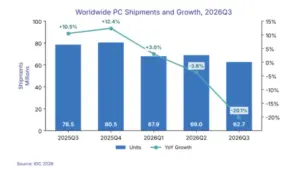







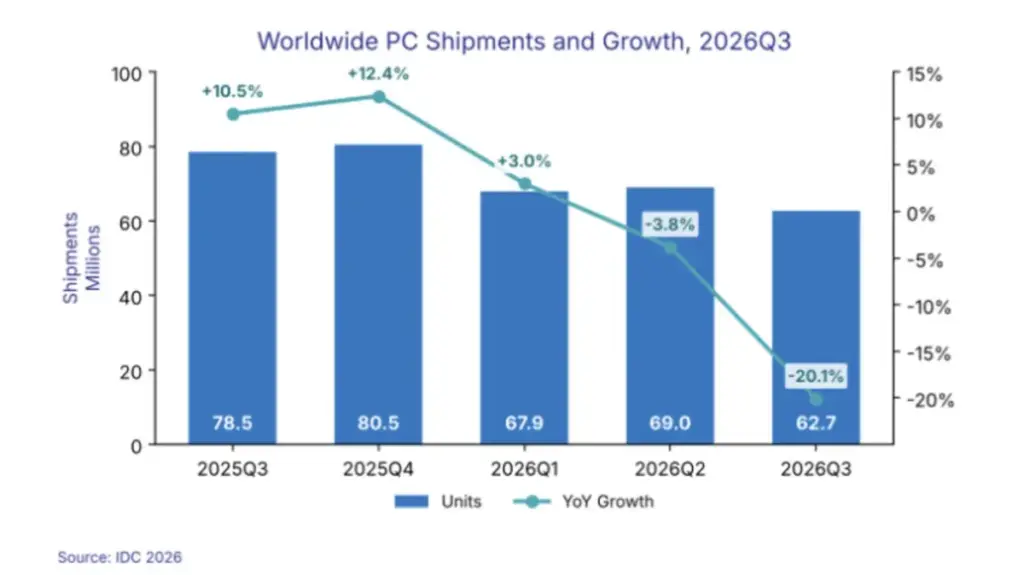
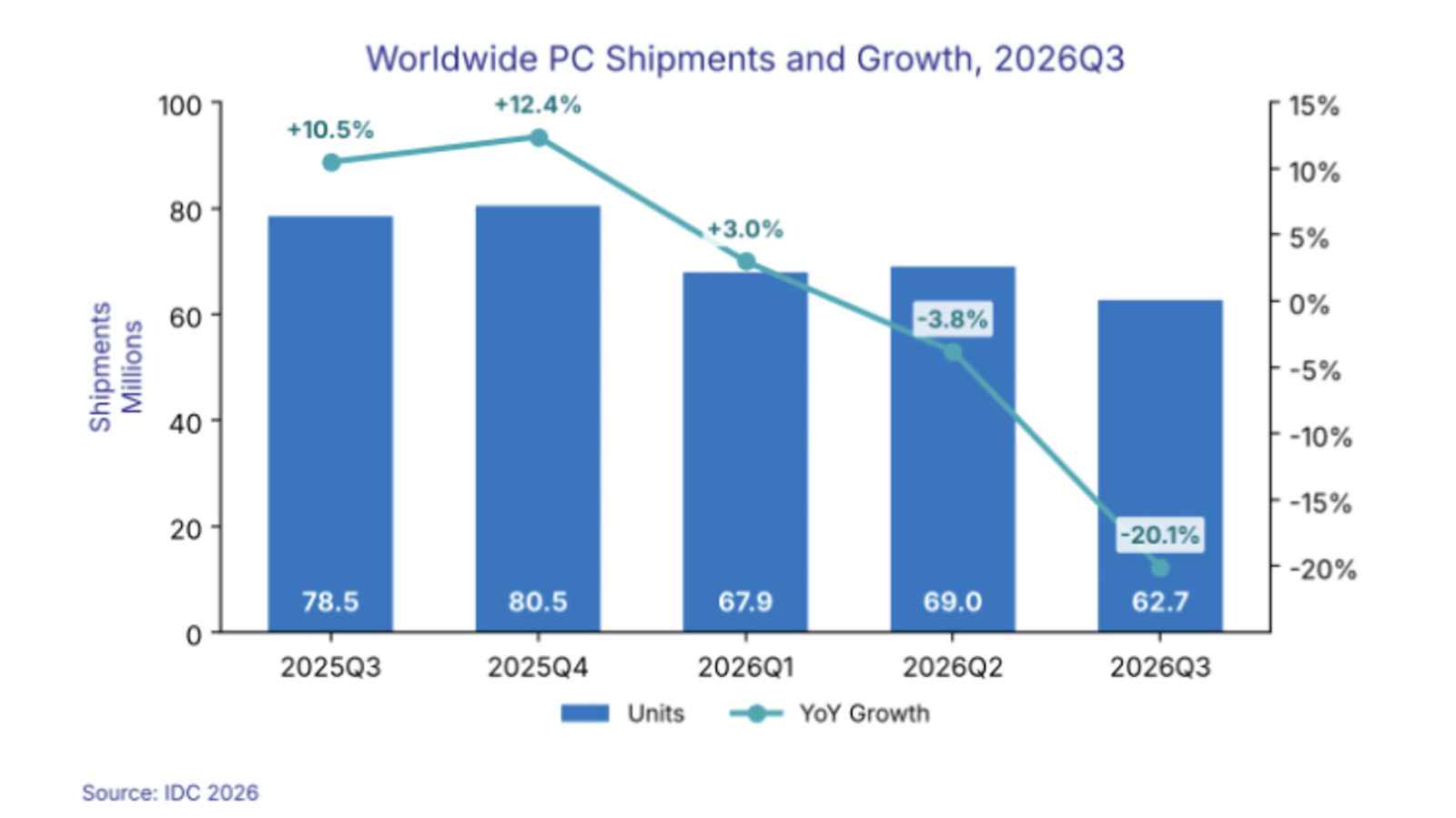
The global personal computer market is currently navigating a period of profound turbulence, as the latest data from the International Data Corporation (IDC) reveals a significant contraction in worldwide shipments. According to the firm’s latest Worldwide Quarterly Personal Computing Device Tracker, global PC shipments for the third quarter of 2026 totaled 62.7 million units. This figure represents not only a 9.1 percent decrease from the second quarter of 2026 but, more alarmingly, a stark 20.1 percent decline compared to the same period in 2025. This double-digit year-over-year drop underscores a deepening malaise in the industry, one that analysts are increasingly attributing to a confluence of supply chain constraints and sustained inflationary pressure on hardware pricing.
For industry observers and consumers alike, the term "RAMaggedon" has become shorthand for this complex crisis. The term, which emerged to describe the lingering instability in memory component availability and the resulting price volatility, appears to be an apt descriptor for the current state of the market. The industry is currently trapped in a cycle where the scarcity of critical components keeps production costs high, which in turn necessitates higher retail prices for finished goods. These elevated price tags are, predictably, stifling consumer interest and corporate procurement cycles, leading to the slump in volume that the IDC has now documented for several consecutive months.
The Q3 2026 data serves as a sobering follow-up to the trend identified earlier this year. In July 2026, the IDC reported the first meaningful decline in PC shipments in nine quarters, breaking a long-running streak of growth that had been buoyed by the pandemic-era demand for remote work and education technology. That initial cooling period followed earlier downward revisions by the IDC, which had already begun cutting its forecasts for the entire 2026 calendar year as early as the spring. The transition from growth to contraction has been rapid, fueled by a perfect storm of macroeconomic headwinds and the persistent memory-related supply issues that have dogged manufacturers for months.

Jitesh Ubrani, the research director for consumer devices at IDC, pointed to a shift in sentiment within the supply chain and retail channels as a primary driver for the current inventory imbalance. "Channels are now worried about carrying too much inventory into a market where high prices are suppressing demand," Ubrani noted in a statement accompanying the report. This apprehension among distributors and retailers creates a secondary ripple effect: if retailers fear that current stock will not move quickly enough, they reduce new orders, which suppresses the total shipment numbers reported by manufacturers.
The paradox for the consumer is that while this inventory build-up might suggest impending sales, the reality of the pricing structure remains rigid. Ubrani suggests that while the current inventory surplus might eventually lead to promotional activities or short-term retail relief, the baseline cost of computing hardware is unlikely to return to the levels seen just a year ago. "That could translate into promotions and some short-term relief for consumers, but we don’t expect pricing anywhere near what it was a year ago," Ubrani explained. "Prices will remain elevated."
The difficulty in stabilizing prices stems from the foundational issues within the global supply chain. The "RAMaggedon" scenario is not merely a shortage of a single component, but a broader reflection of manufacturing bottlenecks, logistics costs, and the rising price of silicon and other raw materials. Because these costs are baked into the production process at the factory level, manufacturers have little room to lower prices without severely impacting their own bottom lines. Consequently, the burden of these costs is passed directly to the end-user, further dampening the appetite for upgrades, particularly in a macroeconomic environment characterized by rising interest rates and general economic uncertainty.
The broader outlook for the remainder of 2026 and into 2027 remains guarded. With macroeconomic conditions continuing to fluctuate, the IDC’s analysis suggests that the industry is in a precarious position. The primary risk identified by analysts is that the market conditions could deteriorate further before any meaningful recovery takes hold. For corporate IT departments, which often operate on multi-year refresh cycles, this environment creates a difficult decision-making landscape. Many organizations are opting to sweat their existing assets—keeping older machines in service for longer than originally planned—rather than committing to significant capital expenditures in a market where both the hardware and the pricing remain unfavorable.
For the average consumer looking to purchase a new desktop or laptop, the current advice from market analysts is one of extreme caution and strategic patience. The recommendation is to treat any genuine discounts or clearance events as isolated opportunities rather than signs of a market-wide price correction. Because the structural issues—specifically the supply chain and component availability constraints—are expected to persist for the foreseeable future, the "normalcy" that buyers are accustomed to is unlikely to return in the immediate term.
The IDC’s findings confirm that the industry is in the midst of a painful recalibration. After two years of unprecedented demand, the PC market is grappling with the consequences of a post-peak environment. The combination of high inventory levels, cautious consumer spending, and the persistent "RAMaggedon" supply issues has created a scenario where volume is down, prices are up, and the path to growth remains obscured by wider economic variables.
As the industry heads into the final quarter of 2026, all eyes will be on whether manufacturers can manage their inventory levels without resorting to deep, margin-eroding discounts, and whether consumer sentiment shifts in response to any holiday-season promotional efforts. However, based on the current data, the expectation is that the market will remain suppressed for at least another year. For those who can afford to delay their purchases, the consensus remains that holding off is the most prudent course of action, as the industry continues to work through the massive inventory and supply chain hurdles that have defined this challenging year. The road back to a stabilized market appears long, and the current quarterly results indicate that the industry is still searching for its footing in a landscape fundamentally altered by the disruptions of the last twelve months.