






By TechCrunch Staff
October 8, 2026
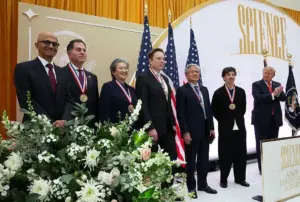
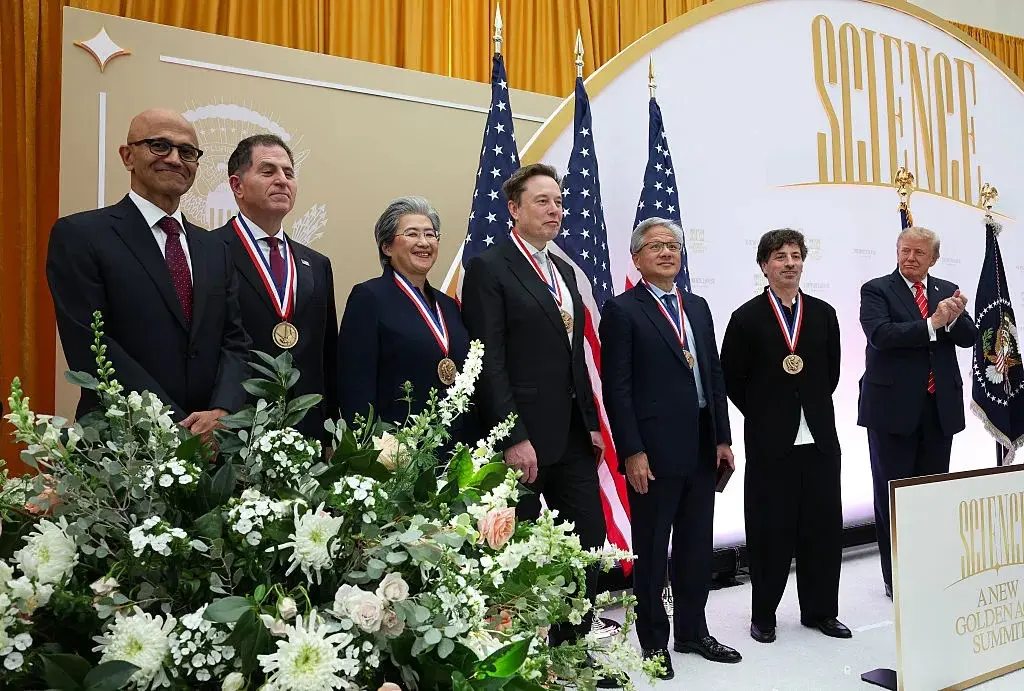
In a ceremony that underscored the deepening intersection of Silicon Valley’s power elite and the federal government, President Trump presided over the "Golden Age of American Innovation Summit" on Thursday. The event, held at the White House, served as the backdrop for the presentation of the National Medal of Science and the National Medal of Technology and Innovation—the highest honors the United States bestows upon its scientific and technological pioneers.
The list of recipients read like a "who’s who" of the modern tech economy. Among those awarded the National Medal of Science were Elon Musk, the driving force behind SpaceX and Tesla; Jensen Huang, the CEO of Nvidia; Sergey Brin, co-founder of Google; and Lisa Su, the long-time leader of AMD. Meanwhile, the National Medal of Technology and Innovation was conferred upon Michael Dell, chairman and CEO of Dell Technologies, and Satya Nadella, the chief executive of Microsoft.
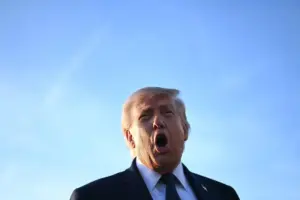
During his address at the summit, President Trump lauded the honorees for their contributions to the nation’s economic and technological standing. "These individuals have helped pioneer an incredible future for America," the President stated. "Because of them, we will always be on top. No one else can compete with us."
A Convergence of Capital and Commendation
While the awards are ostensibly designed to recognize excellence in discovery and invention, the ceremony has drawn significant scrutiny regarding the financial relationship between the recipients and the current administration. According to reporting by The New Republic, the collective group of awardees has donated nearly $6 billion to initiatives and organizations tied to President Trump and his political orbit.
This financial nexus has ignited a conversation about the criteria for such prestigious national awards. The connections are varied and substantial. Major corporations represented by the recipients have engaged in significant political and philanthropic support for the administration. For instance, both Alphabet and Microsoft were noted for their contributions to the President’s inauguration fund and the financing of White House ballroom events.
AMD, under the leadership of Dr. Lisa Su, has provided financial support to a pro-Trump Super PAC, further highlighting the alignment between the company’s corporate interests and the administration’s political machinery. Perhaps the most significant figure cited in recent reports is Michael Dell. Alongside his wife, Susan Dell, the tech executive pledged $6.25 billion toward the "Trump Accounts," a signature administration savings program designed for children.
Critics and policy analysts point to these figures as evidence of an increasingly blurred line between public recognition and private patronage. While the White House maintains that the medals are awarded strictly on the basis of professional merit and scientific or technological contribution, the optics of the event—occurring alongside these massive financial contributions—have prompted questions about the influence of corporate wealth in the highest echelons of government recognition.
The Paradox of Policy and Praise
The ceremony took place against a backdrop of complex and sometimes contradictory policy maneuvers. The most striking juxtaposition occurred during the appearance of Satya Nadella. The Microsoft CEO was presented with the National Medal of Technology and Innovation on the same day the administration announced an indefinite suspension of Microsoft from the H-1B visa program.

The H-1B program has long been a pillar of the American technology industry’s recruitment strategy, allowing companies to hire skilled foreign workers in specialized fields. The administration’s decision to halt Microsoft’s participation in the program represents a significant blow to the company’s operational flexibility and is widely seen as a restrictive shift in immigration policy.
That the administration would simultaneously bestow a high honor upon the head of a company it has effectively sidelined from a critical talent pipeline highlights the tension inherent in the current administration’s "America First" technological agenda. By prioritizing the recognition of domestic icons like Nadella while imposing strict limitations on the very global workforce strategies that helped propel those companies to the top, the White House is navigating a narrow path that seeks to celebrate innovation while aggressively pursuing nationalist labor and immigration goals.
The Future of the American Innovation Summit
The "Golden Age of American Innovation Summit" is being framed by the administration as a rallying cry for domestic technological superiority. In an era of intense global competition, particularly with rising powers in the Asia-Pacific region, the White House has made clear its intention to leverage the combined might of its leading tech giants to ensure the United States remains the preeminent global superpower.
For the recipients, the medals serve as a validation of their roles in shaping the 21st-century economy. Elon Musk, a frequent presence in political discourse, represents the frontier of space exploration and autonomous vehicle development. Jensen Huang’s leadership at Nvidia has placed the company at the epicenter of the global semiconductor and AI revolution. Meanwhile, the inclusion of leaders like Sergey Brin and Lisa Su reflects the administration’s focus on the pillars of the internet age and hardware manufacturing.
Yet, for all the pageantry of the event, the underlying narrative remains one of intense scrutiny. The sheer scale of the financial contributions made by these individuals and their respective firms to the President’s initiatives is unprecedented in the context of scientific awards. Whether these donations are viewed as philanthropic engagement or as an attempt to cement influence in a politically volatile environment depends largely on one’s perspective of the current administration’s tenure.
As the tech sector continues to grapple with increasing regulation, evolving antitrust landscapes, and the shifting sands of global trade, the relationship between these companies and the White House will likely remain a focal point of public debate. For now, the administration appears intent on continuing its strategy of aligning itself with the most powerful figures in industry, betting that the success of these individuals will ultimately be reflected in the success of the nation as a whole.
The ceremony on Thursday was a reminder that in the modern American political landscape, science and technology are rarely isolated from the broader currents of finance and policy. As the dust settles on the summit, the tech industry, the scientific community, and the public are left to weigh the value of these honors against the reality of a political climate where the lines between policy, profit, and prestige are more obscured than ever.
Moving forward, all eyes will be on how these leaders balance their new status as nationally recognized innovators with the challenging regulatory and economic environment they face under the current administration. With the H-1B suspension and other policy shifts on the horizon, the "Golden Age" promised by the President will require more than just medals; it will require a delicate reconciliation between the demands of global corporations and the specific, often protectionist, objectives of the White House.