





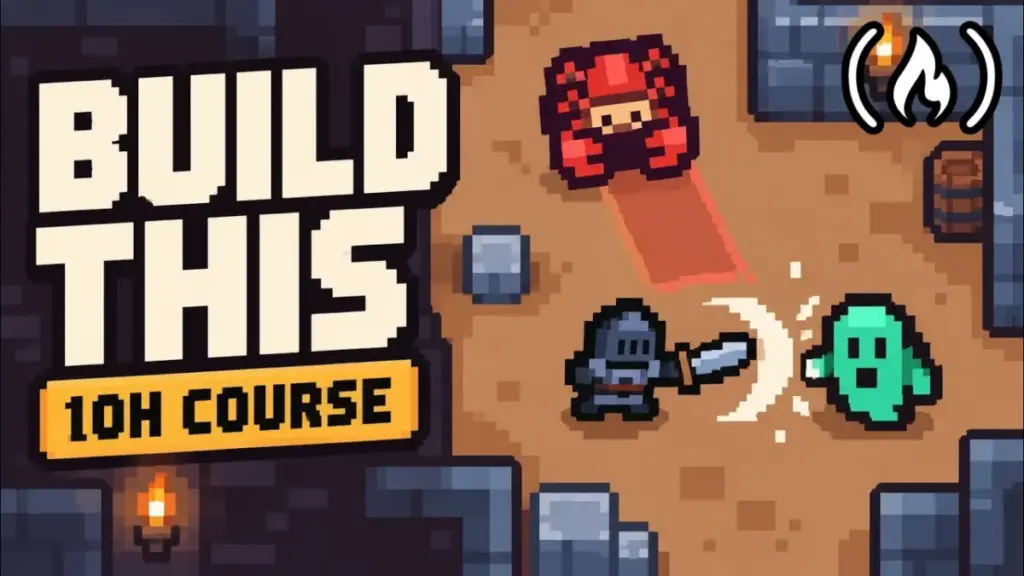
Building a successful top-down action roguelite is one of the ultimate tests for an independent game developer. The genre demands absolute precision: combat must feel sharp and responsive, rooms must flow logically and connect seamlessly, and every single run must force the player to weigh the temptation of immense power against catastrophic risk. While modern game engines provide powerful foundational tools, finding comprehensive educational resources that bridge the gap between basic mechanics and a polished, fully realized game has historically been a major hurdle for aspiring creators. Most available tutorials tend to stop prematurely, leaving developers stranded just as their projects begin to require advanced system integration before anyone else can actually open, play, and enjoy the game.
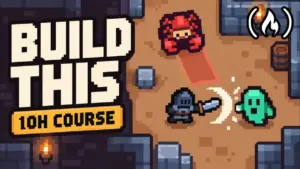
To address this persistent educational gap in the game development community, a massive new resource has officially been published. A comprehensive 10-hour masterclass has been released on the freeCodeCamp.org YouTube channel, designed to guide developers through the entire lifecycle of building a complete top-down action roguelite in Godot 4.7.2. Spanning from a completely blank project directory all the way to an exported, playable game ready for distribution, the course offers an exhaustive look into professional game architecture. The curriculum is taught by Omar Zaki, the creator of Coding Quests, who brings a structured and practical approach to teaching complex programming and design concepts within the Godot ecosystem.
What sets this comprehensive course apart from traditional video tutorials is its interactive philosophy. Most of the individual lessons feature a dedicated practical segment encouraging learners to pause, step up, and build the next logical piece of the game themselves before reviewing the instructor’s solution. This active learning methodology ensures that students do not merely copy code line-for-line, but instead develop the critical problem-solving skills and architectural intuition required to tackle their own independent game development projects in the future. By focusing heavily on how disparate systems communicate with one another—such as linking player inputs, enemy artificial intelligence, room generation, and user interfaces—the course demystifies the chaotic process of putting together an action-heavy game genre.

The release comes at a time of significant growth for the Godot engine community. Godot 4 has rapidly gained traction among both hobbyist developers and professional studios due to its lightweight footprint, robust open-source nature, and powerful node-based scene architecture. However, as the engine’s capabilities have expanded, so has the complexity of building genre-specific frameworks. Roguelites, by their very nature, require procedural or semi-procedural generation, tight combat loops, persistent progression systems, and balanced economies of risk and reward. Designing these systems in Godot 4.7.2 requires a deep understanding of GDScript, scene instancing, signal management, and performance optimization to ensure that fast-paced action sequences run smoothly without stuttering or frame drops.
Omar Zaki’s background with Coding Quests shines through in the pacing and depth of the material. Rather than rushing through the setup or glossing over tricky math and logic hurdles, the course takes the time to explain the foundational reasoning behind every architectural decision. Developers following along will learn how to structure player movement, implement responsive hitboxes and hurtboxes, design intelligent enemy behaviors that react to the player’s positioning, and construct dynamic rooms that alter the flow of combat. Furthermore, the curriculum covers the crucial final steps of game development that are so often neglected in short-form tutorials, including user interface design, audio integration, game state management, and the final export process for sharing the completed creation with the world.
The full 10-hour course is now available to watch completely free of charge on the official freeCodeCamp.org YouTube channel. This release represents a significant addition to the growing library of open educational content available for the Godot engine, providing developers of varying skill levels with a reliable blueprint for bringing their own complex game ideas to life. As open-source tools continue to empower creators across the globe, comprehensive masterclasses like this one play a pivotal role in lowering the barrier to entry for professional-grade game development, enabling dedicated learners to transform abstract concepts into polished, playable experiences.