







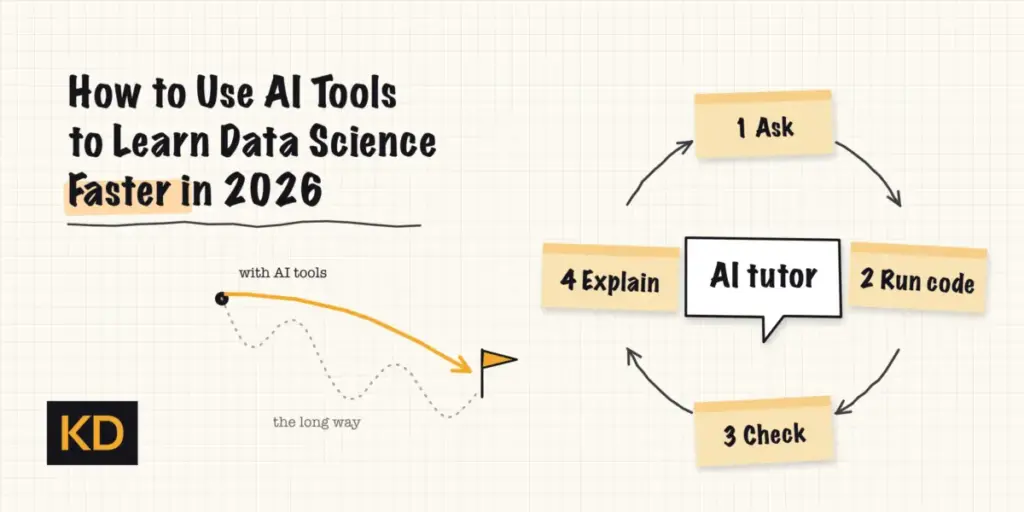
Learning data science is more accessible now than it has ever been, and artificial intelligence tools are a primary catalyst behind this transformation. Where students once spent days debugging a single script or searching painstakingly through fragmented documentation, they can now secure instant, context-aware explanations and precise code suggestions in mere seconds. This shift is reshaping how individuals enter the field, lowering technical barriers and dramatically speeding up the educational timeline for aspiring professionals.
However, this unprecedented accessibility comes with significant trade-offs. While the best AI tools in 2026 successfully reduce friction across the entire learning process, the real challenge facing students is discerning which tools to utilize and learning how to employ them without inadvertently letting algorithms do all the critical thinking. Rather than replacing human intellect, the most successful learners are discovering that artificial intelligence must be harnessed strategically. This dynamic has sparked a broader conversation within technical education regarding how to balance automated assistance with genuine conceptual mastery, guiding learners through every stage of their development from Python foundations to securing their first data science roles.
Getting the Foundation Right First
Before reaching for any advanced AI tool, experienced educators and industry veterans emphasize a fundamental principle: students should avoid learning artificial intelligence before mastering analytics fundamentals. This sequential approach matters because AI assistants are most useful when learners already possess sufficient context to critically evaluate the feedback they receive. If a student asks an artificial intelligence model to explain a confusion matrix without ever having studied classification concepts, the generated explanation will remain surface-level at best and potentially misleading at worst.
To avoid these pitfalls, educational frameworks dictate starting with a solid working knowledge of Python, basic statistics, and data manipulation libraries such as pandas and NumPy. Once this groundwork is established, artificial intelligence tools transition from being deceptive crutches into powerful multipliers. Learners utilize them to probe deeper into subjects rather than skipping essential developmental steps. Structured learning environments like DataCamp have adapted to this paradigm by offering AI-native formats featuring adaptive tutoring that adjusts dynamically to a user’s skill level, pace, and context in real time. This type of responsive feedback is particularly valuable early on, preventing minor misconceptions from compounding into major conceptual roadblocks.
Using AI Assistants as On-Demand Tutors
With a firm foundation securely in place, conversational artificial intelligence assistants transform into some of the most versatile learning assets available to students. Platforms such as ChatGPT and Microsoft Copilot provide immediate answers to coding inquiries, break down multifaceted concepts into digestible parts, and generate functional code snippets on demand, effectively eliminating the delays traditionally associated with waiting for instructor office hours or tutoring availability.
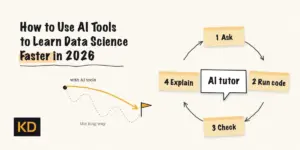
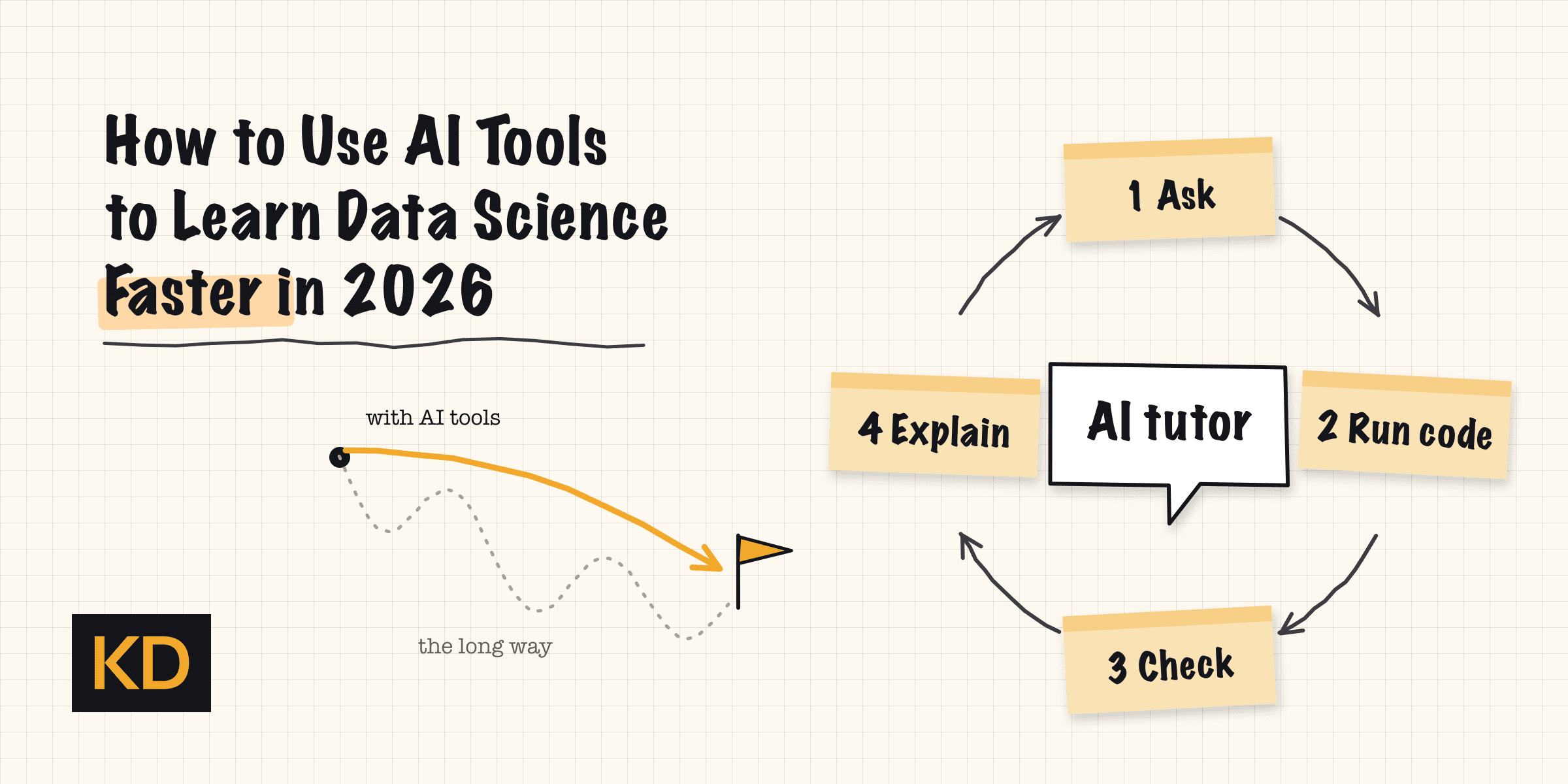
The secret to maximizing these conversational agents lies in treating them as collaborative thinking partners rather than glorified search engines. Instead of simply pasting a generic error message and demanding a quick fix, effective learners describe their intended objectives, detail what they have already attempted, and ask the assistant to guide them through the precise nature of the malfunction. This methodology keeps the human student firmly in the driver’s seat while still securing the necessary technical assistance.
Students frequently employ conversational tools for deep dives into complex topics, asking models to explain theories through multiple analogies until the underlying mechanics click into place. Other common applications include comprehensive code reviews, where individuals submit their scripts not merely to check for correctness, but to understand how an experienced data scientist would refactor the code and why. Additionally, learners leverage these tools for study planning, feeding their current competency levels and career goals into the system to generate customized weekly curricula complete with targeted resources and milestones.
Accelerating Coding with AI Coding Assistants
One of the most persistent bottlenecks in learning data science has historically been the wide gap between understanding a conceptual framework and being able to implement it cleanly in production-ready code. Dedicated AI coding assistants are actively closing that gap for a new generation of analysts and developers. For students specifically, the primary advantage extends beyond sheer speed; it involves the continuous exposure to idiomatic, well-structured code alongside their own preliminary attempts, which gradually trains the eye for quality and style.
GitHub Copilot remains a widely recommended solution within data science contexts. Development teams utilizing the tool routinely report productivity gains of approximately forty percent, and for learners building independent portfolio projects, that efficiency translates directly into a higher volume of finished work, an essential metric for job seekers entering a competitive market. Alternative platforms like Cursor are also gaining traction among developers who prefer granular control over how automated suggestions integrate into their local workflows.
When employing coding assistants for educational purposes, experts caution against blindly accepting every automated suggestion. Instead, learners are encouraged to treat each recommendation as a prompt for inquiry: understanding precisely why a piece of code functions, and querying the assistant for line-by-line explanations when the logic is obscure. This practice transforms passive code generation into an active, highly engaging learning experience. Comparing personal coding attempts against AI-suggested refactorings builds computational intuition far faster than traditional static tutorials can achieve on their own.
Building Projects with AI Guidance
Portfolio projects remain the single most effective mechanism for demonstrating practical data science competencies to prospective employers. Artificial intelligence tools have streamlined both the scoping and the execution phases of these projects, helping learners overcome the paralysis of choice that often stalls independent development.
Many aspiring data scientists struggle more with strategic direction than with motivation. Determining an appropriate dataset, formulating a compelling research question, and calibrating the correct level of analytical complexity are frequent hurdles. AI assistants help address all three challenges before serving as an ongoing sounding board throughout the building phase. By describing their exact skill level and target roles, learners can solicit tailored project ideas that demonstrate relevant competencies. Once a project is selected, the assistant helps outline the architectural structure, suggests exploratory data analysis techniques, recommends appropriate modeling strategies, and advises on how to frame analytical findings for maximum impact.
Jupyter Notebook remains the standard environment for this type of exploratory work, with many modern AI assistants offering direct integrations through extensions that allow students to receive contextual help without disrupting their analytical workflow. When visualizations fail to render correctly or model performance falls short of baseline expectations, learners can systematically consult these tools to generate structured troubleshooting lists.
Using AI for Concept Reinforcement and Self-Testing
Active recall is widely recognized as one of the most effective cognitive learning strategies supported by educational research. Rather than passively re-reading static notes or textbooks, modern data science students are increasingly using artificial intelligence to facilitate rigorous self-testing sessions.
By prompting an assistant to administer targeted quizzes—such as requesting five sequential questions on the structural differences between bagging and boosting algorithms, with immediate feedback provided after each response—students turn passive review into active retrieval practice. This methodology can be seamlessly extended to technical coding challenges, where an assistant outlines a machine learning problem accompanied by dataset descriptions and expected outputs, challenging the student to write the solution independently before requesting hints. This structure closely mirrors technical interview formats, bolstering both technical proficiency and professional confidence.
Staying Current with Emerging Tools and Research
The technological landscape of data science evolves at a relentless pace, and modern AI tools assist practitioners in keeping abreast of new developments with minimized administrative overhead. By 2026, the traditional role of the data scientist has shifted visibly from a pure "model builder" to an "AI orchestrator." Consequently, contemporary learners must master classical machine learning methodologies alongside the intricacies of working with large language models, constructing retrieval-augmented generation systems, and navigating frameworks like LangChain and LlamaIndex.
These libraries and architectures have cemented their status as industry standards for building intelligent agents and retrieval systems, making familiarity with them an implicit expectation in the modern job market. Students utilize conversational AI assistants to secure rapid, plain-language summaries of complex academic papers and emerging techniques, evaluating whether specific advancements warrant deeper investigative study. This approach preserves currency in their mental models without requiring the exhaustive reading of every technical publication in full.
Recommended Tools to Start With
Navigating the vast ecosystem of educational technology requires a curated approach tailored to specific stages of the learning journey. For structured instruction, established platforms like DataCamp, Dataquest, and Coursera remain formidable resources, with DataCamp’s adaptive AI tutoring providing distinct advantages for self-directed individuals.
For conversational assistance, platforms such as ChatGPT and Claude excel in delivering technical education, with Claude frequently noted for its capability in handling multi-step logical explanations. GitHub Copilot stands out as the prevailing choice for integrated coding assistance within data science workflows, maintaining robust compatibility across environments like Jupyter, Visual Studio Code, and PyCharm. Meanwhile, tools like Perplexity serve researchers seeking citation-driven, verified answers when cross-referencing claims against external source materials becomes necessary.
Ultimately, artificial intelligence tools cannot acquire data science competencies on behalf of a student, but they significantly accelerate the trajectory when applied with deliberate intention. Learners who derive the highest value from these systems use them to probe deeper into active subjects, overcome technical impasses without abandoning their objectives, and complete comprehensive projects efficiently. By establishing solid analytical foundations, selecting appropriate tooling, and remaining active participants rather than passive consumers, students can build durable technical skills suited for any professional environment.