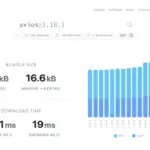










The historical divide in web development between relying on external JavaScript libraries and utilizing native browser capabilities is steadily narrowing. A comprehensive assessment of mid-sized modern web applications reveals that between 60KB and 90KB of minified and gzipped dependencies currently sitting inside typical package.json files can now be handled directly by the web platform. Capabilities that once required dedicated third-party packages—such as complex date and number formatting, HTTP requests, UI modals, tooltips, deep object cloning, and array grouping—are increasingly supported natively across major browsers.
Industry analysts point out that these redundant libraries frequently remain inside applications not due to developer negligence, but because engineering teams rarely re-audit their dependency trees against modern browser capabilities. While security audits via package managers are common practice, questioning whether a third-party library continues to perform a task that modern browsers can handle natively is an evaluation that occurs far less frequently.
The rapid pace of modern browser releases means that features standardized under the Baseline initiative—a collaborative effort by the WebDX Community Group to track cross-browser compatibility across Chrome, Edge, Firefox, and Safari—are transforming what can safely be built using vanilla web technologies. Baseline categorizes features into states of availability, distinguishing between those that are newly available and those that have reached widespread availability across all major engines. This distinction dictates whether developers can immediately drop a dependency or whether they should implement a brief feature check or wait for wider market adoption.

When evaluating these codebases, performance experts recommend a structured decision framework rather than rushing to strip out packages blindly. Developers must assess whether a native browser feature is safe for their specific user demographic, analyze the net cost of any required polyfills, and verify whether the native platform implementation covers the nuanced use cases previously handled by robust third-party tools.
Internationalization represents one of the most substantial areas for immediate bundle reduction. The browser’s native Intl namespace now encompasses a robust family of formatting tools that render numerous small packages obsolete. Features such as relative time formatting, which traditionally required dedicated helper libraries, are now natively supported through Intl.RelativeTimeFormat. Similarly, numbers, currency values, compact notations, and linguistic list joining are fully managed by native APIs like Intl.NumberFormat and Intl.ListFormat. While certain advanced formatting tools like duration formatting are emerging as newly available standards, developers targeting broad public audiences are advised to verify browser compatibility or apply progressive enhancement strategies before making the switch.
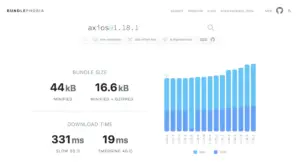
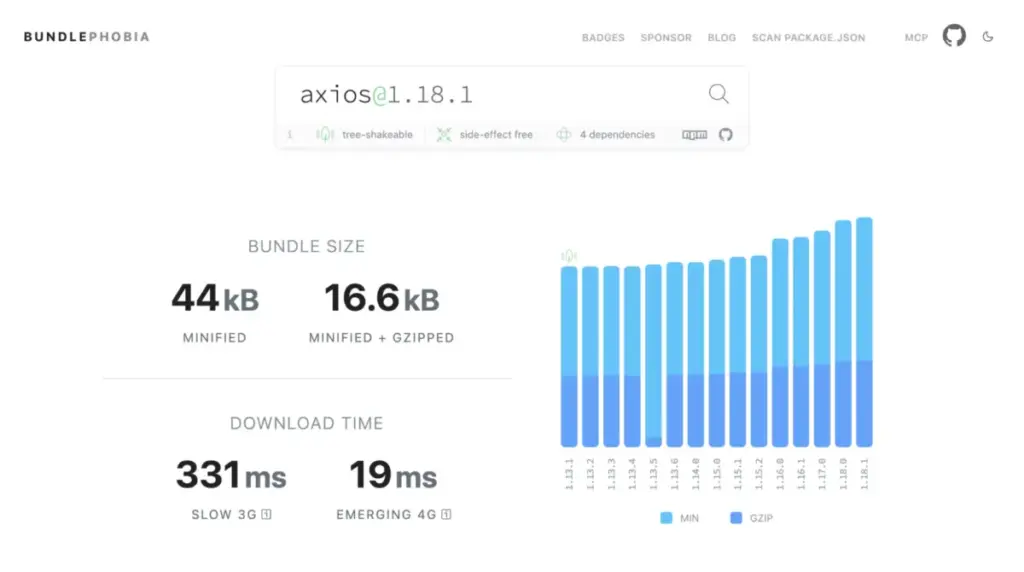
HTTP client management presents a more nuanced engineering challenge. While popular libraries like Axios and Superagent remain staples for many applications due to advanced features like request interceptors, automatic retries, and request cancellation, standard data fetching requirements are fully met by the native fetch API combined with modern abort signals. Developers utilizing basic HTTP operations can achieve significant bundle size reductions by transitioning to native implementations, provided they account for any specialized middleware or custom configurations relied upon by their existing architectures.

User interface primitives have similarly evolved past the point where external component wrappers are strictly necessary. The introduction of the native dialog element handles complex accessibility requirements, including focus trapping, escape-key handling, and top-layer rendering, eliminating the need for standalone modal and focus-management libraries. Furthermore, the Popover API and CSS anchor positioning provide native solutions for tooltips, dropdowns, and floating panels that previously demanded heavy third-party positioning engines.
Utility libraries, particularly subset functions historically imported from lodash, also show significant overlap with modern JavaScript standards. Native additions such as object and map grouping, structured cloning for complex data structures, and comprehensive set operations allow engineering teams to discard numerous individual utility packages without sacrificing functionality. However, asynchronous control utilities like debounce and throttle mechanisms retain their utility as developers await further platform standardization.
Conversely, industry benchmarks caution against premature migration for features that have not yet achieved universal browser support. The long-awaited Temporal API for modern date and time manipulation serves as a prime case study. While Temporal offers a vastly superior architecture compared to legacy JavaScript date objects, it has not yet reached full Baseline status across all stable browser releases. Attempting to polyfill Temporal across legacy environments can inadvertently introduce a heavier footprint than maintaining lightweight third-party date libraries, demonstrating that careful cost-benefit analysis remains essential during dependency reviews.

As the web platform continues its rapid evolution, periodic dependency audits are becoming an increasingly vital practice for maintaining optimal application performance. By systematically cross-referencing production dependencies against current browser capabilities, engineering teams can successfully return dozens of kilobytes of redundant code back to the browser, ensuring faster load times and cleaner, more maintainable codebases.