









Apple’s “Welcome Home” event marked a significant strategic shift for the technology giant, signaling that the introduction of the new HomeView smart display was merely the opening salvo in a much broader push into the smart home ecosystem. For years, Apple has taken a notably cautious and measured approach to the smart home market. Early, small-scale hardware partnerships, such as the LG Circle security camera, functioned as little more than tentative exploratory steps, and most of those initiatives ultimately fizzled out without leaving a lasting market footprint. Now, that era of hesitation has officially ended, and Apple’s aggressive new stance is expected to profoundly reshape the competitive landscape for smart home product lines in both the immediate and distant future.
This first-of-its-kind Apple lineup introduces a deeply integrated, comprehensive collaboration with consumer electronics leader LG Electronics to produce a suite of advanced smart security cameras, alongside a uniquely designed smart lock that breaks away from conventional industry aesthetics. As reviewers and industry analysts begin testing these new offerings, it is immediately clear that they carry Apple’s signature design philosophy, focusing heavily on streamlined user experiences and rapid, frictionless setup processes. The debut of these products has already captured the attention of rival home security and automation brands across the sector.
"Apple Home Collection makes it easy to choose smart home accessories with confidence," said Matthew Costello, Apple’s vice president of hardware engineering, in the official announcement. "Working closely with industry leaders LG Electronics and Schneider Electric, we designed every accessory to work seamlessly with Apple Home, so managing your home is simple, reliable and private."


By stepping up its ambitions, Apple is mounting its most significant play in the smart home sector to date. The newly unveiled hardware ecosystem showcases a distinct design language and technical integration that highlights the company’s renewed focus on the connected household.
An Innovative Smart Lock Design Developed with LG
Among the most striking announcements is a novel smart lock developed in partnership with LG, which immediately drew attention for its departure from traditional deadbolt aesthetics. While the market is saturated with dozens of smart lock configurations, the exterior housing of Apple and LG’s joint creation features a distinctive circular keypad engineered to twist for manual unlocking—a mechanism that may initially require a learning curve for first-time users. Priced at a premium $349.95, it stands as one of the most expensive smart locks currently available to consumers.
Although Apple has kept specific technical details under wraps, the lock is expected to support Apple Home Keys and advanced proximity-based auto-unlocking features. Crucially, the device incorporates support for Matter, a somewhat unexpected technical concession from Apple that ensures cross-platform compatibility. This allows the lock to function not only within Apple Home but also with rival ecosystems like Amazon Alexa and Google Home. Furthermore, the inclusion of Aliro compatibility enables seamless integration with digital wallets such as Samsung Wallet, allowing users to unlock doors simply by approaching with a compatible smartphone.

The smart lock is also designed to interoperate smoothly with other newly released LG and Apple products, establishing a cohesive ecosystem that includes a newly minted video doorbell—another product category that represents entirely new territory for Apple.
A Wave of Security Cameras Focused on Simplicity and Integration
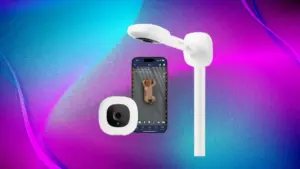
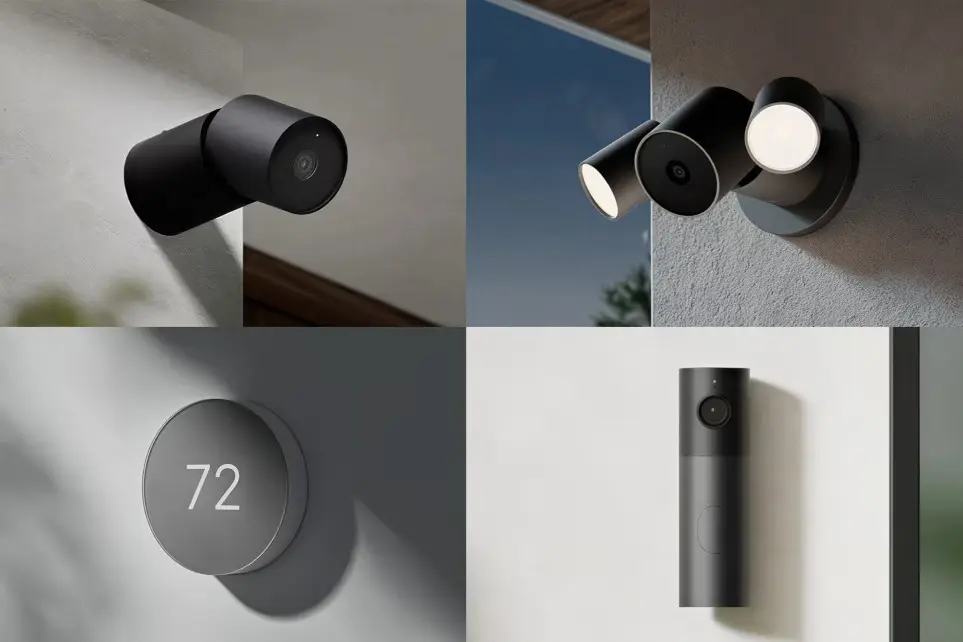
The collaboration between Apple and LG has also yielded a comprehensive lineup of security cameras. Rather than releasing a single standalone device, the partnership introduces four distinct camera models, all capturing video in crisp 2.5K resolution and optimized for deep integration with Apple TVs, the new HomeView display, and HomePod speakers such as the recently announced HomePod mini 2.
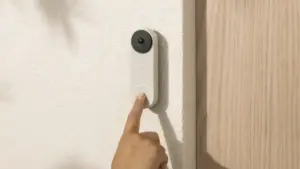
The slim video doorbell, priced at $249.95, emerges as a particularly compelling option. It utilizes a dual-camera optical design, conceptually similar to models offered by brands like Eufy, which simultaneously captures a wide-angle overview of the front yard and a focused view of the porch, welcome mat, and arriving visitors.

The lineup also features a wired floodlight camera retailing for a substantial $399.95, equipped with dual LEDs and adaptive brightness controls, alongside separate indoor ($199.95) and outdoor ($299.95) surveillance cameras. The indoor camera introduces a privacy mechanism, automatically tilting its lens to obstruct the view when occupants are present and physically lowering itself to signal active privacy when family members return home—a functional approach closely mirroring recent hardware designs from competitors like Arlo.
These cameras support advanced object recognition capabilities, capable of distinguishing between people, pets, vehicles, packages, and familiar faces. However, Apple has not yet detailed the pricing structure for these advanced features, though the company notes that an active iCloud Plus subscription will be mandatory. This requirement includes ten days of cloud video storage, a factor that could rapidly consume standard iCloud storage limits when shared with other personal digital content. This model diverges from security camera brands that rely on dedicated, isolated cloud storage tiers. While Apple notes that local storage is available as a fallback when cloud connectivity fails, the exact capacity of this onboard storage buffer remains unspecified.
Users can monitor the video feeds across multiple Apple devices, including iPhones, Apple TVs, and the HomeView interface. Additionally, Siri AI is integrated to provide natural language video descriptions and answer contextual queries regarding recorded footage, though the real-world utility of such features remains a subject of ongoing evaluation among tech reviewers. While the physical exteriors do not radically break from industry norms, they clearly inherit Apple’s minimalist aesthetic cues blended with LG’s manufacturing DNA. Early hands-on evaluations emphasize that Apple collaborated intensely on the industrial design and privacy-centric software architecture, though the latter aspect brings notable complexities.
Navigating Complex Privacy Questions Around Facial Recognition

The inclusion of familiar face recognition introduces significant regulatory and privacy questions. This technology automatically detects and catalogues recurring faces, allowing users to label individuals so that cameras can generate specific alerts—such as identifying a family member by name rather than issuing a generic motion notification.
However, the technology’s inherent intrusiveness extends beyond household members to include any passing visitors or strangers captured on camera. This has led several jurisdictions, including the states of Illinois and Texas and the city of Portland, Oregon, to enact strict legal limitations or outright bans on certain facial recognition technologies. Simultaneously, major technology rivals such as Amazon Ring and Google Nest are facing active lawsuits over alleged privacy violations and the unauthorized collection of biometric facial data. Apple’s decision to incorporate its own version of facial recognition places the company directly into this contentious legal and ethical landscape.
Apple maintains that all Home app data is protected via end-to-end encryption, ensuring that neither Apple nor its manufacturing partners can access the underlying data for external purposes. Footage is reportedly processed locally on an Apple Home hub or through Private Cloud Compute infrastructure, with encrypted backups stored within iCloud. Depending on how these systems operate in practice, industry observers suggest Apple could face similar scrutiny and potential legal challenges regarding consumer privacy.
Expanding into Home Climate Control with New Smart Thermostats

In another unprecedented move, Apple is venturing into the smart thermostat market, tackling one of the more technologically complex segments of home automation. Rather than easing into the sector with simpler accessories like smart plugs, Apple is leveraging its new partnerships with LG and Schneider Electric to launch two distinct thermostat models targeted at premium home upgrades.
Both smart thermostats carry a starting price of $199.95, a dual-product strategy that has raised questions among industry analysts regarding the necessity of offering two identical internal hardware platforms. Both units share an identical feature set, encompassing humidity sensors, adaptive temperature scheduling, and integration with Clean Energy Guidance data in the United States to help households minimize energy consumption during peak pricing hours. The primary differentiator between the two models is purely aesthetic, with one featuring a round housing and the other adopting a squarish profile.
Smart thermostats have historically proven effective at reducing household energy expenditures, often offsetting their initial purchase price through utility savings within a few years of installation. Furthermore, Apple’s inclusion of on-device wiring detection aims to simplify the do-it-yourself installation process for consumers.
Evaluating Apple’s Position Against Established Competitors

Apple is entering the mature smart home market considerably later than dominant players like Amazon and Google. While late entry is not an insurmountable obstacle, Apple faces the burden of proving that its ecosystem additions are essential upgrades rather than expensive alternatives. Many of the core functionalities introduced in the new collection mirror features already refined by competing brands, meaning Apple’s success will heavily depend on hardware performance, seamless integration, and execution.
While iCloud Plus integration could potentially offset security subscription costs for existing Apple subscribers, the high retail price points of the hardware—often exceeding the most expensive equivalents offered by rival manufacturers—present a significant financial barrier to entry for everyday consumers.
As these devices roll out for extensive public and professional testing in the coming months, the broader technology industry will be closely monitoring how consumers respond. When a dominant ecosystem player makes a decisive expansion into the connected home, the entire market takes notice, but the ultimate verdict will rest on the practical reliability and everyday utility of the hardware.