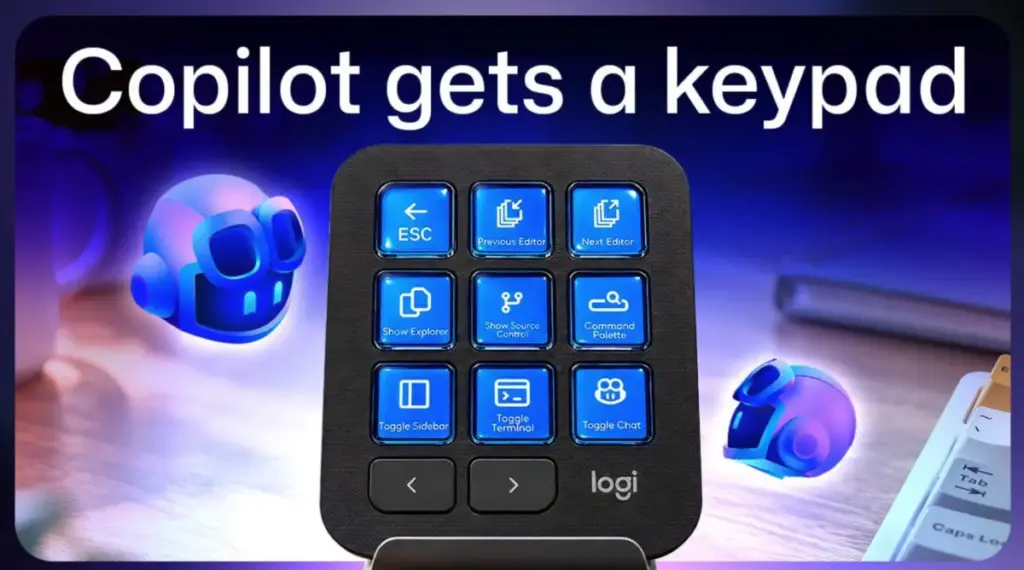
For decades, the life of a software engineer was defined by a static set of rituals. The workstation was a sanctuary of specific, learned behaviors: the rhythmic clatter of a mechanical keyboard, the mastery of obscure terminal commands, the reliance on a sprawling array of browser tabs, and the constant navigation between editors and debuggers. Developers spent their careers learning to "speak computer," adapting their cognitive processes to the rigid requirements of the machine. Whether it was memorizing complex shortcuts or deciphering cryptic syntax, the relationship between the human and the software stack was one of manual operation.
However, a fundamental shift is currently underway. We are moving away from an era of operating tools toward an era of expressing intent. This transition is not merely about making coding faster; it is about fundamentally altering the nature of the development lifecycle. Driven by advancements in artificial intelligence, software development is evolving from a mechanical process into an exercise in direction, context-setting, and high-level judgment.
The Rise of Intent-Based Development
For a long time, the primary promise of AI in coding was the ability to "prompt" a machine to generate snippets of code. While useful, this represented only the tip of the iceberg. The real transformation lies in the capacity for AI to act as a collaborative agent—a system that understands the deep context of a repository, selects appropriate models, plans complex work, executes tool calls, inspects for failures, and iterates within boundaries defined by the human developer.

Today, platforms like GitHub Copilot are enabling developers to articulate an outcome rather than a sequence of keystrokes. By gathering repository-wide context, inspecting dependencies, and running tests, these agents can revise implementations and offer pull requests for review. This creates an interactive loop where the AI handles the mechanics of file editing and debugging, while the developer acts as the architect and the final arbiter of quality.
This compression of the development chain is perhaps the most significant change to the craft in the modern era. When the "how" of implementation is delegated to an agent, the developer’s value shifts toward the "why." Time previously spent wrestling with tool configurations or navigating fragmented documentation is now redirected toward defining constraints, managing project structure, and ensuring that a solution aligns with the needs of the customer.
This evolution actually elevates the importance of the human developer. As agents become capable of churning out multiple implementations in minutes, the developer’s role as a judge becomes paramount. Does this abstraction make sense in the long term? Is this migration strategy safe? Do these tests provide meaningful validation, or are they merely checking boxes? These are questions of taste, strategy, and engineering rigor—human-centric attributes that are now more valuable than ever because the mechanical burden of coding has been lightened. The developer remains the ultimate authority, accountable for the outcome, while the mechanics are increasingly handled by the system.
Ambient Intelligence and the Emerging Workflow
To truly realize the potential of this new workflow, AI cannot remain a side-project or an external tool. It must be embedded into the development environment as an "ambient intelligence." This requires a new infrastructure of connectivity. Technologies like the Model Context Protocol (MCP) are essential here, as they allow agents to interface seamlessly with various tools and services. By encoding conventions, project instructions, and policy-enforcing hooks, we create a system that is aware of the developer’s intent while maintaining the necessary guardrails.
This shift involves three distinct layers: the modality, which captures the developer’s intent; the harness, which plans and executes the work; and the control plane, which allows the developer to inspect, redirect, and approve changes. The most effective systems will be those that integrate these layers without forcing the developer to surrender control.
The Renaissance of Physical Controls
As we move toward agentic workflows, the interface for interacting with our code is expanding beyond the screen. While the keyboard and mouse have served us well, the nature of agent-assisted development allows for new ways of interacting with the machine. We are seeing a renewed interest in physical controls—small, programmable devices that can bridge the gap between intent and action.
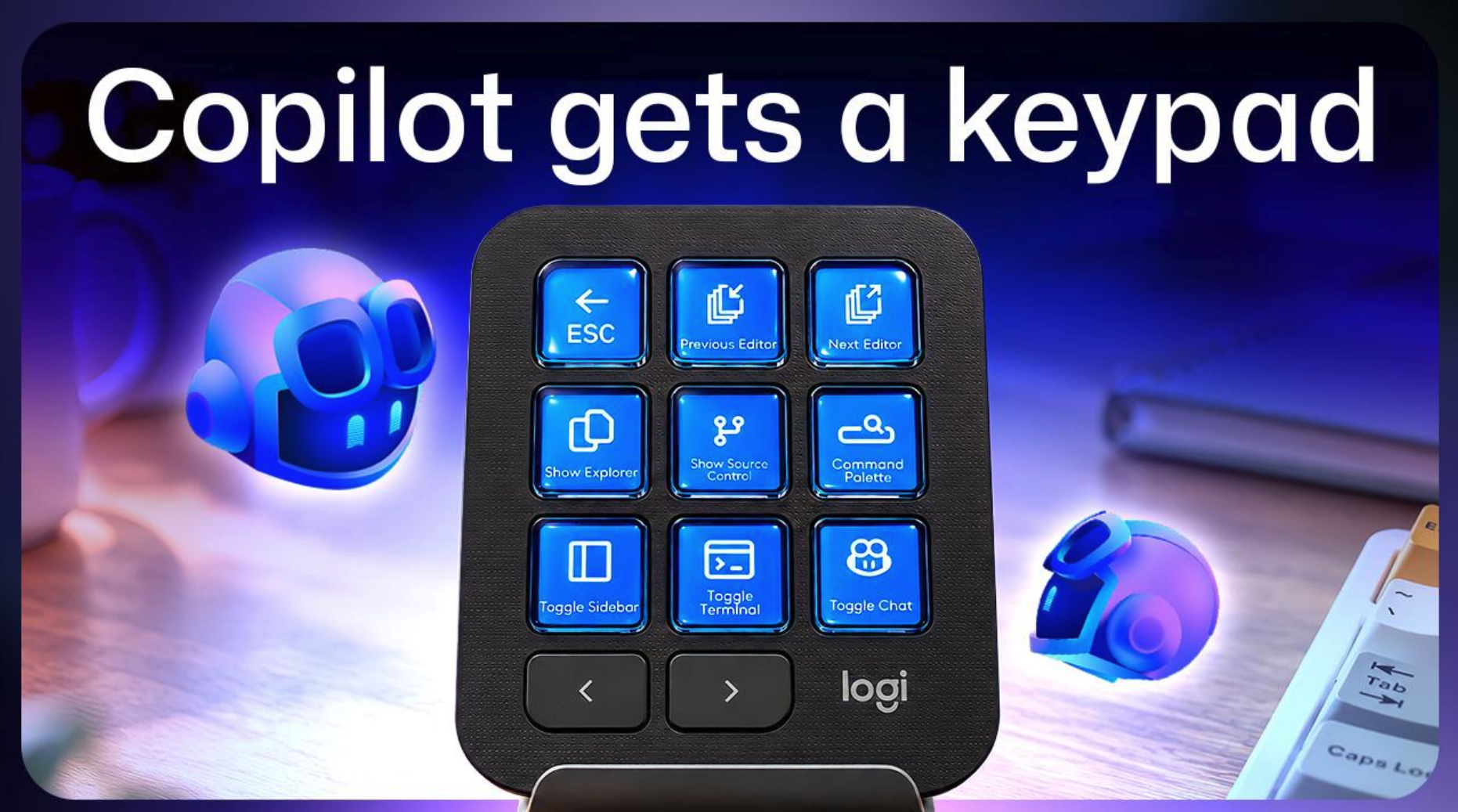
This is not a retreat from the digital, but a move toward more ergonomic, ambient control. For the past 18 months, there has been a concerted effort to explore how hardware, such as the Logitech MX Keypad, can integrate with these new development paradigms. The goal is to turn repetitive, high-friction actions into programmable inputs that are contextual to the work at hand.
In the GitHub Copilot application, for instance, a physical key can be mapped to trigger a complex, multi-step sequence, resume a coding session, or invoke a specific IDE command. The utility of such a device is measured by its ability to reduce friction. When a developer identifies an action they perform dozens of times a day—such as submitting a parameterized prompt or toggling a session—mapping that action to a physical button allows them to maintain their focus. It is about keeping the developer "in the flow," allowing them to move between voice commands, keyboard shortcuts, and physical controls without losing the context of their work.
This is not a requirement for every developer, nor is every task worthy of a dedicated button. However, when the interface is customizable, the developer can decide which actions are significant enough to warrant a dedicated shortcut. By offloading these minor interruptions to physical hardware, we return a degree of attention and cognitive bandwidth to the engineer.
The Interface Moves into the Background
The ultimate goal of this technological evolution is the invisibility of the interface. We have moved from the early days of raw, text-based commands to the graphical user interfaces of the 1990s, the connectivity of the web, and the touch-based fluidity of mobile. Now, we are entering the era of intent-based agents and ambient control.
The collaboration between GitHub and Logitech to integrate the GitHub Copilot app into the MX Keypad experience is a testament to this direction. By allowing developers to run agentic workflows while maintaining control over how they invoke and steer those agents, we are learning how to balance automation with human intuition.
There are still significant engineering hurdles to clear. We are currently in the early stages of this transition, and the industry is grappling with critical questions: How much context should an agent retain across sessions? Which autonomous tool calls are safe, and which require explicit oversight? How do we ensure that multiple agents, operating within the same repository, do not conflict or create redundant work?
The answers to these questions will define the next generation of software development tools. For now, the focus remains on building systems that understand enough context to be useful, preserve enough control to be reliable, and get out of the way enough to let us build. The objective is not to replace the human builder, but to strip away the friction that has historically plagued the development process.
For developers interested in this new paradigm, the opportunity exists to experiment with these workflows firsthand. By mapping repeated, high-friction interruptions to physical controls, engineers can begin to see exactly how these ambient interfaces impact their focus and productivity. It is a shift from the era of "speaking computer" to an era where the computer finally meets us halfway—providing the support we need to build the software that matters.