





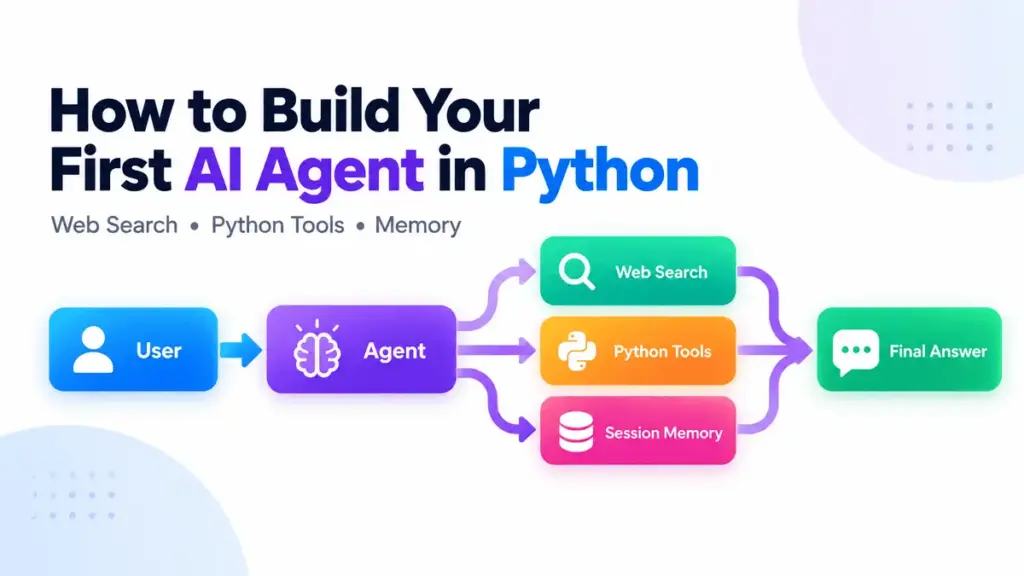
Developers looking to harness artificial intelligence beyond static prompts now have access to a streamlined development framework following the release of the OpenAI Agents SDK. Designed to simplify the creation of autonomous workflows, the new toolkit allows developers to construct intelligent agents capable of connecting to external tools, maintaining persistent conversation states, and executing multi-step operations in Python without the need to manually build custom tool-calling loops from scratch.
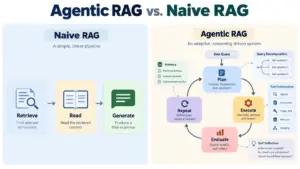
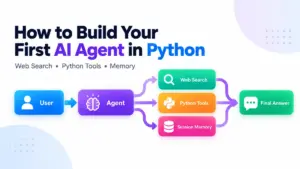
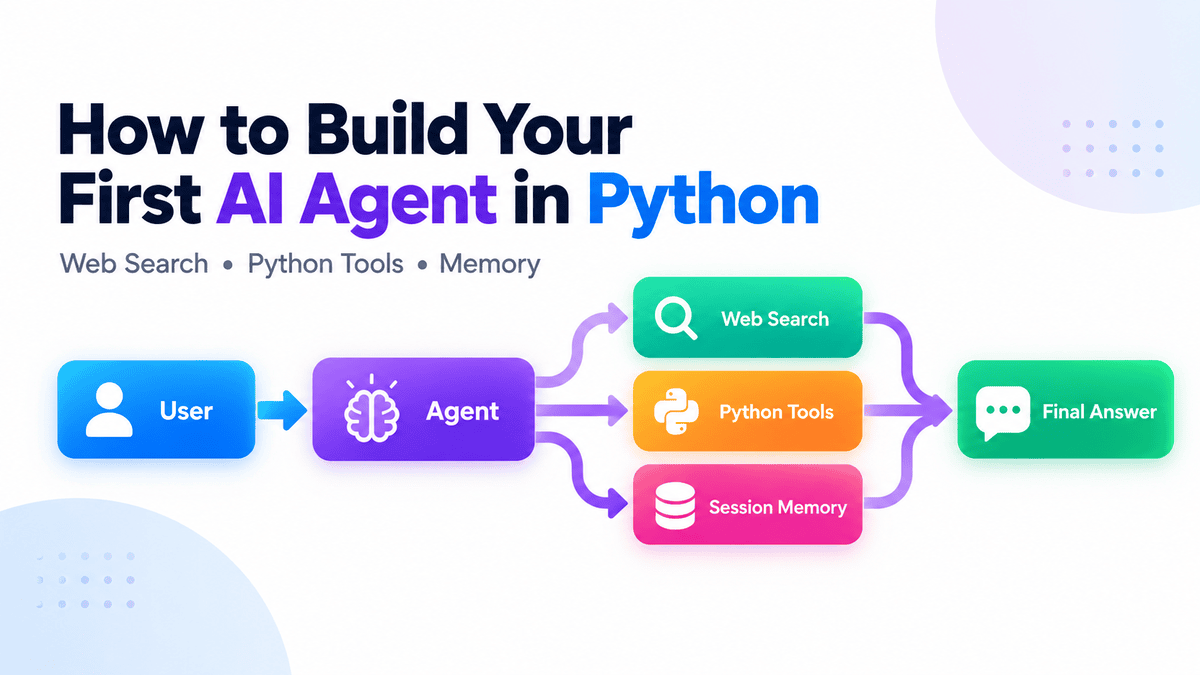
In a traditional large language model application, the interaction follows a straightforward, linear path: a user submits a prompt, the model processes the text, and a final response is generated before the process terminates. Modern AI agents, however, introduce a more dynamic execution loop. In this architecture, the user communicates with the agent, which evaluates whether external assistance is necessary. If required, the agent triggers a specific tool—such as a web search or a custom calculation function—receives the results, and continues reasoning until it produces a comprehensive final response.
The core orchestration behind this advanced functionality is managed by the Runner component within the OpenAI Agents SDK. This mechanism automates the process of dispatching requests to the underlying model, executing requested tools seamlessly, passing data back and forth, and maintaining continuity until the objective is achieved. This inherent capability to reason across multiple steps and dynamically deploy specialized functions distinguishes modern agents from conventional language model interfaces.
Setting up an environment to utilize the new SDK has been streamlined for modern Python developers. Projects can be initialized rapidly using package managers like uv or standard pip installations, with API authentication managed through standard environment variables. Once configured, developers can transition from writing basic scripts to deploying agents capable of deciding when real-time information retrieval is necessary.
By integrating hosted tools such as web search capabilities into the agent definition, developers no longer need to write custom API wrappers for routine queries. When presented with questions requiring up-to-date data, the model autonomously determines the appropriate moment to search the web, ensuring that the responses reflect the most current state of knowledge rather than relying solely on static training parameters.
Beyond general web searches, the SDK empowers developers to extend agent utility by integrating custom Python functions as callable tools. Utilizing straightforward decorators, standard functions designed for mathematical computations, data processing, or internal business logic can be transformed into tools that the model can invoke dynamically. The framework automatically parses function names, parameters, type hints, and docstrings to construct accurate tool schemas that the language model can interpret without manual JSON configuration. Clear documentation strings within the code serve a critical role, helping the model understand precisely what each custom function accomplishes and when it should be deployed in response to a user query.
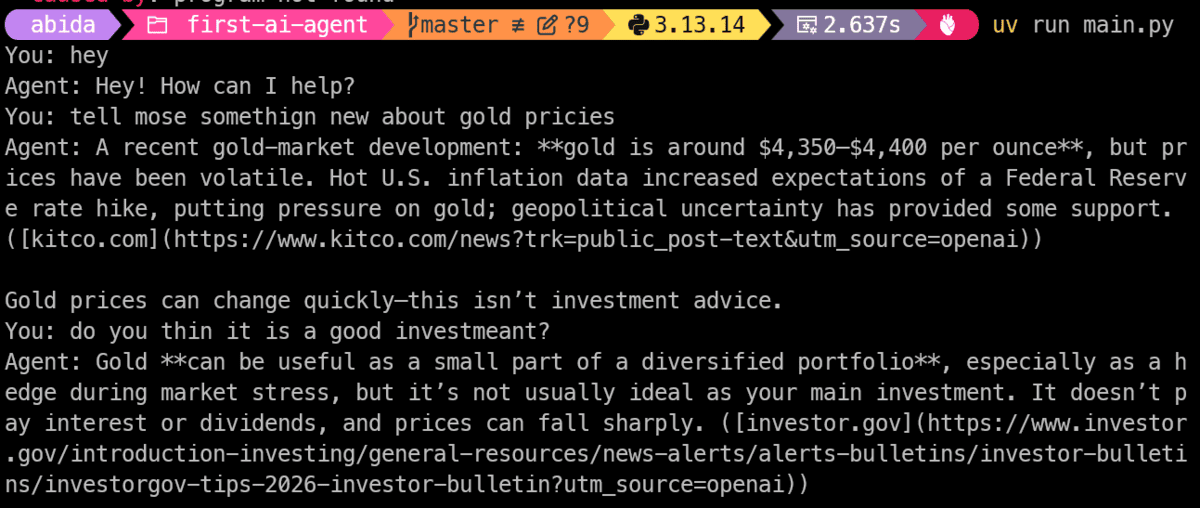
Maintaining continuity in interactions represents another critical advancement provided by the framework. Effective AI assistants require conversation memory to prevent context loss between exchanges. To address this, the SDK incorporates flexible session management systems. Developers can implement file-backed SQLite databases to preserve conversation histories across sessions, ensuring that follow-up questions regarding previous topics are interpreted correctly by the agent. For larger enterprise architectures, the SDK provides backend integration options for robust database systems including Redis, SQLAlchemy, and MongoDB, allowing persistent memory infrastructure to scale alongside growing application demands.
The integration of these components creates a cohesive ecosystem where the agent dictates the course of action, the runner manages the execution loop, and the session layer preserves historical context. Furthermore, the framework incorporates default tracing capabilities designed to simplify debugging and monitoring. Developers can inspect comprehensive traces detailing model calls, tool selections, and multi-step execution paths directly through administrative dashboards. This visibility proves particularly valuable when refining agent instructions and diagnosing unexpected tool-calling behaviors in complex production workflows.
Ultimately, the introduction of the OpenAI Agents SDK highlights a broader shift in software development toward equipping language models with actionable capabilities rather than relying exclusively on text generation. By abstracting the repetitive boilerplate logic required to manage tool execution loops and conversation states, the framework lowers the technical barrier for engineers seeking to build multi-step automated systems. As developers continue to adopt these patterns, foundational tools combined with structured execution environments provide a scalable pathway for integrating intelligent automation into everyday Python applications.