The landscape of portable computing is undergoing a significant transformation. For over a decade, Google’s ChromeOS has served as the backbone of the budget-friendly laptop market, providing a streamlined, web-centric experience that redefined how students and casual users interact with technology. However, the recent introduction of "Googlebooks"—a new tier of high-performance, Android-based hardware—has shifted the goalposts. As Google pivots toward this more integrated, hardware-conscious ecosystem, consumers are left asking a fundamental question: In a world where Googlebooks offer superior performance and deeper mobile integration, is the traditional Chromebook still a sound investment?
What Googlebooks Do That Chromebooks Can’t
The primary differentiator between the emerging Googlebook ecosystem and the established Chromebook market lies in the underlying architecture. While Chromebooks have long been praised for their simplicity, they operate on ChromeOS, a platform that manages Android applications through a containerized emulation layer. While functional, this approach often results in performance bottlenecks, stuttering, and compatibility bugs. Googlebooks, by contrast, are built upon an Android-based operating system designed to run applications natively. By shedding the emulation overhead, these devices unlock the full potential of their internal components, providing a fluid experience that feels more like a high-end mobile device than a legacy browser-based machine.
This transition to a native environment allows Googlebooks to tap directly into the Google Play Store with a level of efficiency that ChromeOS simply cannot match. Users can expect more consistent frame rates, faster load times, and more stable multitasking. However, it is worth noting that this transition is not without its caveats. Early reports indicate that the optimization gap is still being bridged; some complex, resource-heavy Android applications may still exhibit performance variability when running on Intel-based Googlebook hardware. Despite these teething issues, the promise of native execution is a massive leap forward for users who rely on mobile-first workflows.

Google’s hardware requirements for the Googlebook certification program are equally ambitious. While entry-level Chromebooks often struggle with 4GB or 8GB of RAM, the new Googlebook standard mandates a baseline of 16GB of RAM and 256GB of storage. This shift is intended to future-proof the user experience, ensuring that the device remains responsive for years to come. When paired with power-efficient mobile-first silicon, these laptops are currently delivering approximately 14 hours of battery life—a substantial improvement over the fluctuating endurance of the average Chromebook.
Perhaps the most compelling feature of the Googlebook platform is its deep synergy with the Android mobile ecosystem. By leveraging a shared OS foundation, Google has effectively created an "Apple-like" continuity experience. Owners of compatible smartphones—specifically those running Android 17 or later—can access phone applications directly on their laptop screens, mirror notifications, and sync files in real-time without the need for cumbersome manual transfers. Settings and preferences mirror automatically, creating a unified digital workspace. This level of cohesion is a stark departure from the siloed nature of traditional ChromeOS, which, while secure, often felt detached from the user’s mobile device.
The hardware build quality has also been elevated. To earn the Googlebook certification, manufacturers—including industry stalwarts like Acer, ASUS, Dell, HP, and Lenovo—must adhere to strict design guidelines. The days of flexible, cheap plastic chassis are being phased out in favor of carbon-fiber materials that offer both rigidity and a premium aesthetic. Furthermore, every Googlebook is designed with the integration of Gemini, Google’s AI suite, at the system level. This ensures that artificial intelligence is not merely an add-on, but a foundational element of the user interface, assisting with everything from content creation to file management.
Where Chromebooks Still Make Sense
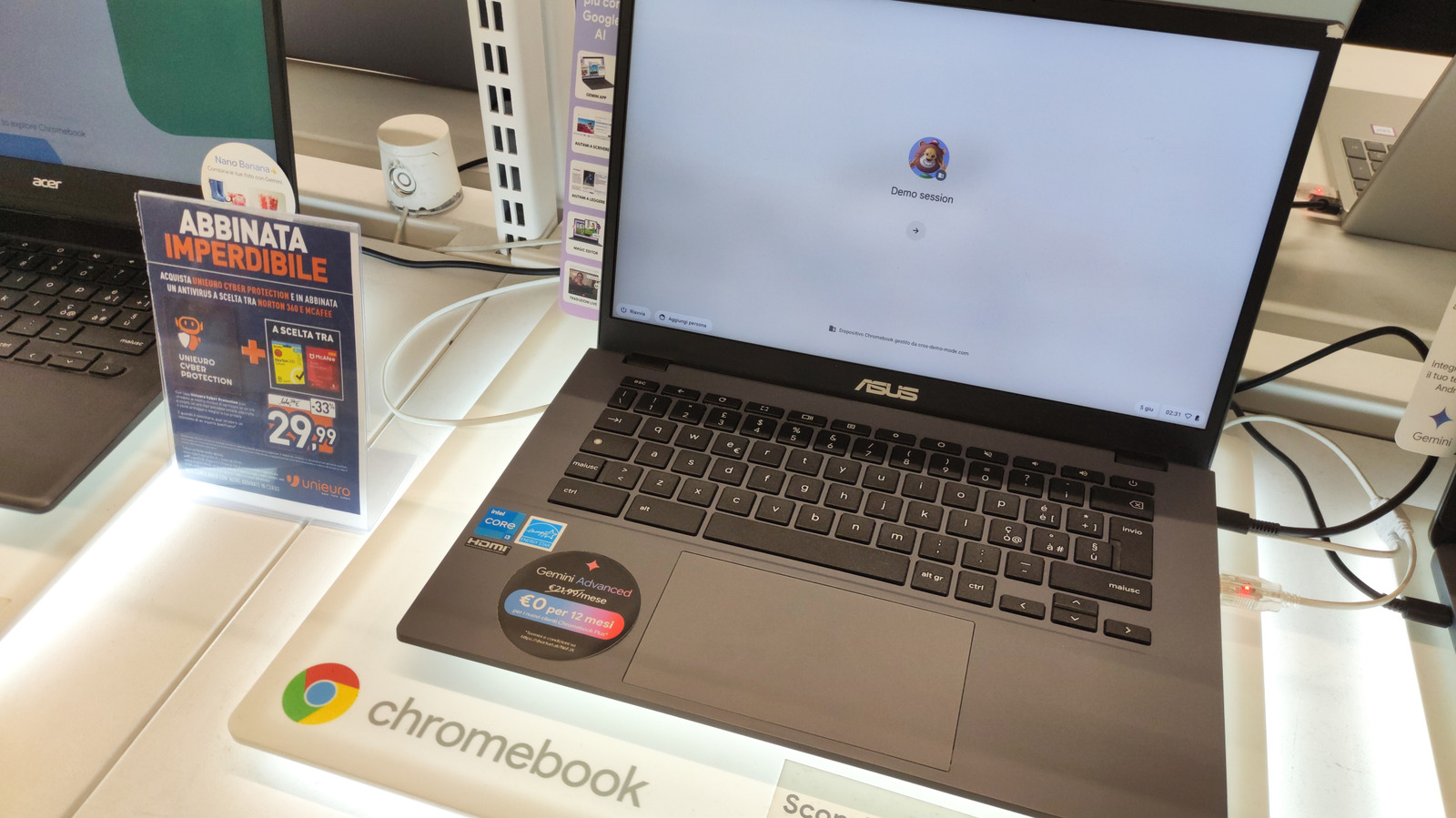
Despite the allure of the high-performance Googlebook, the traditional Chromebook remains a pillar of the market for one undeniable reason: cost. The economic divide between the two platforms is stark. Chromebook Plus models, which offer a respectable 8GB of RAM and 128GB of storage, frequently retail for under $500. For those with even more modest requirements, entry-level Chromebooks can often be found for less than $300. In contrast, the current lineup of Googlebooks begins at $899 and can scale up to $1,299. For a student, a household with a tight budget, or a business deploying a fleet of machines for simple administrative tasks, the price-to-performance ratio of a traditional Chromebook is difficult to ignore.
Determining whether to upgrade depends entirely on the intended use case. Chromebooks have thrived for years because they excel at the "light" computing tasks that occupy the majority of a user’s day: browsing the web, streaming media, and editing documents in the cloud. For these specific activities, the limited hardware of a standard Chromebook is not a disadvantage—it is a functional adequacy. If a user’s workflow does not demand the raw power required for intensive video editing or casual gaming, the premium cost of a Googlebook may simply be an unnecessary expense.
Moreover, there is the factor of platform maturity. Chromebooks have been refined over more than a decade, resulting in a stable, predictable, and highly secure environment. While Googlebooks represent the cutting edge, they are currently navigating the "growing pains" inherent to any new ecosystem. ChromeOS has a well-defined lifecycle, with support and security patches guaranteed through 2034. This long-term commitment provides a level of certainty for enterprise and educational buyers that is difficult for a nascent platform to immediately replicate. A device purchased today is not going to become obsolete overnight; it will continue to receive critical updates well into the next decade.
It would be dishonest to ignore the limitations of the Chromebook, however. The platform’s reliance on web-based apps means it lacks the native power of traditional Windows or macOS software, which can be a dealbreaker for power users. Furthermore, at the lowest end of the price spectrum, hardware quality—specifically screen resolution and processor speed—can be underwhelming, leading to a lackluster user experience that has soured some consumers on the platform entirely. These devices are tools of convenience, not performance, and they are best utilized by those who understand those boundaries.
Ultimately, the choice between a Googlebook and a Chromebook is a reflection of the evolving needs of the modern consumer. Googlebooks provide a premium, integrated, and high-performance experience that rivals the best in the industry, effectively closing the gap between mobile and desktop computing. They are built for the future, leveraging AI and native Android support to redefine what a "laptop" can do. Yet, the traditional Chromebook continues to occupy a vital niche. By prioritizing affordability, simplicity, and proven reliability, it remains the most accessible entry point into the world of personal computing. As the market continues to fragment, users will find that while the technology is changing, the fundamental need for a device that matches both their budget and their specific workflow remains the true deciding factor.