Amazon Web Services has officially announced the public preview of the AWS Well-Architected Agent, a significant leap forward in how organizations manage the health, security, and efficiency of their cloud infrastructure. By leveraging artificial intelligence to analyze complex AWS environments, the new service aims to move beyond static, manual audits, providing users with highly contextualized, actionable recommendations designed to align cloud deployments with specific business objectives.
The introduction of this agent represents a fundamental shift in the AWS Well-Architected framework. For years, the Well-Architected Tool has served as a cornerstone for cloud professionals, offering a structured way to review workloads against established best practices. However, these reviews have traditionally been manual, time-intensive processes that require a deep understanding of the environment and a significant investment of time from engineering teams. The new Well-Architected Agent automates this discovery process, functioning much like an experienced cloud architect who possesses a comprehensive view of an organization’s entire infrastructure.
By correlating utilization metrics, resource configurations, and complex application topologies, the agent evaluates environments against best practices spanning more than 65 AWS services. Rather than providing generic advice that may or may not apply to a specific architecture, the agent tailors its findings to the unique goals of the business. It identifies trade-offs across different pillars—such as security, cost, performance, and resilience—and offers concrete, ready-to-implement remediation packages. This capability is intended to drastically reduce the friction typically associated with implementing architectural improvements, allowing teams to remediate issues with confidence rather than uncertainty.
Streamlining the Path to Architectural Excellence
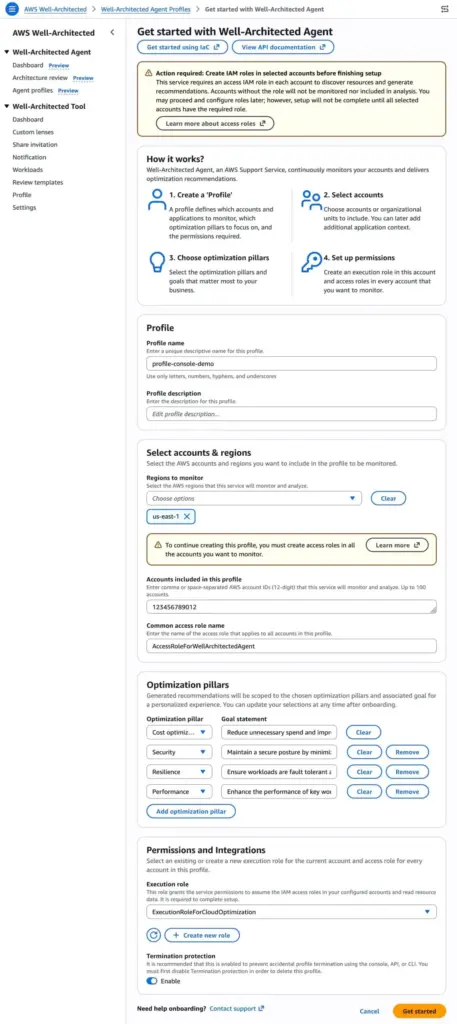
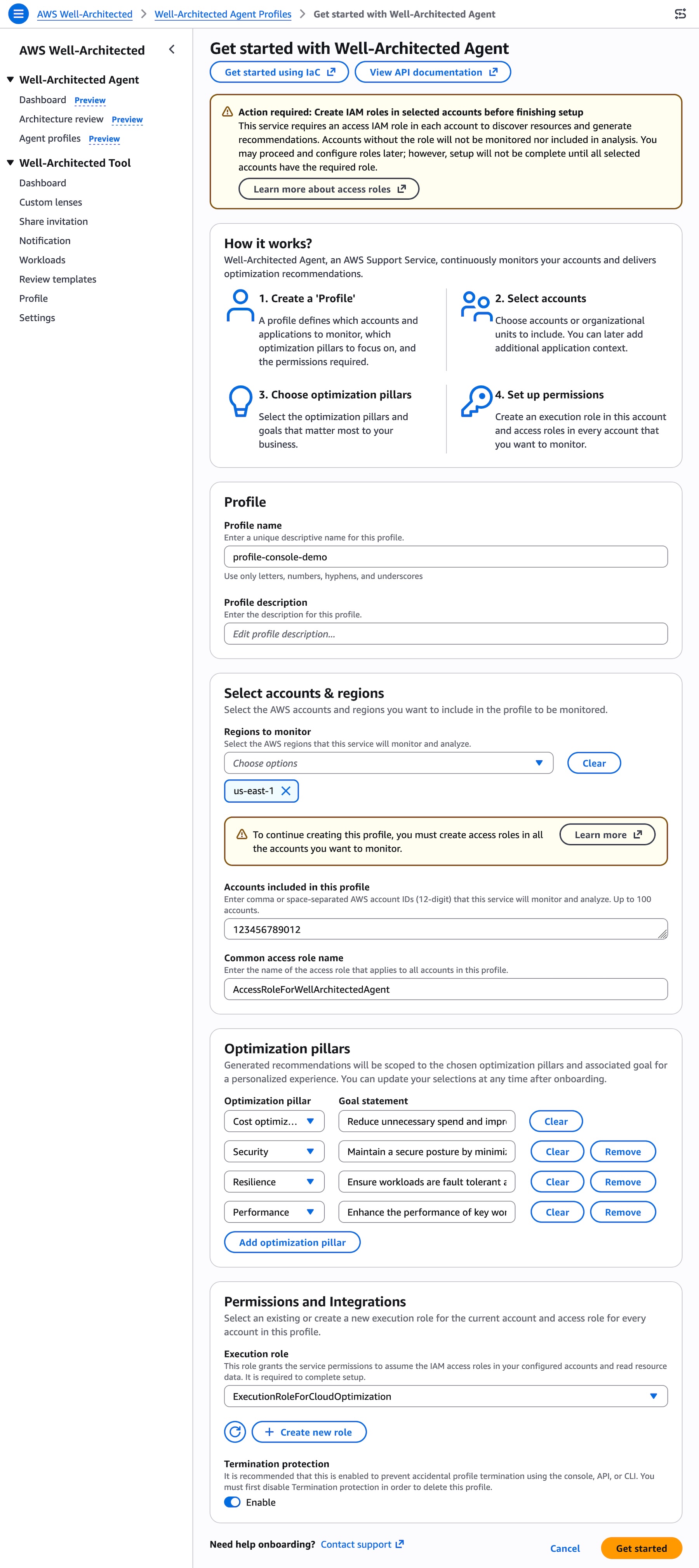
Getting started with the new service is designed to be a straightforward process within the existing AWS Well-Architected console. Users begin by establishing an agent profile, which serves as the foundational definition for the scope of the agent’s work. Within this profile, administrators can specify which AWS accounts and applications the agent is permitted to monitor and provide guidance on. This configuration phase also includes the necessary IAM role setup, which grants the agent the authority to securely access resource configurations, utilization metrics, and topology data. This ensures that the agent can perform its analysis while maintaining strict adherence to the security and access control policies of the organization.

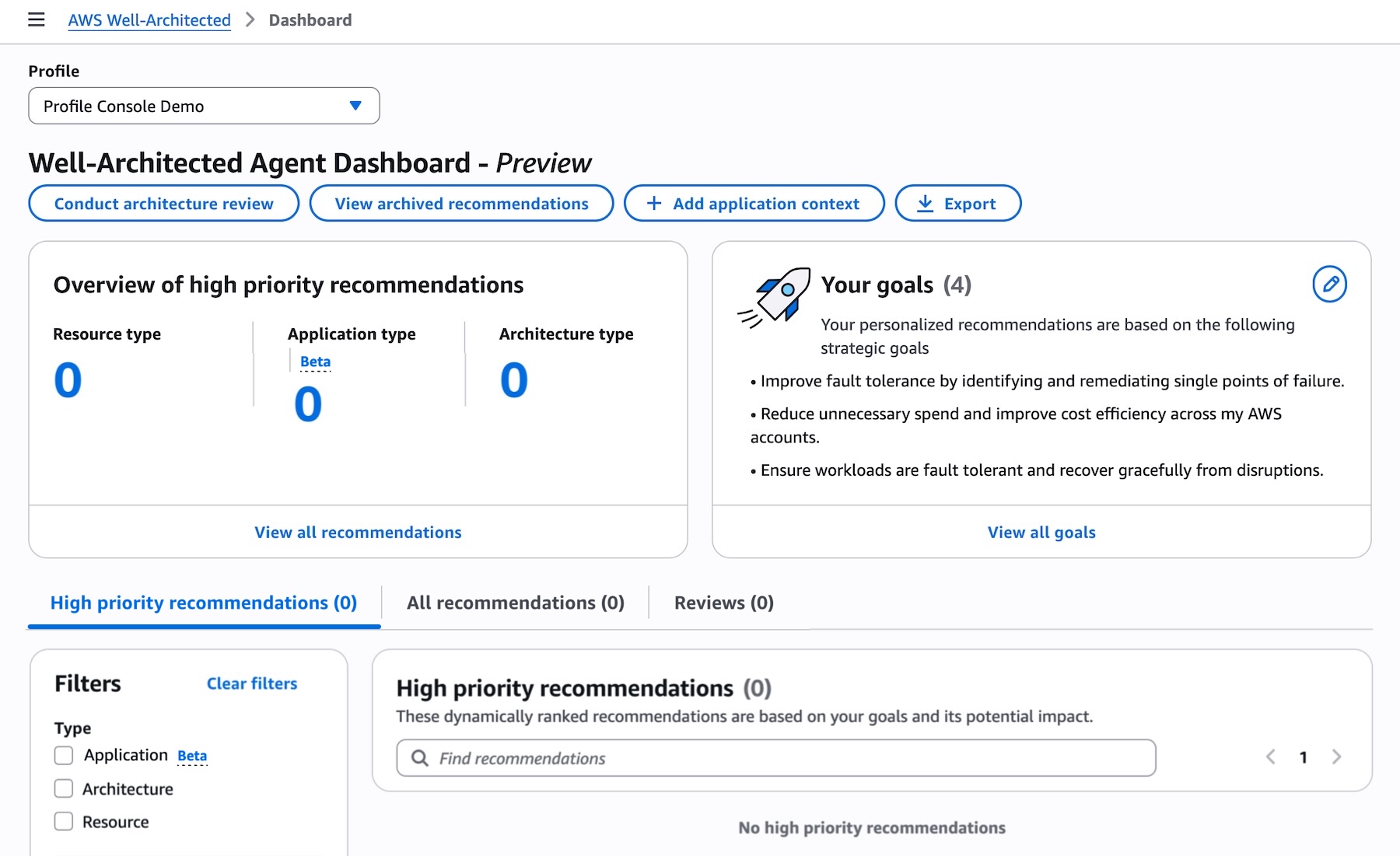
Once the profile is active, the agent begins its work, with initial resource and application recommendations typically generated within 24 hours. The flexibility of the service is a key design feature; users can select which optimization pillars are most critical to their specific business operations. Whether an organization is prioritizing aggressive cost cutting, hardening its security posture, or maximizing the resilience of its mission-critical applications, the agent can be tuned to focus its analytical power accordingly.
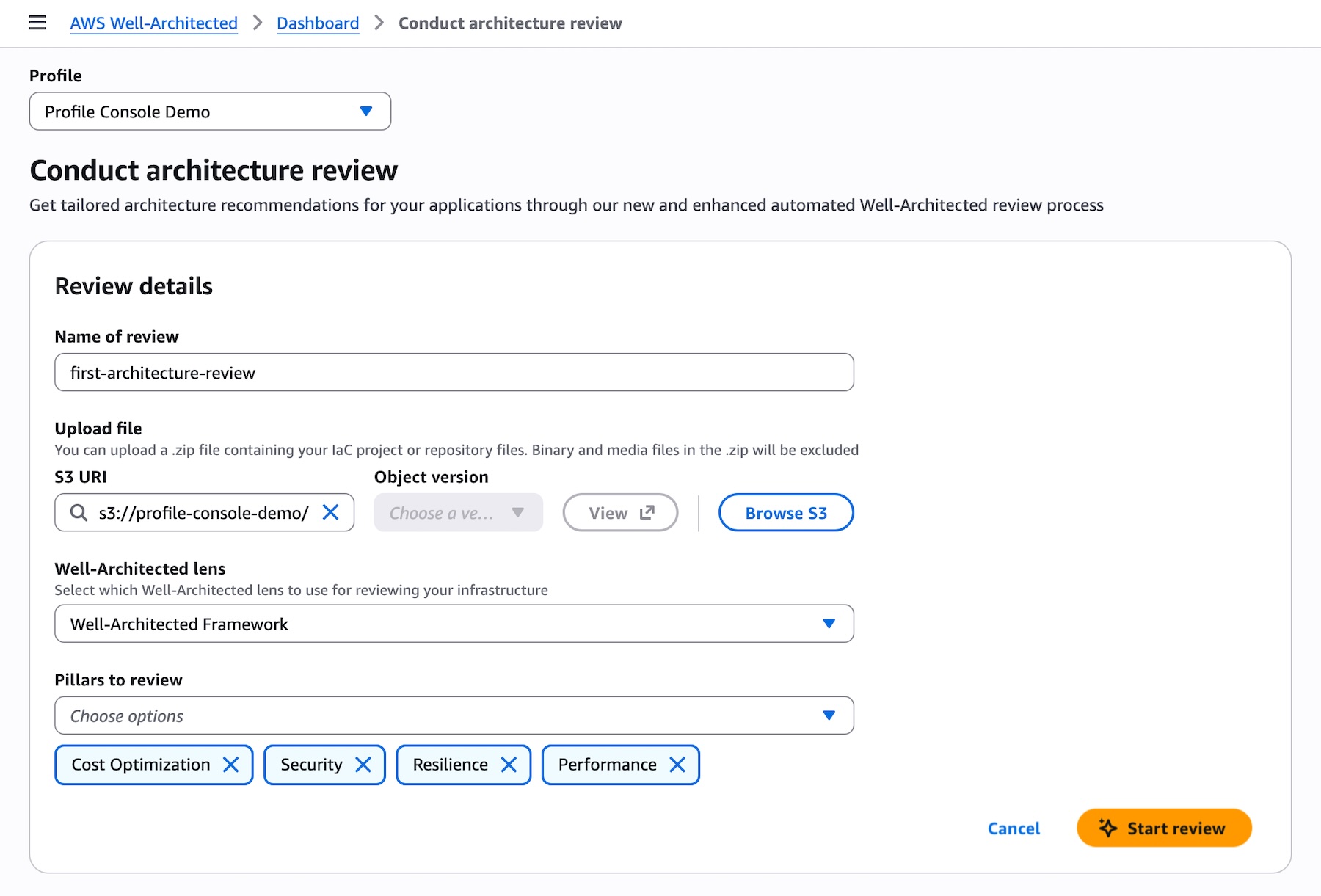
Furthermore, the agent extends its utility beyond existing workloads by offering support for pre-deployment reviews. By uploading Infrastructure as Code (IaC) projects—including those written in Terraform, AWS CloudFormation, or the AWS Cloud Development Kit (CDK)—engineers can subject their proposed infrastructure changes to the same rigorous architectural analysis as their live environments. This "shift-left" approach allows teams to catch potential misconfigurations or inefficiencies before they are even provisioned, potentially saving thousands of dollars and preventing security vulnerabilities from reaching production.
Context-Aware Remediation and Workflow Integration
A standout feature of the Well-Architected Agent is its ability to provide "automation-ready" remediation. When a recommendation is generated, it is not merely a suggestion; it is a roadmap. When a user selects a specific finding, they are presented with a detailed explanation of why the agent identified the issue, the potential impact it has on the business, and the trade-offs involved in resolving it. This level of transparency is critical, as it empowers engineers to make informed decisions rather than blindly following automated prompts.
The remediation process itself is designed to fit into a developer’s existing workflow. Users can choose to receive instructions for the console, updated IaC templates, or specific CLI commands to address the identified issues. For teams that prefer managing their infrastructure as code, the agent can generate the exact code snippets required to update existing CDK or CloudFormation templates. This allows developers to integrate the fix into their CI/CD pipelines, test the changes in a staging environment, and roll them out with minimal disruption.
For more advanced users, the service offers deep integration through API access. By utilizing the AWS MCP Server and various plugins, engineering teams can incorporate these recommendations directly into their preferred AI coding tools and development environments. This programmability enables organizations to treat cloud architecture reviews as a continuous, automated component of their software development lifecycle, ensuring that the cloud environment evolves in tandem with the code it hosts.
A Complementary Evolution of Cloud Management
Despite the advanced capabilities of the new agent, AWS emphasizes that it does not replace the traditional AWS Well-Architected Tool. Many organizations have built robust, specialized processes around the existing tool, particularly those that utilize user-defined lenses to measure workloads against highly specific, industry-regulated, or internal best practices. The new agent is intended to augment these efforts by handling the heavy lifting of discovery and data analysis, while the traditional tool remains available for deep-dive, qualitative reviews where human expertise and business-specific nuances are paramount.
The introduction of the Well-Architected Agent arrives at a time when cloud environments are becoming increasingly complex. As businesses expand their footprints across multiple accounts and regions, maintaining visibility and ensuring adherence to best practices becomes a monumental task. By automating the identification of architectural gaps and providing clear, executable remediation steps, AWS is positioning the agent as a vital tool for organizations looking to scale their cloud presence without compromising on quality or efficiency.
Currently, the public preview of the AWS Well-Architected Agent is available in the US East (N. Virginia), US East (Ohio), and US West (Oregon) regions. However, the service is designed to be inclusive, allowing users to onboard workloads from any AWS commercial region. As the service is delivered through AWS Support, it is available to all AWS customers who maintain an active AWS Support plan. As the preview progresses, AWS encourages users to explore the service within the Well-Architected console and provide feedback through their standard support channels, ensuring that the final, general availability release meets the diverse needs of the global AWS community.