








The United Kingdom has officially leveled a significant blow against the global underground financial infrastructure, issuing sweeping economic sanctions against the cryptocurrency platform Cryptomus. The move, enacted on October 8, 2026, marks a pivotal escalation in the international effort to disrupt a sophisticated, chameleonic network that experts identify as a primary artery for the Russian wartime economy. Beyond facilitating basic transactions, Cryptomus has served as a critical nexus for ransomware syndicates, narcotics traffickers, darknet marketplaces, and fraud operations, all while providing the necessary machinery to help Russian entities circumvent long-standing international financial restrictions.
The sanctions represent a stark shift in the legal landscape for platforms that operate in the shadows of the digital asset space. By placing Cryptomus on its sanctions list, the U.K. has effectively frozen any assets the company may hold within British financial institutions and prohibited all British citizens and companies from engaging in business with the platform, whether through digital assets or traditional financial services.
The reach of these sanctions is broad, intentionally targeting not just the primary entity but the surrounding ecosystem that supports it. In addition to Cryptomus—which has operated under various aliases including Certa Payments and Xeltox Enterprises—the U.K. has also designated the virtual payment platforms VexPay, TokenSpot, and the Tsunami Payments service. These platforms have functioned as interconnected nodes, collectively providing a resilient payment infrastructure that benefits the Russian government and its sanctioned financial institutions.

A Legacy of Deception and Evasion
The rise and longevity of Cryptomus have been characterized by a persistent strategy of rebranding and regulatory avoidance. Since its emergence in 2022, the platform has consistently shifted its identity to distance itself from mounting legal scrutiny. This pattern of behavior reached a breaking point in late 2025, when the Canadian government imposed a record-breaking CAD $176 million fine against the platform for flagrant violations of anti-money laundering (AML) protocols.
Rather than complying with international standards or ceasing its operations, the platform responded by attempting to outpace regulators. Shortly after the Canadian fine, the organization launched a parallel service dubbed "Heleket." This rebranding was a calculated move to continue processing high volumes of transactions without the burden of "know your customer" (KYC) requirements, effectively maintaining a "no-questions-asked" gateway for criminal actors. Even as Heleket’s support agents on Telegram publicly denied any affiliation with Cryptomus, the operational parallels and the timing of the transition left little doubt among investigators regarding the true nature of the service.

The effectiveness of these tactics, however, has been challenged by the recent U.K. intervention. Blockchain analysts, including Richard Sanders, have noted that while the Canadian fine was a significant symbolic and financial gesture, it ultimately proved unenforceable. "A fine doesn’t stop a cryptocurrency payment processor from processing payments," Sanders observed in a recent analysis. "Sanctions kill the operation. The distinction matters." By targeting the platform’s ability to interface with the global financial system, the U.K. has moved beyond mere monetary penalties to a strategy of operational strangulation.
Quantifying the Illicit Flow
The scale of the activity funneled through these platforms is staggering. According to investigations by the blockchain intelligence firm TRM Labs, Cryptomus had processed more than $7 billion in transactions between its inception in 2022 and early 2026. This vast volume of capital was not limited to standard commercial trade; it included extensive flows associated with the sale of child sexual abuse material, the financing of international terrorist networks, and large-scale human trafficking operations.
Data from the blockchain analysis firm Chainalysis further underscores the systemic role these services play in supporting Russia’s wartime economy. In an October 8 blog post following the U.K. announcement, Chainalysis highlighted that Cryptomus and its sibling service, Heleket, had evolved into major hubs for illicit activity. Their research indicates that these platforms consistently attracted higher volumes of illicit funds than many of the traditional "mixers" typically monitored by law enforcement. By late 2025, the number of illicit counterparties interacting with these platforms had surged to over 900 in a single month, demonstrating a rapid expansion of their role as the preferred payment processor for cybercrime services.
The impact of the sanctions was immediate. On the day the U.K. announcement was made, the Cryptomus support bot on Telegram—previously a hub of activity for users looking to move funds—suddenly informed users that the platform was unable to process transactions. This breakdown suggests that the sanctions have succeeded in disrupting the platform’s ability to maintain its technical and financial bridges to the broader digital economy.
The Geography of Phony Regulation
One of the most intriguing aspects of the Cryptomus saga is the bizarre, often fictitious, regulatory framework the company used to project an air of legitimacy. Investigations into the platform’s corporate structure have revealed a labyrinthine web of "fake" financial institutions, often tied to a non-sovereign or disputed territory.

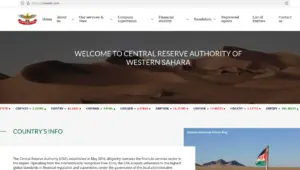
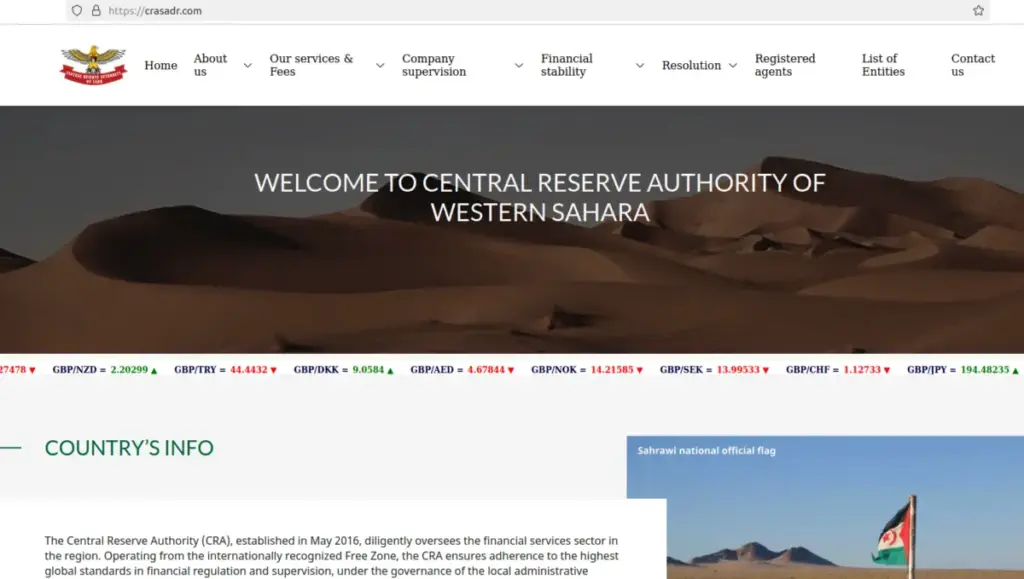
As early as December 2024, reporting revealed that the sole shareholder of Certa Payments—the parent company of Cryptomus—was a 25-year-old Ukrainian woman who simultaneously managed a host of other firms. Among these was the "WS Management and Advisory Corporation," an entity that marketed itself as a regulatory body overseeing licenses for cryptocurrency, foreign exchange, and online gaming businesses incorporated in the Western Sahara.
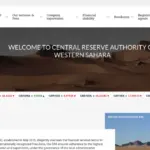
The website for this self-styled regulator, crasadr.com, appeared to provide official licenses and compliance oversight for various platforms, including those operated by the same parent company. Further technical analysis showed that one of the former domains used by Certa Payments shared a server with a dozen other suspicious domains, including a site for the "Central Reserve Authority of the Western Sahara." This elaborate performance of regulatory compliance was designed to provide a veneer of legality to potential clients, masking the fact that the entire structure was built on a foundation of sovereign ambiguity and administrative fiction.
A New Standard for International Cooperation
The U.K.’s move is being watched closely by international observers, particularly for its implications for the "Five Eyes" intelligence-sharing alliance. Richard Sanders pointed out that this is the first known instance of a Five Eyes country sanctioning a cryptocurrency operation that is incorporated within the jurisdiction of another Five Eyes member. This sets a significant precedent for cross-border enforcement, signaling that members of the alliance will no longer tolerate the exploitation of their regulatory frameworks by platforms that facilitate global crime.
The situation remains fluid. While the sanctions have forced a temporary, if not permanent, cessation of operations for Cryptomus and its related entities, the history of these platforms suggests a high degree of adaptability. Whether the principals behind the operation attempt yet another migration to a different jurisdiction or service name remains to be seen. However, the U.K. action has significantly raised the cost of entry for such illicit enterprises, effectively closing off major corridors of the financial system and complicating the ability of criminal actors to convert their digital spoils into usable, spendable capital within legitimate banks.
As the digital landscape continues to evolve, the case of Cryptomus serves as a stark reminder of the intersection between decentralized finance and state-sponsored illicit activity. By dismantling the infrastructure that enabled these operations, regulators are beginning to reclaim the digital space from those who have long treated it as a lawless frontier.