









In a significant move to streamline cloud governance and operational excellence, Amazon Web Services (AWS) has announced the public preview of the AWS Well-Architected Agent. This new AI-powered service is designed to fundamentally change how organizations manage their cloud environments by providing deep, contextual insights into infrastructure performance, cost efficiency, security, and resilience. By moving beyond static checklists and manual audits, the agent acts as an intelligent partner for cloud architects, offering actionable, environment-specific recommendations that help teams align their technical workloads with their broader business objectives.
For years, the AWS Well-Architected Framework has served as the gold standard for cloud design, providing a set of best practices for building secure, high-performing, and cost-effective systems. However, implementing these principles across complex, large-scale environments has historically required significant manual effort. The new Well-Architected Agent seeks to bridge this gap by automating the analysis process. By correlating utilization metrics, resource configurations, and application topologies across more than 65 AWS services, the agent mirrors the analytical approach of a seasoned cloud architect, identifying optimization opportunities that might otherwise go unnoticed in rapidly evolving cloud environments.
The power of this new service lies in its ability to deliver context-aware recommendations. Rather than providing generic advice, the agent analyzes the unique goals and constraints of a user’s specific business. For instance, if an organization prioritizes cost reduction for a specific development environment while emphasizing high availability for a production workload, the agent adjusts its analysis accordingly. It assesses the infrastructure against the Well-Architected best practices and generates implementation packages that include not just the "what," but also the "how," providing users with ready-to-implement fixes that save time and reduce the likelihood of human error.

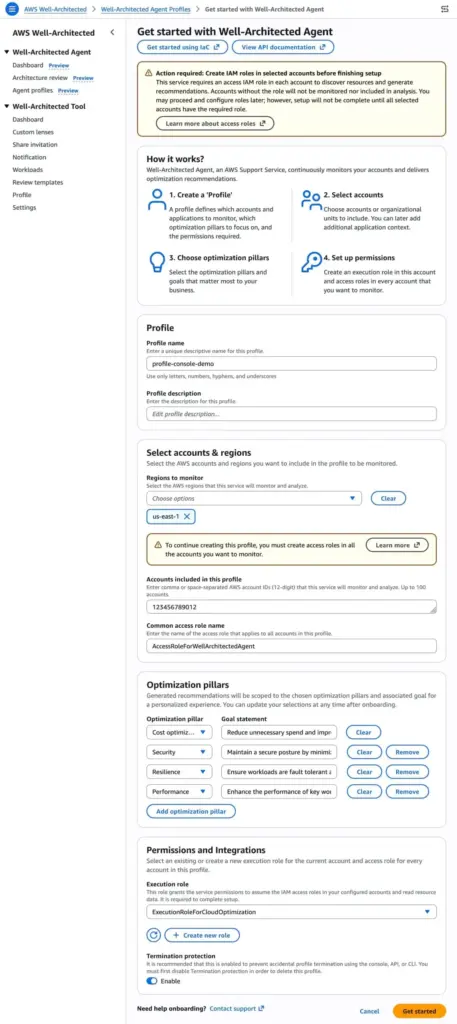
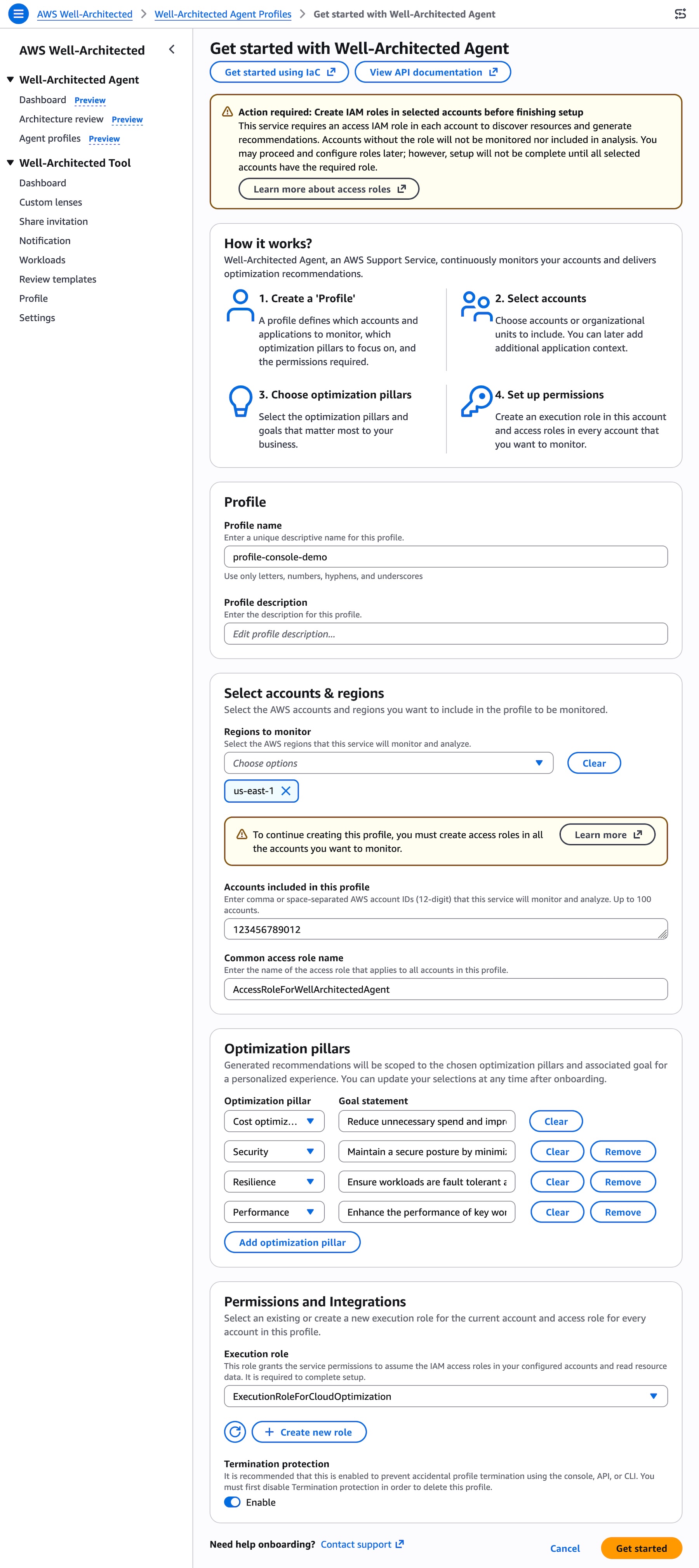
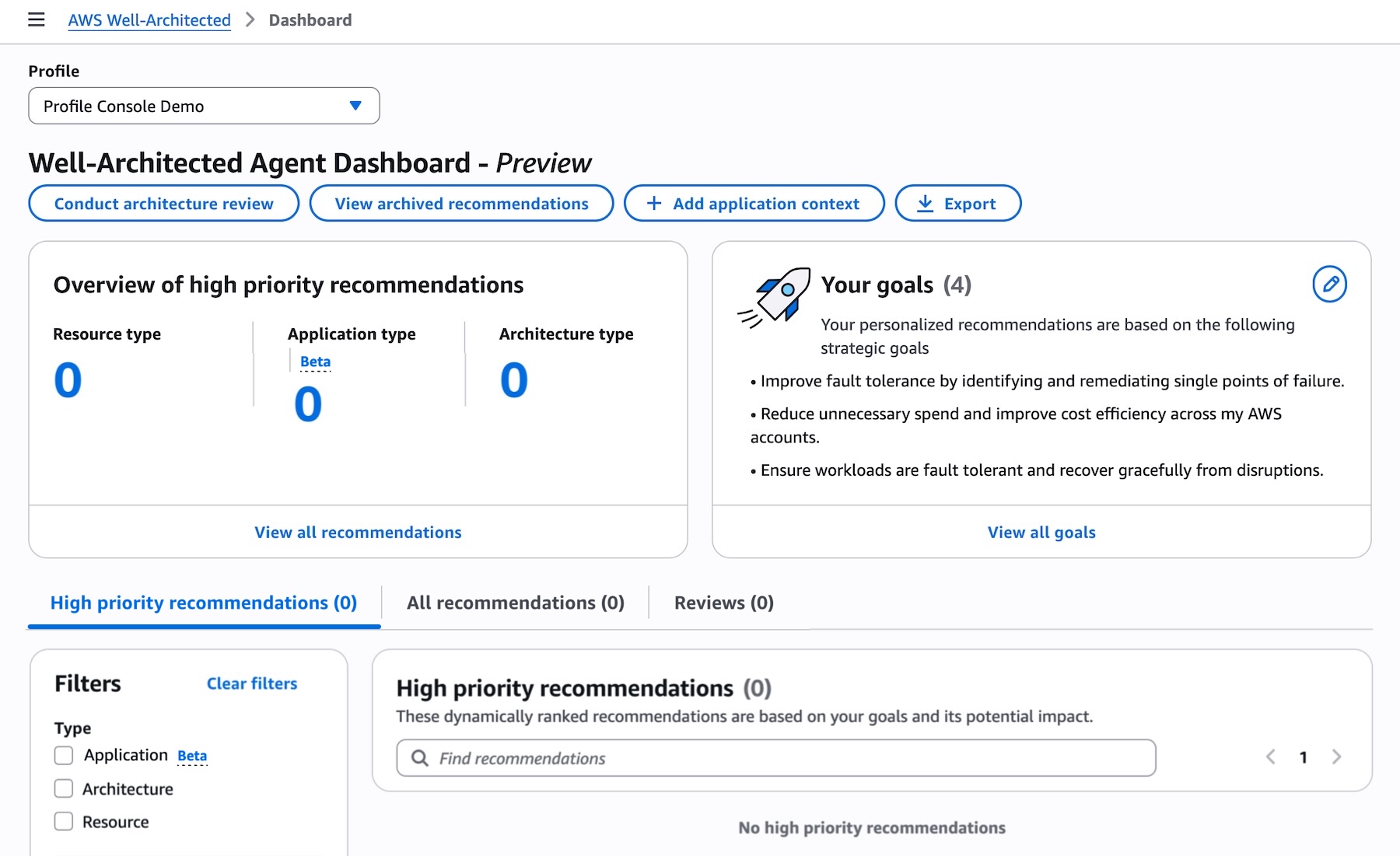
To begin utilizing the service, users start by creating an agent profile within the AWS Well-Architected console. This profile acts as the control center, where administrators define the scope of the agent’s reach. By specifying which AWS accounts and applications should be monitored, users maintain granular control over their environment. The setup process involves defining the optimization pillars—such as cost, performance, security, and resilience—that are most critical to the business. Once the necessary IAM roles are provisioned to grant the agent read access to resource configurations and utilization metrics, the system begins its work. Within 24 hours of profile creation, the agent produces its first set of prioritized recommendations, providing a foundation for data-driven architectural improvements.

Beyond live environment monitoring, the AWS Well-Architected Agent introduces robust capabilities for pre-deployment validation. Recognizing that the best time to optimize an architecture is before it is ever deployed, AWS has enabled users to upload Infrastructure as Code (IaC) projects—including Terraform, AWS CloudFormation, and AWS Cloud Development Kit (CDK)—directly to the dashboard. By analyzing these templates, the agent can flag potential issues or optimization opportunities before resources are provisioned in the cloud. This shift-left approach is designed to prevent technical debt from accumulating at the source, allowing developers to integrate best practices into their existing CI/CD pipelines seamlessly.
The utility of the agent extends to the remediation phase, which is often the most time-consuming aspect of architectural reviews. When the agent identifies a finding, it doesn’t just point out the problem; it provides the pathway to a solution. Through the console, users can access detailed insights that explain the rationale behind a recommendation, including the potential impacts and trade-offs of implementing a change. This is particularly valuable for complex environments where a change in one pillar, such as security, might have unforeseen consequences for another, such as performance. By highlighting these trade-offs, the agent empowers teams to make informed decisions that align with their overall business strategy.
When it comes time to implement a fix, the agent offers multiple paths, including updated IaC templates, CLI commands, and console-based instructions. The ability to receive updated code snippets directly—such as a specific CDK function that can be copied and pasted into a codebase—dramatically accelerates the remediation lifecycle. For organizations that prefer to manage their workflows programmatically, AWS has also introduced support for the AWS MCP Server and various plugins, allowing the agent to integrate directly into AI-powered coding tools. This integration enables developers to interact with the agent through their preferred IDEs, searching documentation and pulling recommendations without ever leaving their development environment.
While the new agent marks a leap forward in automation, it is designed to work in tandem with the existing AWS Well-Architected Tool. Organizations that have already invested in custom lenses and internal best practices can continue to use the Well-Architected Tool to maintain their specific governance standards. The new agent acts as a force multiplier, automating the heavy lifting of data analysis while allowing teams to retain the flexibility to customize their architectural reviews to meet highly specialized industry or internal requirements.
The public preview of the AWS Well-Architected Agent is currently available in the US East (N. Virginia), US East (Ohio), and US West (Oregon) regions. While these regions serve as the host for the agent’s intelligence, customers can onboard workloads from any commercial AWS region, making the tool accessible to global enterprises. The service is provided through AWS Support and is available to customers with an active AWS Support plan, underscoring AWS’s commitment to providing high-touch, expert-level assistance to its users.
As cloud environments grow in complexity, the challenge of maintaining architectural integrity becomes increasingly difficult. By automating the identification, analysis, and remediation of architectural inefficiencies, the AWS Well-Architected Agent addresses a critical pain point for cloud operations teams. It transforms the practice of cloud governance from a reactive, periodic audit process into a continuous, proactive cycle of optimization. As the service moves through its public preview, AWS expects to gather further feedback from the community, continuing to refine the agent’s ability to provide high-fidelity, actionable insights that help customers get the most out of their cloud investments. For those looking to improve the security, cost-efficiency, and performance of their AWS workloads, the agent offers a clear, scalable path toward achieving a more robust and efficient cloud architecture.