











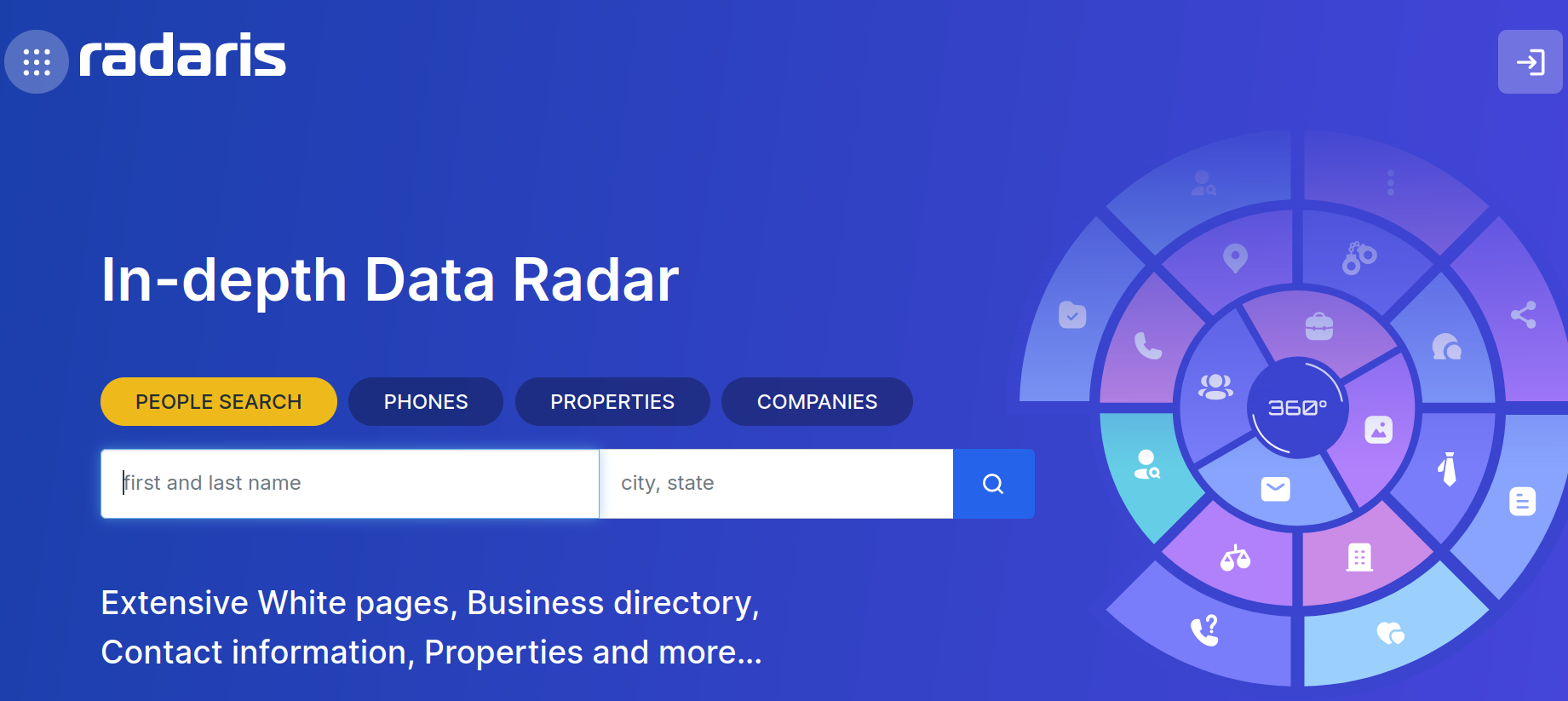
The shadowy world of consumer data brokers—often characterized by aggressive data harvesting and a persistent refusal to honor privacy requests—has faced a significant legal reckoning. Radaris.com, a prominent people-search platform long notorious for ignoring requests to scrub personal information, has been stripped of its domain name. In a landmark decision, a judge ordered the transfer of Radaris.com and more than a dozen associated data broker domains to the plaintiffs, following a pattern of obstruction, legal maneuvering, and repeated failures to comply with New Jersey’s stringent privacy protections for public officials.
This legal victory centers on "Daniel’s Law," a New Jersey statute enacted in the wake of a tragic incident involving the family of a federal judge. The law was designed to protect state law enforcement officials, government personnel, judges, and their families by mandating the removal of their personal information from commercial data brokers. Critically, the statute provides for significant financial penalties—$1,000 per violation—for companies that ignore valid removal requests.
A Legacy of Obstruction
The litigation, initiated in February 2024 by Atlas Data Privacy Corp, sought to hold Radaris accountable for its persistent disregard of these privacy mandates. The process, however, proved to be an arduous exercise in legal attrition. Radaris and its legal representatives, including attorney Val Gurvits of the Boston Law Group, employed what plaintiffs described as a "tried-and-true playbook" of delay and obfuscation. By waiting until the final moments to respond to court deadlines and consistently contesting the legal standing of the various entities behind the websites, the operators of Radaris effectively stalled the litigation for months.

Matt Adkisson, president and CEO of Atlas, characterized the defense strategy as an "island-hopping" phase. As pressure mounted in New Jersey courts, the corporate identity behind Radaris seemed to shift constantly, with new entities emerging from jurisdictions such as the Marshall Islands, the British Virgin Islands, and the Seychelles. This shell game created a revolving door of liability, where defense attorneys would argue that the entity currently being sued was not the proper party, only for that entity to be discarded in favor of a new, equally opaque corporation as a judgment neared.
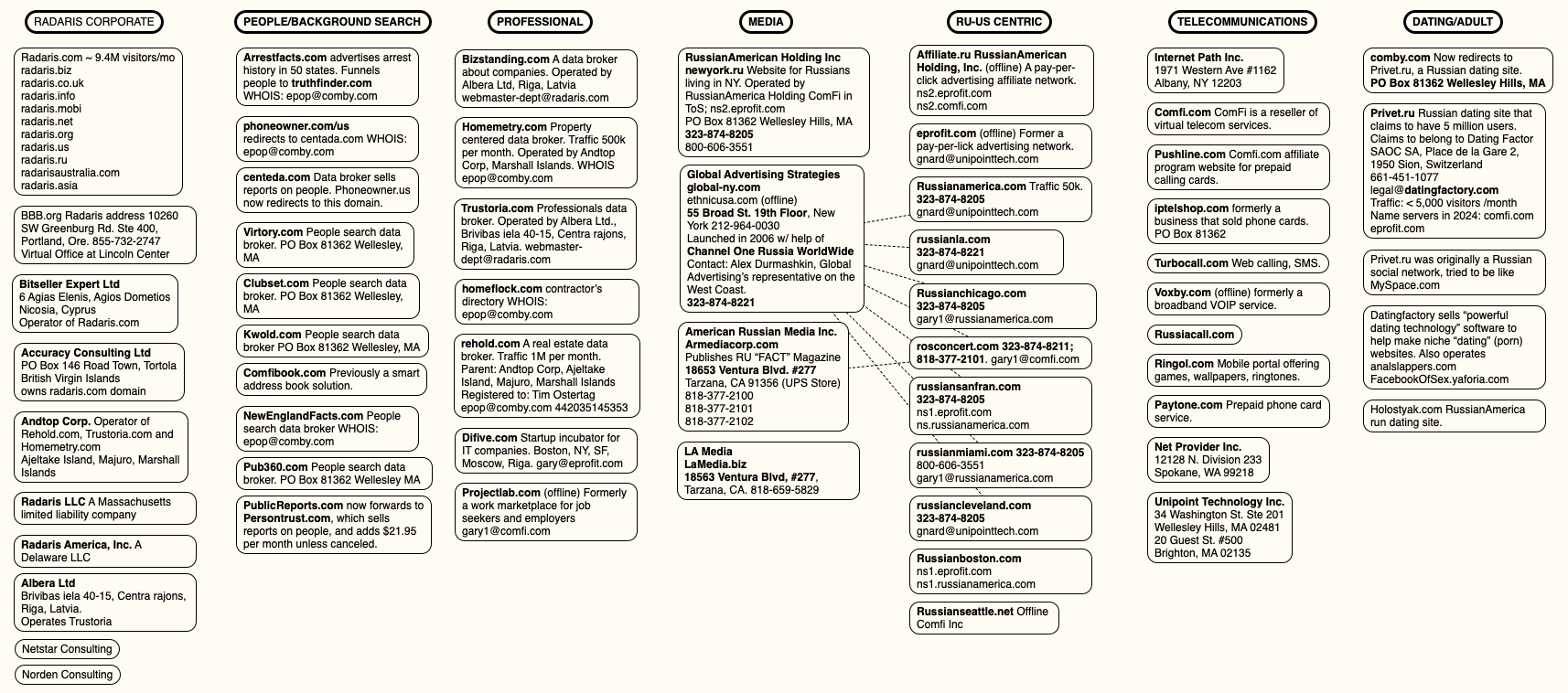
The complexity of these corporate structures is not merely coincidental. An investigation by Atlas, bolstered by thousands of internal emails and documents obtained during discovery, revealed that the dozens of "independent" companies behind these sites—including names like Bitseller Expert Limited, Andtop Company, and various "Solutions" and "Group" entities—were all managed by the same small group of individuals, shared common financial infrastructure, and operated from a unified virtual office.
The Lubarsky Connection and the "Gary Norden" Ruse
The true architecture of the Radaris empire was brought into sharper focus in early 2024, when reporting by KrebsOnSecurity identified the co-founders as Igor and Dmitry Lubarsky. The Russian-born brothers, based in Massachusetts, have presided over a sprawling network of people-search companies, Russian-language dating services, and various affiliate programs.
The response from the Lubarsky camp was swift and aggressive. Following the initial exposé, attorneys for the brothers threatened defamation litigation, demanding the removal of the article and a formal apology. They claimed the reporting was factually incorrect, asserting that the true ownership resided with individuals in Ukraine. However, as the legal battle progressed, the facade began to crumble.
Perhaps most damning was the revelation that the Radaris operation had, for years, utilized a fictitious CEO named "Gary Norden." When confronted in court, their attorney, Val Gurvits, conceded that the identity was a fabrication. This pseudonym was not merely an internal convenience; it was used to provide a sense of legitimacy in press releases and to solicit capital from potential investors, masking the actual control exerted by the Lubarsky brothers.

The Costs of Non-Compliance
The financial scale of these operations is significant. According to data obtained by Atlas, Radaris.com alone generated approximately $42,000 in monthly revenue. Sister sites, such as Veripages.com, brought in roughly $45,000 monthly, largely through partnerships with marketing and advertising firms like the Lifetime Value Company. Furthermore, the documents showed that the Radaris network maintained lucrative partnerships with companies like Onerep—a firm that markets itself as a privacy solution, effectively creating a cycle where the same actors profit from both the exposure of personal data and the "cure" of removing it.
For the plaintiffs, the goal was never just financial recovery, which remains difficult when dealing with dispersed, foreign-based entities. The primary objective was the protection of public officials. Raj Parikh, a partner at PEM Law and the lead on the Daniel’s Law litigation for Atlas, emphasized that the firm was prepared for a long, resource-intensive fight. "In the past, they won by attrition," Parikh noted. "Plaintiffs’ attorneys tired of the procedural games and just gave up. That strategy worked for a decade, and it probably would have worked in this case too. But we were acutely aware of the threat this website posed to law enforcement officers and other public officials in New Jersey."
On August 26, the New Jersey court determined that the defendants had been afforded ample opportunity to defend themselves and had failed to do so. The resulting default judgment led to the transfer of the domain name to Atlas. Currently, attempting to access Radaris.com results in a notice from Atlas regarding the domain transfer, effectively shuttering the platform’s ability to serve as a hub for personal dossiers.
Constitutional Challenges and the Privacy Landscape
Despite this victory, the broader legal battle is far from over. The data broker industry is currently mounting a massive, coordinated constitutional challenge to Daniel’s Law. Approximately 150 lawsuits initiated by Atlas have seen at least 70 moved to federal court, where the industry argues that the New Jersey statute is overly broad and violates First Amendment protections regarding the publication of public records.
The outcome of these challenges, likely headed toward the U.S. Supreme Court, carries immense weight for the future of digital privacy in the United States. While at least 14 other states have adopted legislation inspired by Daniel’s Law, the effectiveness of these measures remains under threat. In August 2025, a federal district court ruled that West Virginia’s version of the law was facially unconstitutional, citing First Amendment concerns.
Privacy expert Justin Sherman, author of the upcoming book The Middlemen, views the situation as a systemic failure of federal oversight. "These days at the federal level, add in the intense amount of lobbying against these laws from social media companies, big tech, cryptocurrency firms, and now AI proponents in the mix who claim that limiting their data scraping is somehow going to collapse the whole U.S. economy," Sherman explained.
The core of the issue, according to experts, is the categorical exemption of "public" or "government" records from most privacy legislation. This creates a loophole that allows companies to aggregate and monetize information from marriage certificates, property filings, court documents, and motor vehicle records with little restriction. As seen in the recent breach at IDScan.net—which exposed the driver’s license data of 153 million Americans—the lack of federal safeguards around how this data is stored and shared creates a constant, high-level risk of identity theft and surveillance.
For now, the transfer of Radaris.com serves as a stark reminder of the potential consequences for those who ignore privacy statutes in pursuit of profit. Yet, as the legal industry and consumer advocates prepare for a protracted battle in the higher courts, the fundamental question remains: whether current legislation can effectively protect individual privacy in an era where data harvesting has become the bedrock of the modern digital economy. As Sherman noted, the need for comprehensive federal action has been clear for years, yet the path forward remains obstructed by the very interests that thrive on the current, largely unregulated status quo.