










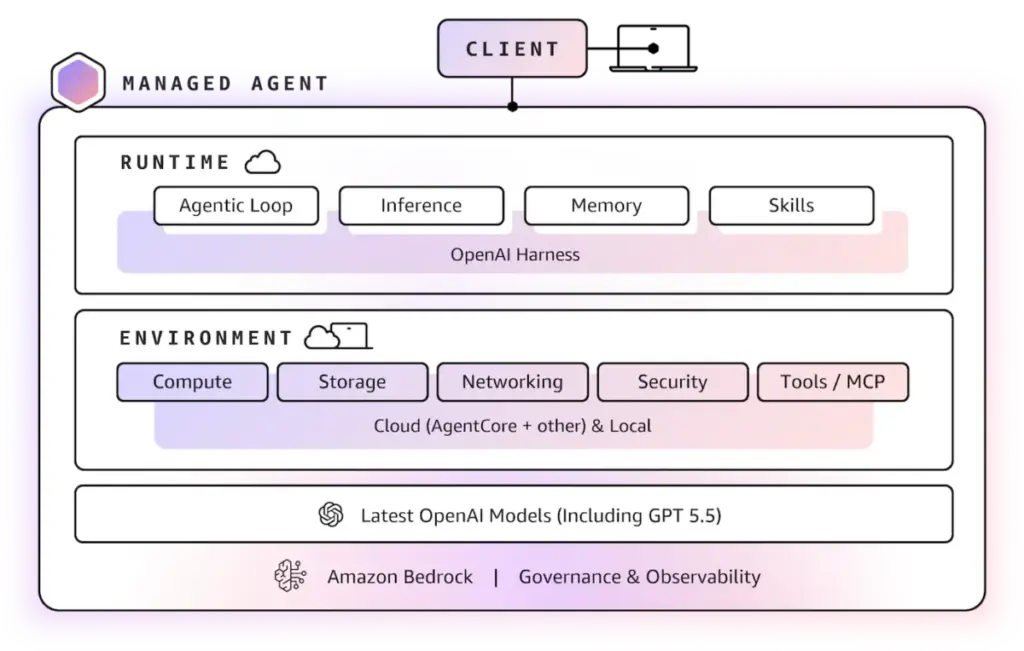
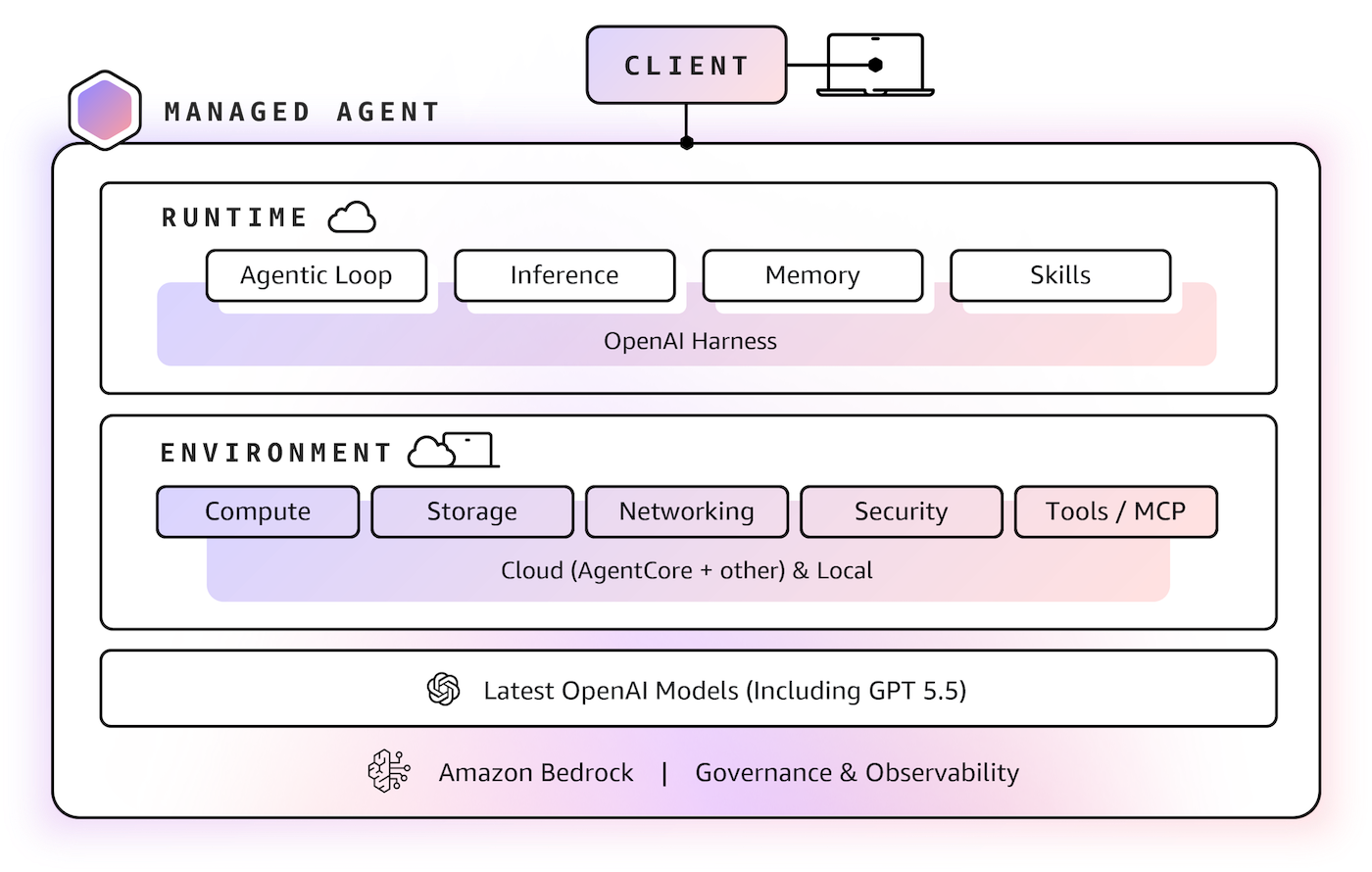
In a significant development for cloud-native artificial intelligence, Amazon Web Services (AWS) has officially announced the public preview of Amazon Bedrock Managed Agents powered by OpenAI. This new offering represents a strategic bridge between OpenAI’s sophisticated agentic capabilities and the robust, secure infrastructure of the AWS cloud. By utilizing a customized version of OpenAI’s Agents API, AWS is enabling developers to deploy intelligent agents that are natively integrated with AWS resources, security protocols, and governance frameworks.
This integration is designed to address a growing demand among enterprise developers who seek the power of OpenAI’s state-of-the-art models but require the high-compliance, low-latency, and secure environment that only a native AWS integration can provide. For organizations already deeply invested in the AWS ecosystem, this means they can now leverage the familiar identity and access management (IAM) controls, data governance policies, and auditing tools they already utilize, all while harnessing the generative capabilities of OpenAI’s models.
The announcement signals a shift in how enterprises manage the lifecycle of AI agents. Rather than treating these agents as external, isolated entities, the new Bedrock Managed Agents functionality allows them to function as first-class citizens within an AWS architecture. By operating entirely within the AWS perimeter, these agents can interact directly with internal data stores, APIs, and microservices without the overhead or security concerns often associated with cross-platform integrations.

Flexible Execution Environments for Scalable Deployment
A central component of this public preview is the flexibility offered in how these agents are executed. AWS recognizes that every enterprise has different architectural requirements, ranging from rapid prototyping on local development machines to highly scalable, managed production environments. To accommodate these diverse needs, the platform provides two primary execution paths.
For teams that require complete control over their runtime environment, AWS supports self-hosted compute. This allows developers to deploy their agents on existing local development machines, within containerized environments, or across any custom compute infrastructure that fits their specific technical constraints. This approach is particularly useful for developers who need to iterate quickly or integrate with legacy systems that cannot be easily moved to a managed cloud service.
Alternatively, for those seeking a more streamlined, hands-off experience, AWS has introduced the Amazon Bedrock AgentCore Runtime. This managed runtime is designed to abstract away the complexities of infrastructure management, providing a reliable and secure environment for agent sessions. By utilizing AgentCore, developers can offload the burden of scaling, patching, and maintaining the underlying compute resources. Furthermore, the service includes highly configurable storage options, allowing developers to maintain state and context across agent interactions within their own AWS account. This ensures that data persistence and security remain entirely under the control of the customer, fulfilling the stringent requirements often found in regulated industries like finance, healthcare, and government services.
Evolving the AWS AI Portfolio
The launch of these managed agents is part of a broader, ongoing effort by AWS to expand the diversity and capability of its model catalog. In conjunction with the announcement of the new agents, AWS has confirmed that it is actively adding new frontier models to the Amazon Bedrock service. This commitment to model diversity is critical for AWS customers who need to match the specific strengths of a model—whether in reasoning, coding, or linguistic nuance—to their unique use cases.
By providing a unified platform where developers can swap, test, and deploy various models, Amazon Bedrock continues to establish itself as a central hub for generative AI development. The integration of OpenAI models into this framework, managed through the Bedrock API, is a major milestone in making the platform the primary destination for developers who prioritize both model performance and operational maturity.

Managing the Product Lifecycle
As AWS continues to innovate at a rapid pace, it also remains focused on the long-term stability and maintainability of its services. Effective cloud management requires a clear understanding of the service lifecycle, and AWS continues to provide guidance to help customers navigate transitions as older technologies are retired or replaced by more modern alternatives.
On September 29, 2026, AWS issued several updates regarding its product lifecycle. These updates are intended to provide customers with the necessary lead time to plan their migrations, update their infrastructure, and ensure that their applications continue to function without disruption. When a service or feature reaches a transition point—whether moving to a maintenance phase, entering a sunset period, or reaching the end of its official support lifecycle—AWS emphasizes the importance of utilizing the official AWS Product Lifecycle Changes documentation. This resource provides detailed guidance on recommended alternatives and best practices for migration.
The company understands that any change to service availability can have significant implications for customer operations. As such, these announcements are released with ample notice, and the AWS Support team remains available to provide architectural guidance and technical assistance to those who may be impacted by these transitions. Maintaining a stable and reliable cloud environment is a shared responsibility, and these lifecycle updates are a critical part of the transparency that AWS offers its user base.
Building the Future of Development
Beyond the immediate technical announcements, AWS continues to invest heavily in the community and the educational infrastructure that supports its builders. The ecosystem surrounding AWS is vast, encompassing a wide range of in-person and virtual events designed to foster knowledge sharing and collaboration.
The upcoming calendar is filled with opportunities for developers to deepen their expertise. Events such as the annual AWS re:Invent, as well as the numerous AWS Community Days held globally, provide platforms for practitioners to connect, share their own solutions, and learn from the experiences of others. For those just beginning their journey or for startups looking to scale their operations, AWS offers dedicated event tracks that cater specifically to the challenges of rapid growth and early-stage development.
Furthermore, the AWS Builder Center has become an essential resource for those looking to stay at the cutting edge of cloud technology. By providing a space to access high-quality content, connect with experts, and engage in collaborative projects, the Builder Center helps to sustain the vibrant community that defines the AWS experience.
As the industry continues to evolve, the ability to rapidly integrate new technologies like managed agents into existing, stable workflows will be a defining characteristic of successful digital organizations. The latest developments from AWS, from the preview of the Bedrock Managed Agents to the ongoing commitment to infrastructure transparency and community building, reflect a strategic focus on providing the tools and environment necessary for builders to innovate effectively. With these new capabilities, developers are now better equipped than ever to leverage the next generation of artificial intelligence while maintaining the security, control, and reliability that are the hallmarks of the AWS cloud. Whether through the flexibility of self-hosted compute or the efficiency of the AgentCore Runtime, the path forward for enterprise AI integration has become significantly more accessible.