








As artificial intelligence coding assistants evolve from simple code-suggestion tools into active agents capable of editing files, installing dependencies, running test suites, and launching applications autonomously, developers face a critical operational dilemma. Removing mandatory prompt confirmations allows tools like Claude Code to work uninterrupted and finish complex tasks efficiently, but it simultaneously raises a fundamental security question: how much of a developer’s local machine should those automated commands be permitted to affect?
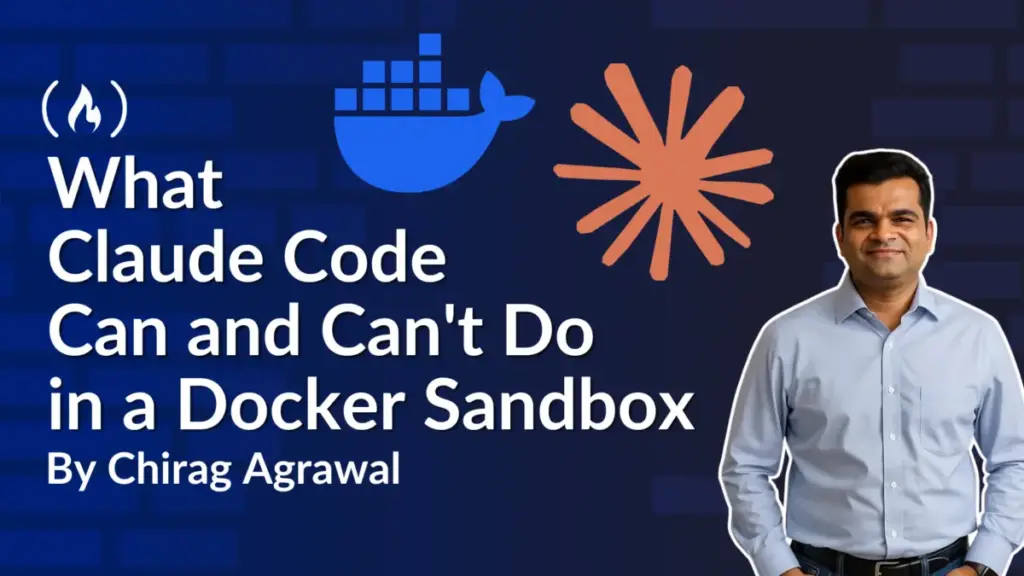
This tension between developer productivity and system security forms the core challenge of modern AI-driven software development. To address this risk, developers need reliable boundaries that isolate the agent while still granting it enough operational freedom to be genuinely useful. Docker Sandboxes attempts to solve this problem by running Claude Code inside a lightweight Linux virtual machine, known as a microVM, which provides tightly controlled, isolated access to both the local project directory and the broader network.
Recent practical evaluations of this integration reveal both the immense power of isolated AI agents and their inherent operational boundaries. When deployed inside a Docker sandbox, an autonomous instance of Claude successfully added a functional health endpoint to a Flask application, wrote a corresponding test, built a custom Docker image, executed and passed all tests within a container environment, and verified that the application responded correctly—all without requiring a single manual command approval from the user.
However, the experiment also highlighted vital nuances regarding how these environments interact with a host computer. Docker provides two distinct project operating modes designed to handle local file modifications differently. In direct mode, the sandboxed AI agent is granted immediate read and write access to a designated project folder on the host Mac, allowing changes to appear instantly. Conversely, in clone mode, the agent operates on a separate, isolated copy of the Git project residing strictly within the sandbox. This isolation layer allows developers to thoroughly review and inspect all proposed modifications before applying them to their original source code repositories.
Understanding the mechanics of what these sandboxes isolate helps clarify the underlying security model. Unlike ordinary Linux containers that share the kernel of the host system, a Docker Sandbox features its own dedicated kernel. This architectural separation ensures that the operating system managing processes and hardware access inside the sandbox remains entirely distinct from the host Mac.
Although Claude operates with administrative privileges—specifically sudo access—inside the sandbox, allowing it to install software or modify system files internally, those permissions do not translate to administrative control over the host computer. The chosen project directory remains protected by specific sharing rules, and the integration launches Claude using an automated flag that bypasses standard tool-approval prompts while relying entirely on Docker’s foundational isolation to govern file and network access.
The architectural separation also extends to networking and process management. Outbound network requests originating from the sandbox do not flow directly onto the open internet; instead, they pass through a local proxy on the host machine that evaluates whether the destination is permitted. Furthermore, credentials can be injected securely via proxy-managed configurations without ever storing sensitive API keys directly inside the sandbox environment. Meanwhile, unshared host files, active host processes, and the host’s native Docker engine remain completely cut off from direct access paths.
Practical testing of these environments uncovers significant workflow implications that developers must consider. In direct mode, asking an AI agent to delete a project file or introduce a localized Git hook results in immediate modifications on the host machine. However, this immediacy introduces review challenges. Standard version control diff commands may reveal deleted files while failing to expose newly created local hooks residing outside the normal tree of committed files, meaning that thorough auditing requires looking far beyond standard code diffs.
Clone mode mitigates some of these risks by keeping modifications quarantined within a private copy inside the sandbox, allowing developers to fetch branches and examine statistical diffs prior to merging. Yet, neither mode creates an absolute barrier against data exposure. While sandboxes effectively prevent unauthorized edits to unshared files, they do not automatically render the contents of readable project files secret. If a project folder contains uncommitted configuration files or database credentials, an AI agent with read access can process that sensitive information, regardless of whether the changes are being routed through a direct folder link or a cloned copy.
Network governance presents a similar nuance. Configuring network access presets—ranging from open environments to balanced developer setups and locked-down configurations—allows organizations to dictate which external package registries and model APIs an agent can reach. However, a destination rule ultimately controls only where an agent can connect, not what kind of data it transmits during that connection. Strict oversight of both file permissions and network policies remains essential for safe deployment.
Ultimately, the choice between direct and clone modes depends entirely on a developer’s workflow preferences and risk tolerance. Direct mode offers immediate integration with local editors, making rapid iteration seamless. Clone mode provides a vital security buffer, enabling rigorous inspection of committed changes before they ever touch the primary project repository. As autonomous coding agents become standard fixtures in software engineering, leveraging containerized microVM isolation allows developers to harness the full potential of AI-assisted development while maintaining strict command over their local computing environments.