The open-source community is currently hard at work behind the scenes on an exciting new project, signaling a fresh phase for one of the movement’s most recognizable digital hubs. While specific details regarding the upcoming initiative are still under wraps and not yet ready for a formal public rollout, the quiet period on Opensource.com has not been without purpose. As the platform prepares for its next evolution, the community is reflecting on the fundamental nature of the internet, the infrastructure of top-level domains, and the human connections that have fueled the open-source movement for more than a decade.
Visitors to the site may have noticed a distinct hush in recent weeks. That quietness is the direct result of intense planning and development for a new project currently in the works. While organizers emphasize that there are not many granular details to announce just yet, there is already plenty of broader philosophy to discuss. And what better way to begin a conversation about the future of a digital community than by looking at the entire architecture of the internet itself?
The Internet, and Top-Level Domains
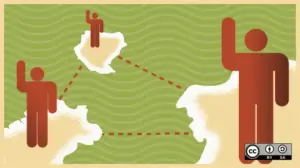
To understand where the community is heading, it helps to examine where the digital world began. Most internet users know that the internet is, at its core, a network. By definition, a network is simply a group of connections working in tandem. In fact, the very word "internet" is a portmanteau derived from "interconnected" and "network."


In its earliest iterations, the internet was a much smaller and more constrained system consisting of just two primary networks: the military network and the academic network. As the technology began to scale and grew popular far beyond those two specialized groups, it quickly became apparent that different designations were necessary to bring order to the digital landscape. Regulators and architects needed a way to instantly differentiate a commercial entity from a charitable organization, a university from a governmental department, or an individual hobbyist from an enterprise.
These necessary designations came to be known as top-level domains, commonly abbreviated as TLDs. Today, internet users can choose from a vast array of TLD extensions, but for a long time, the ecosystem relied on only a handful of foundational options. Those original TLDs remain remarkably popular and deeply ingrained in modern digital culture. Most internet users intuitively understand that visiting a website ending in a .com address typically means navigating to a commercial site, while venturing to a .org address generally points toward a non-profit organization, a public interest group, or a community-driven initiative. These suffixes provide immediate context, serving as digital signposts that tell visitors who is operating the space they are entering and what kind of mission drives it.
Open Source Is a Network
That concept of networks and designations brings the conversation directly back to the heart of the open-source movement. Open source can manifest in many different ways and take on countless forms. It can be commercial, driven by enterprise budgets and market demands. It can be non-profit, powered by donations and public grants. It can be academic, emerging from university research labs and computer science departments. It can even be purely cultural, shaped by artists, writers, and community organizers who believe in sharing knowledge freely.
No matter what form it ultimately takes, however, open source is always a network. Sometimes that network is literal and technological, consisting of interconnected computers, servers, repositories, and distributed version control systems. But most importantly, and above all else, open source is a network of people.

Whether contributors, users, and maintainers are gathering in person at a bustling international conference, sharing ideas over drinks at a local pub, or collaborating asynchronously in an online chat room, open source is fundamentally a community of living, breathing human beings. It is driven by human curiosity, human collaboration, and a shared desire to build better tools for everyone.
For the past twelve years, the website Opensource.com has been supported and sustained by a commercial entity. That corporate backing provided the resources necessary to publish thousands of stories, tutorials, and opinion pieces about the creation, adoption, and sharing of open-source solutions. Yet, a crucial distinction lies at the core of the platform’s identity: the people—meaning the readers, writers, contributors, and advocates who make up the actual Opensource.com community—are not commercial entities. They are simply people.
Now, that dynamic is shifting. Organizers indicate that in just one month, Opensource.com is going to resolve that long-standing structural mismatch, aligning the platform more closely with the community of individuals who breathe life into it every day. The community is gearing up for a significant transition, and the coming weeks promise to bring more clarity to the mystery.
As the countdown continues, followers and contributors are encouraged to stay tuned for further announcements regarding the new project. Opensource.com continues to document the wider world of open source, publishing stories about creating, adopting, and sharing open-source solutions, and maintaining its presence through channels like Twitter at @opensourceway. The upcoming changes represent a new chapter for a platform that has long served as a digital home for the open-source faithful, promising a future built firmly on the strength of its human network.