The vibrant community behind Opensource.com is hard at work on something entirely new. Visitors to the platform may have noticed a distinct quietness settling over the site lately. That temporary lull is due to an ambitious new project currently in the works. While specific details and logistical roadmaps are still being finalized and have not yet been formally announced, there is already plenty to discuss regarding the future of the platform and its loyal readership. What better way to begin shaping this next chapter than by looking at the broader digital ecosystem and the very fabric of the internet itself?
The internet, and top-level domains
To understand where the community is heading, it helps to examine where the digital world began. Most internet users know that the internet is, fundamentally, a network. By definition, a network is a group of interconnected connections. In fact, the term "internet" is a portmanteau born by combining "interconnected" and "network."
In its earliest days, the internet was a smaller, more specialized entity consisting of just two primary networks: the military network and the academic network. Once the technology matured and gained widespread popularity far beyond those initial two groups, it quickly became apparent that different designations were desperately needed. Systems had to find a way to differentiate between a commercial entity, a charitable organization, a university, or a governmental department as the digital space grew more crowded.
These crucial designations became known as top-level domains, commonly abbreviated as TLDs. Today, internet users can choose from an expansive and diverse universe of domain extensions, but for a long time, there were only a handful available to the public.

Those original top-level domains remain remarkably popular and culturally embedded today. Most web users instinctively know that when they navigate to a ".com" address, they are visiting a commercial site. Conversely, when they visit a ".org" address, they generally expect to find a non-profit website dedicated to public service, community advocacy, or charitable work. These suffixes have carried semantic weight for decades, helping to establish trust and context before a user even loads a page.
Open source is a network
Open source, much like the broader internet, can manifest in many different forms. It can be commercial, driving enterprise software and modern infrastructure. It can be non-profit, supporting public-interest software foundations. It can be academic, powering research institutions and laboratories, or it can be cultural, preserving digital heritage and collaborative art.
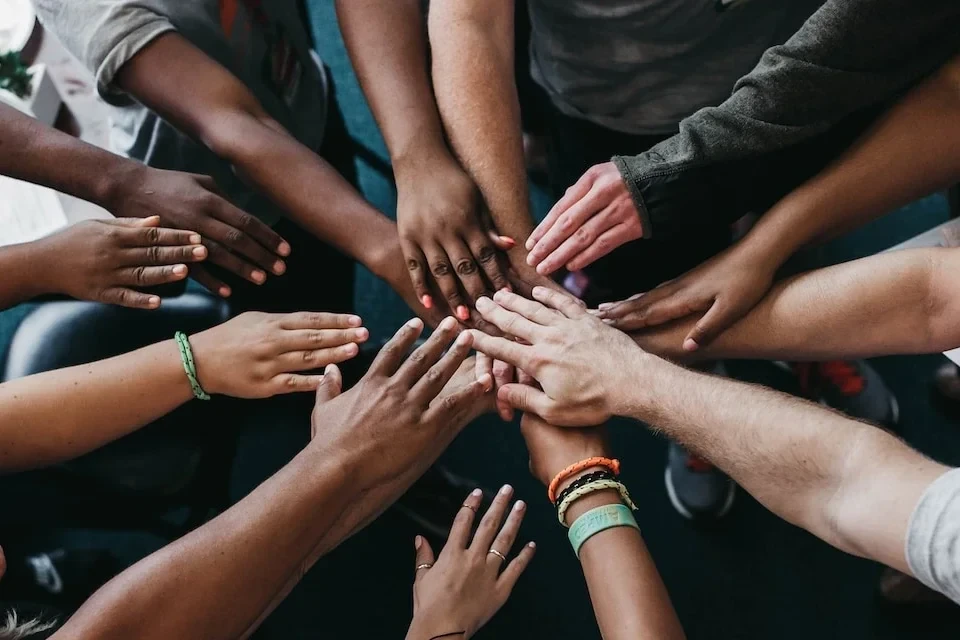
No matter what form it ultimately takes, however, open source is always a network. Sometimes—though certainly not always—that network is composed of physical computers, servers, and repositories sharing code across continents. But most importantly and fundamentally, it is a network of people.
Whether these contributors are gathering together in large convention centers for a major international conference, catching up informally at a local pub, or collaborating in real-time within an online chat room, the open-source movement is, at its core, a community of living, breathing people.

For the past 12 years, the prominent website Opensource.com has been generously supported by a commercial entity, providing a steady platform for stories, tutorials, and insights regarding collaborative technology. However, the people who actually make up the heart and soul of the Opensource.com community—the readers, writers, advocates, and contributors—are not commercial entities. They are simply people.
This realization highlights a unique dynamic between corporate backing and grassroots community ownership. For over a decade, the platform has served as a central digital meeting place for those interested in creating, adopting, and sharing open source solutions, maintaining a consistent voice across the global tech landscape.
Now, change is officially on the horizon. In just one month, Opensource.com is going to resolve that underlying structural gap, bringing the platform closer to its true community roots. Stay tuned for further developments as the timeline unfolds and the next evolution of the platform comes to light.