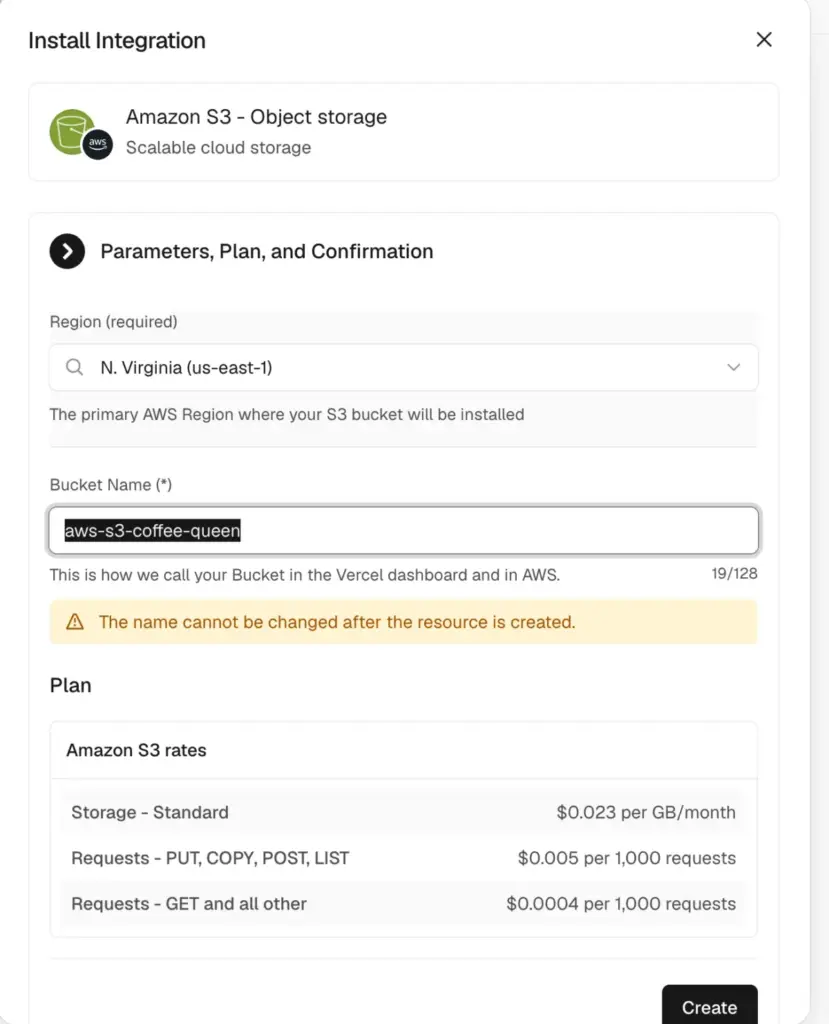
In a significant move to unify the development lifecycle for modern web and artificial intelligence applications, Vercel has announced a new, native integration with Amazon Simple Storage Service (Amazon S3). This development allows developers to provision and manage S3 storage—including the specialized S3 Tables and S3 Vectors—directly from within the Vercel Marketplace and v0, Vercel’s generative AI interface. By bridging the gap between Vercel’s high-velocity deployment environment and the industrial-grade durability of Amazon S3, this integration aims to eliminate the friction typically associated with cross-platform infrastructure management.
For years, millions of developers have relied on Vercel to build, deploy, and scale their web projects. While this workflow has become a gold standard for frontend and full-stack development, the task of provisioning backend storage has historically required developers to toggle between Vercel’s interface and the AWS Management Console. This separation of environments often introduced complexity, requiring manual configuration of Identity and Access Management (IAM) policies, security credentials, and network settings. The new integration solves this by automating the provisioning and connection logic, allowing developers to treat S3 storage as a first-class citizen within the Vercel ecosystem.
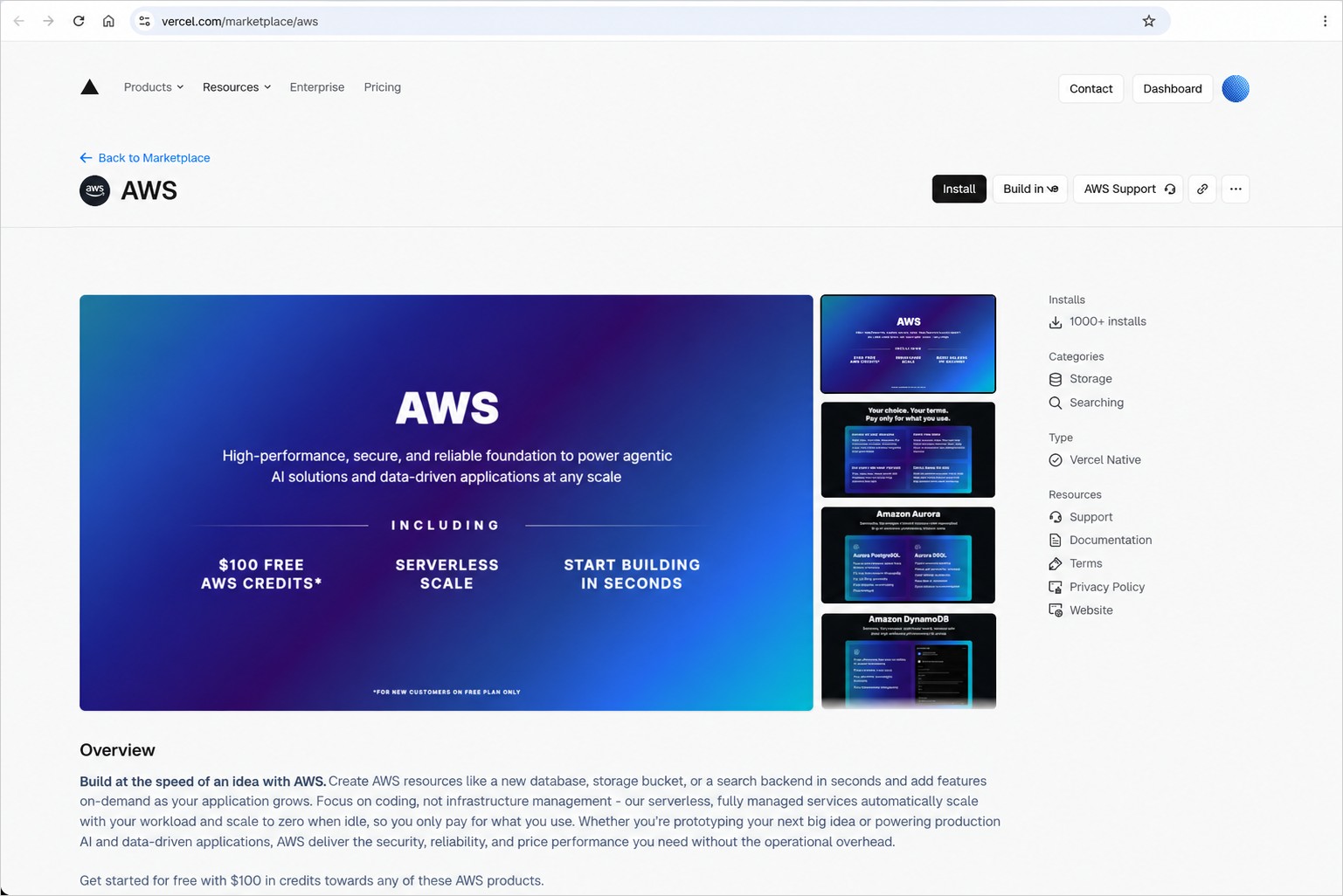
This update represents a critical expansion of Vercel’s existing AWS-native service catalog. With the ability to now deploy S3 alongside previously integrated services like Amazon Aurora, Amazon DynamoDB, and Amazon OpenSearch Serverless, developers can architect a comprehensive application stack entirely within the Vercel interface. This unified approach not only simplifies the development experience but also streamlines billing and account management, as all resources reside within a single AWS account, consolidated under one invoice.
Versatile Storage for Modern Workloads
The integration is designed to accommodate three primary categories of storage workloads: general-purpose everyday storage, large-scale data analytics, and high-performance AI vector search.
For general-purpose applications, developers can provision standard S3 buckets for tasks such as file hosting, media uploads, and asset management. The integration handles the heavy lifting of environment variable injection, automatically populating a project with necessary configurations such as AWS_REGION, AWS_ROLE_ARN, and the specific bucket identifiers. This is facilitated through an advanced security mechanism: at runtime, the @vercel/functions/oidc package exchanges short-lived OpenID Connect (OIDC) tokens with the AWS Security Token Service (AWS STS). This "zero-static-key" approach significantly enhances security, as it removes the need for developers to manage or rotate permanent access keys, which are often the source of security vulnerabilities.
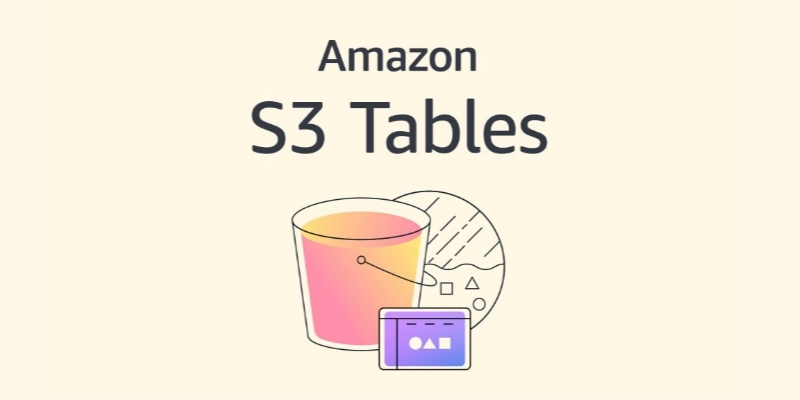
The addition of S3 Tables brings powerful, managed analytics capabilities to the Vercel stack. Designed specifically for high-volume data, S3 Tables provide a fully managed Apache Iceberg experience. These tables are engineered to automatically maintain and optimize query performance, ensuring that data remains accessible and efficient even as volumes scale into the petabytes. Because these tables are compatible with any Apache Iceberg REST Catalog-compliant engine, developers can leverage tools like DuckDB within their Vercel functions to perform complex aggregate queries directly on their cloud-stored data. This opens new possibilities for serverless analytics dashboards and real-time data reporting without the overhead of maintaining a dedicated data warehouse.

Perhaps the most timely addition is the support for S3 Vectors. As AI-driven applications—such as chatbots, semantic search engines, and agents—become standard, the need for efficient vector storage has surged. S3 Vectors provide a purpose-built, cost-optimized solution for storing and querying the embeddings that power these AI experiences. By allowing developers to store and retrieve vectors directly within S3, the integration simplifies the RAG (Retrieval-Augmented Generation) pattern. Developers can generate embeddings using their preferred models and use the S3VectorsClient to perform low-latency similarity searches, effectively turning their object storage into a foundational AI component.
Leveraging Generative AI for Infrastructure Provisioning
Perhaps the most innovative aspect of this announcement is the integration with v0, Vercel’s AI-powered generative tool. The capability goes beyond simple menu-driven provisioning; it allows for natural language interaction. A developer can describe their requirements—for example, "create a support bot that answers questions from my PDFs"—and the AI will interpret the request to provision the necessary infrastructure. In this case, v0 would configure an S3 Vectors bucket, set up the appropriate connections, and generate the necessary boilerplate code to connect the application logic to the storage layer.
This transformation of infrastructure-as-code into infrastructure-by-intent significantly lowers the barrier to entry for complex application architectures. By generating functional, pre-configured code, v0 allows developers to focus on the business logic of their applications rather than the minutiae of cloud configuration.
A Unified Ecosystem
The architecture of this integration emphasizes the power of the AWS ecosystem. Because every service provisioned through the Vercel dashboard shares the same underlying authentication model and AWS account, there is no need for convoluted "glue" code to make services talk to one another. For example, a developer can store raw files in a standard S3 bucket, maintain file metadata in an Amazon Aurora database, and manage document embeddings in an S3 Vectors bucket. Because these resources are all linked to the same project and authentication context, they function as a cohesive unit.
This approach also respects the autonomy of the developer’s AWS account. Users retain full access to AWS-native tooling, ensuring that as their applications grow, they are not locked out of the granular control and auditing features provided by the AWS Console. When linking an existing AWS account to Vercel, the platform intelligently manages only the resources created through the integration, leaving the remainder of the user’s cloud environment untouched and under their direct management.
For teams just getting started with AWS, the integration offers a streamlined onboarding path. Users can create a new AWS account directly through the Vercel platform, which includes $100 in free AWS credits valid for six months, providing a low-risk environment to prototype and test these new storage features.
Availability and Future Directions
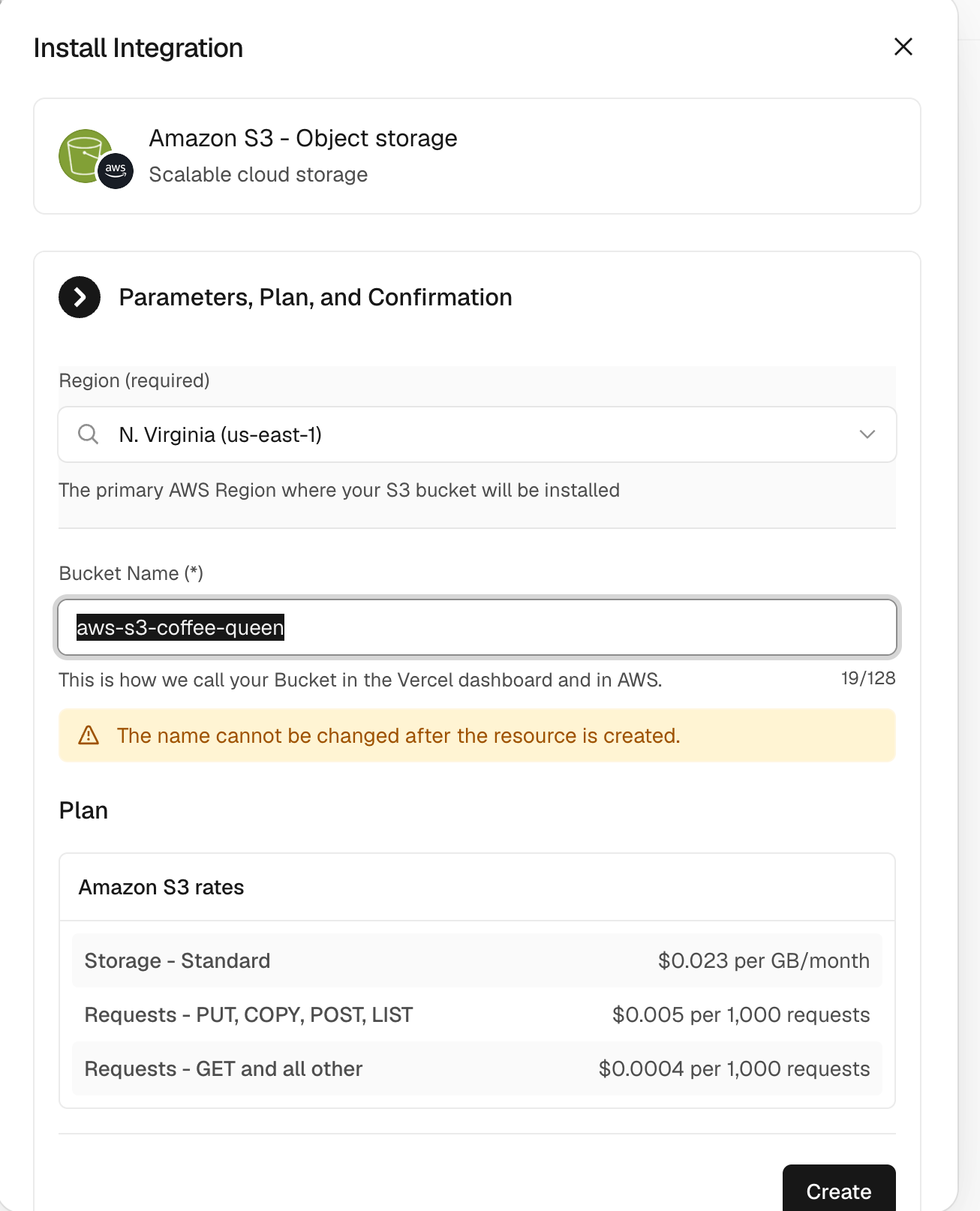
The integration of Amazon S3, S3 Tables, and S3 Vectors is available today for all Vercel users across all commercial AWS regions supported by the platform. The service is provided without additional fees from Vercel, with users simply paying the standard, transparent pricing directly to Amazon for the S3 resources consumed.
For developers looking to deepen their integration with AI-driven development, there are further resources available. The AWS MCP (Model Context Protocol) server and associated plugins allow developers to search technical documentation, check regional service availability, and troubleshoot common issues directly through their AI-enabled coding assistants. Feedback on the integration can be shared via the AWS re:Post for Amazon S3 community, where developers are already beginning to exchange insights on best practices for this new, streamlined cloud-native workflow. As the boundaries between application code and cloud infrastructure continue to blur, this collaboration between Vercel and AWS marks a notable step toward a more intuitive, automated future for full-stack development.