For decades, the Silicon Valley venture capital ecosystem has operated under a foundational, albeit unwritten, compact: firms do not back two companies that compete head-on. This rule served as a cornerstone of trust, ensuring that investors could provide guidance, mentorship, and board-level strategy without the constant shadow of a conflict of interest. However, as the artificial intelligence boom reshapes the technological landscape, that long-standing norm is beginning to buckle under the weight of an aggressive, high-stakes market.
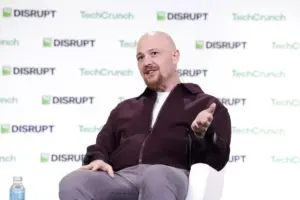
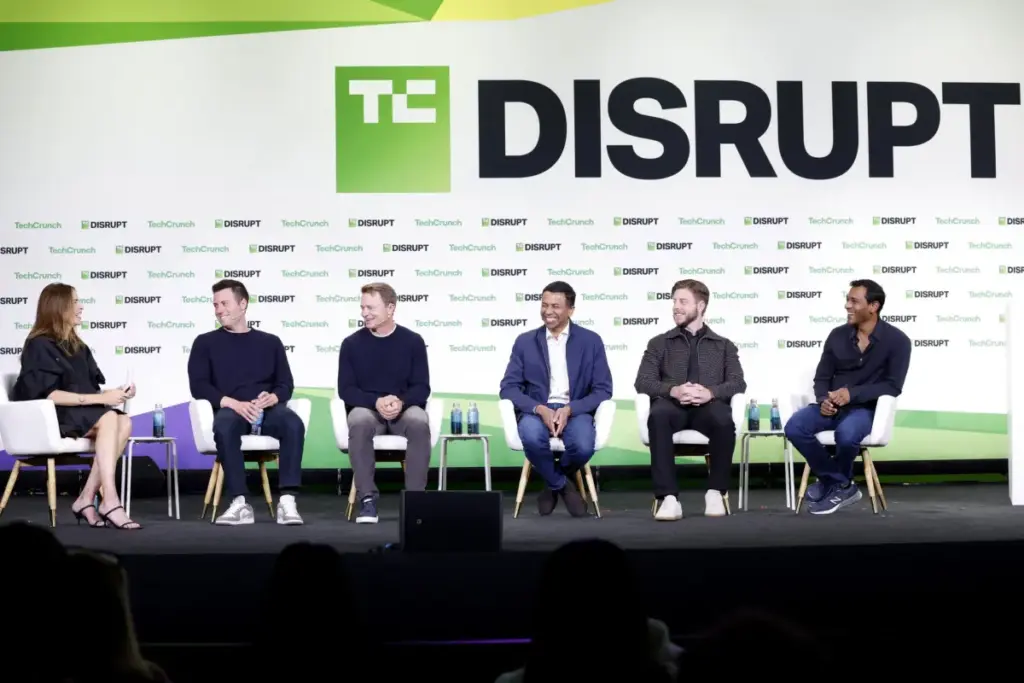
At the recent TechCrunch Disrupt conference, partners from Benchmark—a firm synonymous with the gold standard of early-stage, founder-centric investing—openly acknowledged that the AI revolution is straining the traditional boundaries of portfolio management. The reality of the current market, they suggested, has made the strict adherence to non-compete pacts increasingly difficult to maintain.
The Erosion of Investor Boundaries
The tension has been brewing for years, catalyzed by the sheer scale and rapid development cycles of the generative AI sector. Nowhere is this more visible than in the cap tables of industry giants like OpenAI and Anthropic, both of which count many of the same venture capital firms among their backers. In these instances, the traditional lines have already blurred, with investors betting on multiple horses to ensure they capture a piece of the foundational model market.

However, the consequences of these overlapping interests moved from the abstract to the explosive in late September. Factory, a startup specializing in AI agents designed to automate software engineering, made headlines when it fired board observer and adviser Chris Degnan. The company’s CEO leveled serious allegations against Degnan, claiming he had engaged in “unethical conduct” involving Cognition, a direct competitor known for its “Devin” coding agent.
According to Factory’s leadership, Degnan had allegedly been in discussions to join Cognition while simultaneously participating in sensitive, board-level strategy sessions at Factory. Degnan, for his part, denied these allegations, asserting that he had already resigned from his role at Factory and categorically refuting the claim that he shared confidential, proprietary information. Shortly after the public fallout, it was confirmed that Degnan had joined Cognition as its chief revenue officer.
The public nature of the dispute drew high-profile attention, most notably from Vinod Khosla. The powerhouse investor, whose firm, Khosla Ventures, maintains stakes in both Factory and Cognition, weighed in on social media to defend Degnan. In a pointed jab at Factory’s management, Khosla blasted the company’s CEO, referring to the startup as a “struggling second-tier competitor.” The incident served as a stark reminder that in the current AI arms race, the traditional ethics of venture capital are being tested by a win-at-all-costs mentality.
The “Harsh Reality” of Rapid Evolution
For a firm like Benchmark, whose reputation is built on long-term, decade-spanning partnerships with founders, the shifting landscape presents a significant challenge. When asked at TechCrunch Disrupt whether the firm’s commitment to avoiding competitive conflicts still holds as portfolio companies rapidly expand their features and scopes, the partners characterized the situation as a matter of cold, hard necessity rather than a change in preference.
“The harsh reality of this world is that every company is evolving very quickly,” said Benchmark partner Eric Vishria. He explained that in the AI era, companies are constantly pivoting, iterating, and expanding into new markets. Because the technology landscape is so fluid, startup roadmaps often collide in ways that were unforeseeable at the time of the initial investment. “You are going to get conflicts, and that’s just the reality of the current dynamic,” Vishria added.
Vishria emphasized that Benchmark remains deeply committed to the success and confidentiality of its founders. He also sought to downplay the extent to which investors are actually capable of transferring sensitive technical intelligence between startups, noting that “we are not product or technology experts.”
While he alluded to the recent high-profile conflict between Factory and Cognition as “that type of insane direct conflict,” Vishria maintained that Benchmark has been fortunate to avoid such scenarios. He underscored that for the firm, exclusivity remains a vital component of the early-stage investing model. “But things are evolving,” he conceded. “There’s no doubt about that.”
Why AI is Accelerating the Conflict
Chetan Puttagunta, another partner at Benchmark, identified the fundamental driver behind this phenomenon: the AI-induced collapse in the cost of software development. As the cost to build complex software trends toward zero, the barrier to entry has lowered, and the ambitions of founders have skyrocketed.
“Founders are incredibly ambitious,” Puttagunta noted. “They see a massive surface area and they want to claim all of it.” As startups strive to capture larger shares of the market, they are naturally expanding their feature sets, inevitably running into the turf of other companies.
Puttagunta drew a clear distinction between the types of conflicts investors face. A company that is a direct, obvious competitor at the moment of investment is an “easy answer” for a firm—they either invest or they don’t. The real challenge, he argued, arises when portfolio companies begin as distinct entities and, through the process of market evolution and pivoting, gradually become competitors. “That happens,” he said, suggesting that this kind of organic conflict is becoming an unavoidable feature of modern venture capital.
Transparency as the Final Safeguard
Perhaps the most candid assessment came from Peter Fenton, who described the issue of competitive overlap as “kryptonite” and acknowledged it as one of the most difficult problems his firm faces. Fenton outlined a spectrum of investor behavior: at one end sits the co-founder, who is deeply integrated and would never work with a competing firm. At the other end is the public-market stock picker, who manages risk by owning a diversified basket of rivals.
Benchmark, according to Fenton, positions itself firmly toward the co-founder end of that spectrum. For the firm, the mitigation of these conflicts relies on a “golden rule” of total transparency. “There shouldn’t be a surprise after the fact,” Fenton said. He stressed that if a conflict does emerge, it is the responsibility of the investor to ensure that no founder ever feels that their interests have been compromised or that they have been shortchanged by their board representative.
Despite these assurances, the fact that a firm built on the bedrock of long-term loyalty is now publicly articulating the inevitability of these conflicts is significant. It signals a broader shift in Silicon Valley’s power dynamics. As the lines between competing startups blur and the pace of innovation demands constant, aggressive growth, the old guard of venture capital is being forced to reconcile their traditional ethics with a new, more volatile reality.
For founders, the message is clear: the era of guaranteed exclusivity is fading. While firms like Benchmark continue to champion transparency, the shifting landscape of the AI industry means that companies may increasingly find themselves sharing an investor with their fiercest rival. Whether this leads to a new model of “coopetition” or further public, acrimonious disputes remains to be seen, but the industry’s long-held norms are undoubtedly being rewritten in real-time.