For decades, the life of a software developer has been defined by a familiar, almost ritualistic setup: a high-resolution monitor, a mechanical keyboard, a mouse, and a sprawling digital workspace consisting of an IDE, a terminal, a browser, and a daunting number of browser tabs that promise to be useful eventually. While the specific technologies and languages have evolved, the core relationship between the human and the machine has remained stubbornly consistent. Developers have spent their careers learning commands, memorizing complex keyboard shortcuts, and essentially "speaking computer," adapting their cognitive processes to match the limitations and requirements of the hardware and software tools they use.
However, a fundamental shift is currently underway. Artificial intelligence is not merely changing how we write code; it is fundamentally altering the nature of software development. This transition is not defined by the ability to generate snippets of code via prompts, but rather by the emergence of autonomous, context-aware systems that can navigate a repository, plan complex work, execute commands, inspect errors, and iterate toward a solution within guardrails set by the developer. We are witnessing the evolution from operating tools to expressing intent.
The Shift Toward Intent-Based Development
In the traditional development model, the developer is the primary actor, manually performing every step of the lifecycle—navigating files, writing syntax, managing dependencies, and running tests. The new, agentic paradigm compresses this chain of events. With tools like GitHub Copilot, a developer can now describe an intended outcome, and the system acts as an intelligent partner. The AI can gather repository context, analyze symbols and dependencies, edit multiple files simultaneously, run tests, and revise its own implementation based on feedback.

In an IDE environment, "agent mode" creates an interactive, high-bandwidth loop. A coding agent can take a specific issue, work within an isolated, GitHub Actions-powered environment, and return a polished pull request ready for human review. This is a profound shift. The developer’s role is no longer to issue low-level commands, but to make intent executable. The responsibility for the outcome remains firmly with the human, but the mechanical labor required to reach that outcome is being delegated to the machine.
This evolution makes the developer’s time more valuable and their judgment more critical. When an agent can generate three potential implementations in the time it takes to brew a cup of coffee, the bottleneck is no longer coding speed—it is the ability to curate, verify, and validate. The developer must possess the taste and technical wisdom to determine if an abstraction is sound, whether a database migration is truly safe, and if the provided tests actually cover the edge cases. The craft of software engineering is moving away from syntax proficiency and toward architectural oversight and quality assurance.
Ambient Intelligence and the Future Workflow
The goal of this transition is not to build a world where AI operates in a silo, but to embed intelligence directly into the developer’s existing workflow. This is what many industry leaders describe as "ambient intelligence"—an environment where the AI is aware of the context, the constraints, and the conventions of the codebase without needing constant, explicit instruction.
Achieving this requires a high degree of portability in how context is handled. Technologies like the Model Context Protocol (MCP) are beginning to connect agents to a wider array of tools and services. Furthermore, repository-specific instructions and coding standards help encode tribal knowledge, ensuring that agents adhere to team conventions. When combined with hooks that enforce policy and validate output, we create a system where simpler interfaces can rely on a massive, sophisticated context layer beneath the surface.
This workflow can be categorized into three distinct layers. First, there is the modality, which captures the developer’s intent, whether through text, voice, or physical input. Second, there is the harness, which plans the work and executes the necessary actions. Third, there is the control plane, which allows the developer to inspect, redirect, and approve the agent’s progress. The most successful developer products of the future will be those that integrate these three layers seamlessly, allowing the developer to move fluidly between different modes of interaction without ever losing their mental context.
Why Physical Controls Are Making a Comeback
As we move past the era where the keyboard and terminal were the sole interfaces for development, there is a renewed interest in physical controls. This is particularly evident in the maker community, where developers are experimenting with everything from inexpensive, hackable picture frames to ESP32-based devices with integrated screens. These experiments signal a desire to break out of the "screen-only" mindset and find more tactile, ambient ways to interact with agentic systems.
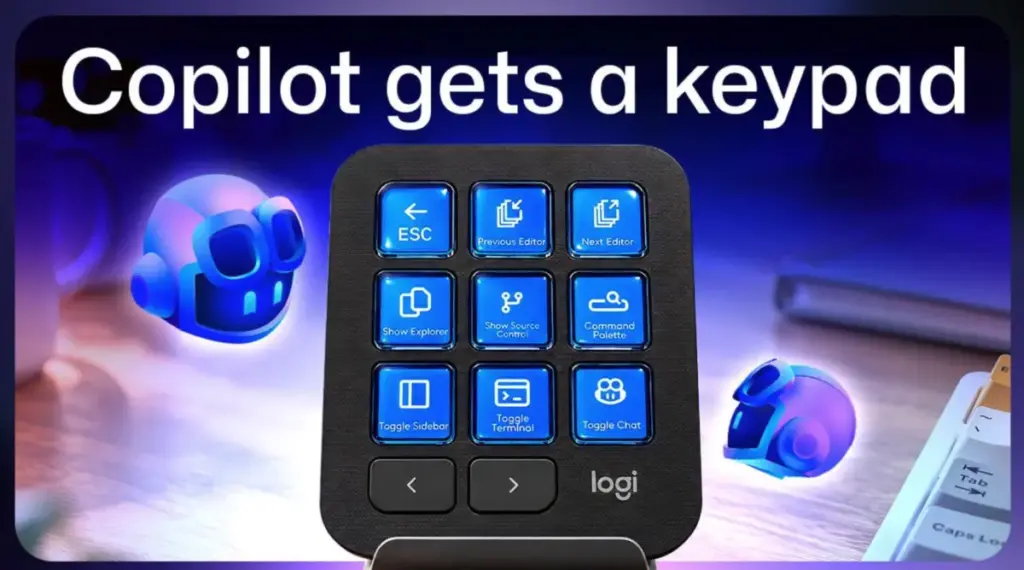
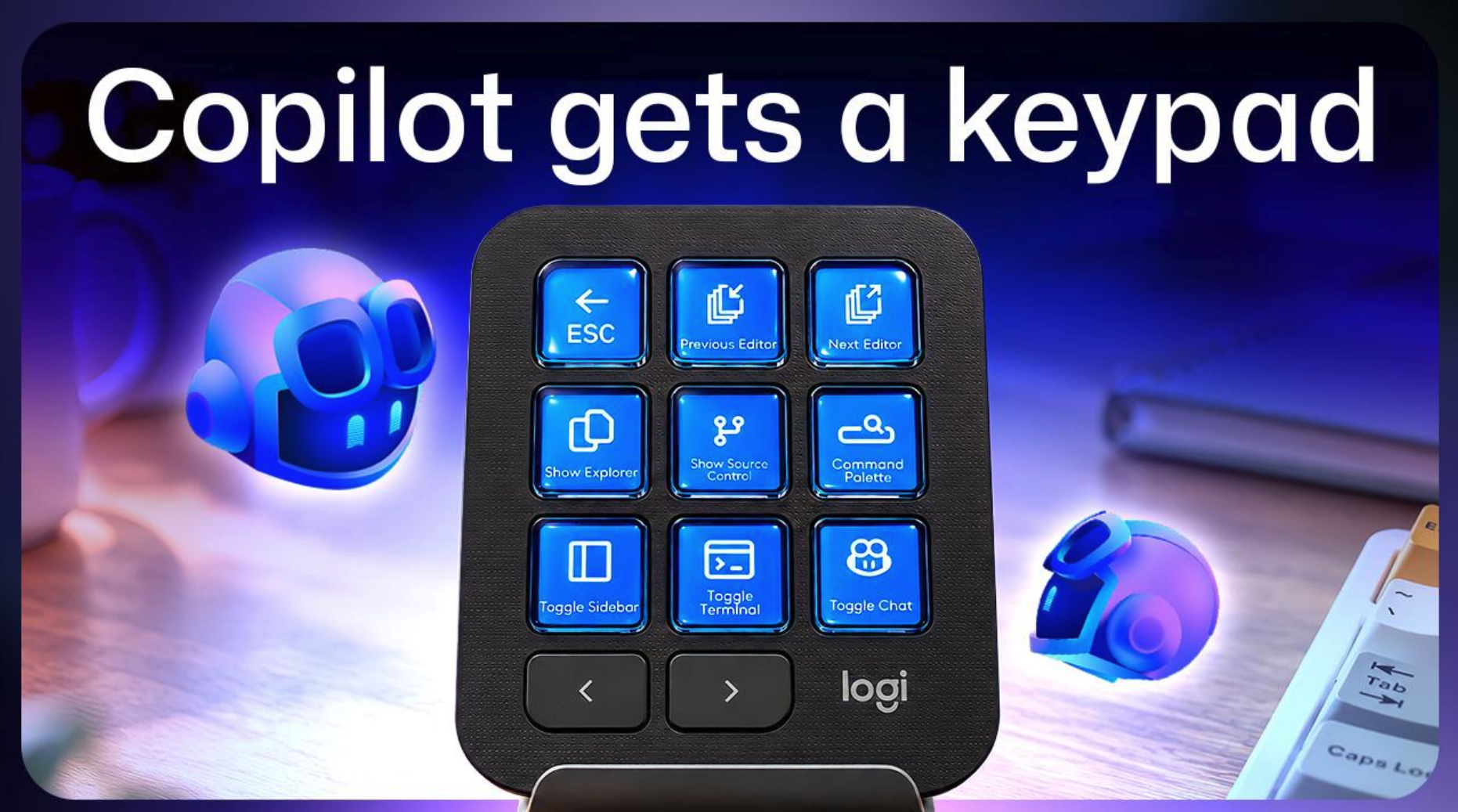
This passion for hardware-software integration has led to a collaboration between GitHub and Logitech. Over the past 18 months, the two companies have explored how the Logitech MX Keypad can be used to accelerate these new, agentic workflows. By turning familiar developer actions into programmable inputs, the keypad allows developers to trigger complex, multi-step sequences with a single press. In the GitHub Copilot app, a physical key can be mapped to submit a parameterized prompt, resume a paused session, or invoke a specific IDE command.
The value proposition of physical hardware in a digital-first world is simple: it removes friction. When an action is performed repeatedly—such as triggering a specific test suite or initiating a standard code review process—removing the need to navigate through menus or type complex commands preserves the developer’s focus. Not every action deserves a dedicated key, and not every developer wants more hardware on their desk. However, when the interface allows the developer to decide which actions are worth physical mapping, the hardware becomes an extension of the developer’s intent, giving them more control while keeping them in a state of "flow."
The Interface Moves into the Background
The ultimate objective of this integration is to move the interface into the background. By integrating the GitHub Copilot app directly into the experience, developers can manage agentic workflows, map repeated prompts, and start or resume sessions through the MX Keypad. This allows for a more intuitive, physical interaction with the AI, helping developers maintain their concentration even as they oversee complex, multi-layered tasks.
We are still in the early stages of this transition, and the industry is currently grappling with critical engineering questions. How much context should an agent retain about an organization? Which tool calls are safe to run automatically, and which require human verification? How should secrets, credentials, and network access be scoped to prevent security risks? How do we coordinate multiple agents so they don’t duplicate work or create conflicting pull requests?
These are not just technical hurdles; they are questions about the future of the profession. Products like the MX Keypad provide a practical platform to explore these issues, allowing developers to experiment with how they invoke, steer, and resume agentic work.
For decades, developers have been forced to learn the nuances of the machine—the syntax, the APIs, the command-line flags, and the arcane rituals required to make software function. Now, the machine is finally learning to meet the developer halfway. The most effective interface of the future will not be the one with the most panels, the most sophisticated AI, or the most buttons. It will be the one that understands the context, preserves the developer’s agency, and quietly gets out of the way, allowing us to focus on what truly matters: building software that solves real problems.
The goal is not to remove the developer from the work; it is to remove the friction that prevents us from doing our best work. By experimenting with new interfaces and integrating AI more deeply into the daily routine, we are reclaiming our time and attention, ensuring that as the mechanics of coding become automated, the craft of software engineering becomes more human, more intentional, and more impactful than ever before.