







The way most organizations are currently rolling out artificial intelligence feels less like a calculated corporate strategy and more like an elaborate corporate farce. If the current wave of enterprise AI adoption were adapted into a feature film, movie reviewers would likely dismiss the plot as entirely unbelievable, noting that no real-world group of professionals could possibly be that short-sighted. Yet, businesses find themselves repeating historical missteps, and what makes the situation all the more frustrating for industry observers is that corporate leadership has traversed this exact terrain before.
Back in 2014, digital strategist and author Paul Boag published a book titled Digital Adaptation for Smashing Magazine, which critically examined the widespread mistakes organizations were making in how they approached digital transformation and outlined what they should have been doing instead. Looking at the corporate landscape today, the striking similarities between the digital transformation era and the modern AI boom suggest that businesses have learned very little from their past trials. Revisiting the core principles of Digital Adaptation reveals how historical lessons can help organizations navigate the immense cultural and operational challenges of artificial intelligence today.
At the heart of the issue is a persistent, foundational error: both then and now, leadership teams consistently approach a profound organizational change as a purely technological challenge.

It’s About People, Not Technology
To be sure, both digital transformation and the integration of artificial intelligence represent massive technological advances, and some level of software implementation is undeniably required. However, that technical deployment is merely the tip of a very large iceberg.
During the height of the digital transformation era, internal IT departments busied themselves rolling out content management systems, customer relationship management software, and corporate intranets. Meanwhile, on the customer-facing side, organizations rushed to launch websites, mobile applications, and early personalization engines. Yet, throughout these expansive rollouts, they placed almost zero emphasis on how real people—both employees and customers—were actually going to use these systems. Internal infrastructure remained notoriously difficult to navigate, while customers either found themselves indifferent to what was being built or actively desiring something entirely different.
A nearly identical dynamic is playing out across the corporate world with artificial intelligence. Senior management teams are thoroughly buying into the technological hype, prompting IT departments to distribute enterprise-wide software licenses, such as Copilot Studio, and essentially consider the job finished. Aside from a bit of generic, organization-wide training sessions, that is typically where the strategy ends. Consequently, everyday staff are left wondering what they are actually supposed to do with these sophisticated new systems, all while feeling an escalating, unspoken pressure to use them and immediately deliver measurable business results.
Organizations must urgently recognize that artificial intelligence represents a profound cultural shift just as much as it represents a technological upgrade, and that internal cultural shift carries enormous implications for their workforce. This time around, the stakes feel even higher for employees because they are actively fearing for their livelihoods. Workers have read the exact same alarming headlines about automation that corporate executives have, and no amount of generic, reassuring promises from senior management is going to make them feel fundamentally secure.
Why Would Staff Want To Adopt AI?
Examining the current corporate push toward artificial intelligence from an ordinary staff member’s perspective reveals a stark reality: the technology offers them very little personal benefit, particularly when they harbor underlying suspicions that management ultimately intends to use it to eliminate their jobs altogether.
The primary reason senior management teams are so visibly excited about artificial intelligence is that it promises substantial efficiency gains and operational productivity. In theory, human employees can accomplish significantly more tasks in considerably less time. However, that operational benefit rarely translates into a tangible advantage for the individual worker. Staff members are still expected to report for a standard nine-to-five workday, but they are now implicitly or explicitly expected to produce a higher volume of work within that exact same timeframe. They do not get any free time back, nor do they typically receive higher compensation, leaving many to wonder why they should enthusiastically embrace a tool whose primary corporate purpose appears to be intensifying their workload.
Before demanding that staff seamlessly embrace artificial intelligence, organizations need to seriously ask themselves how they intend to genuinely motivate them to do so. One viable strategy involves helping workers identify the specific administrative parts of their daily jobs that they actively hate, and then demonstrating how AI can help them execute those tedious tasks more quickly and less painfully. People are naturally far more receptive to sudden workplace changes when those changes are presented as a genuine opportunity to improve their day-to-day working lives rather than an abstract productivity metric for shareholders.
Beyond easing daily frustrations, organizations may ultimately need to consider providing tangible incentives for staff to adopt AI, whether through career progression opportunities, increased compensation, or reduced working hours. Without a compelling "what’s in it for me?" proposition, employee resistance is inevitable.
Staff Need Time And Support To Adopt AI
Furthermore, adopting artificial intelligence is far from a simple, plug-and-play task. It involves thoroughly challenging and rewriting almost every routine working practice an employee has built up over years, or in some cases, decades of professional experience. All of that deeply ingrained procedural knowledge has to be unlearned and rebuilt from scratch. That is an enormous psychological and cognitive burden to place on any workforce, especially when most employees do not find themselves operating under ideal circumstances.
The vast majority of modern corporate employees are already overworked, chronically stressed, and struggling simply to stay on top of their overflowing daily to-do lists. They simply do not possess the luxury of unallocated time to sit down quietly, learn a complex new software tool, and figure out on their own how it seamlessly fits into their existing workflow.
Achieving true adoption requires more than just time; it demands deep consideration, patience, and extensive experimentation. It is entirely insufficient for an organization to simply send a staff member on a generic, one-off training course and magically expect them to return fully equipped to utilize artificial intelligence to its absolute maximum potential.
At an absolute minimum, staff require targeted training that is specifically tailored to the unique demands of their individual roles and departments. However, organizations should be striving to go even further by developing sophisticated internal education programs that help personnel from vastly different professional backgrounds understand how AI applies directly to their daily responsibilities. They require ongoing, institutional support and, crucially, protected working time to experiment with the technology to discover the most effective use cases.
While formal training programs have their place, the most effective support consistently comes from peers within the organization. Rather than focusing initial rollout efforts on winning over the most deeply resistant employees, leadership should identify the internal enthusiasts—the handful of people who are already experimenting with AI tools on their own initiative, often without anyone asking them to do so. Bringing those enthusiastic early adopters together, giving them the protected time and physical space to share what is actually working for them, allows organic enthusiasm to spread naturally across the wider team.
This phenomenon was clearly visible during the digital transformation era as well. Internal conferences and show-and-tell sessions where staff demonstrated functional projects to their peers did significantly more to drive genuine technology adoption than any formal memo issued from the executive suite ever could. People are inherently far more likely to try a new approach when they witness a colleague in a similar role utilizing it successfully than when they are simply ordered to do so by senior management.
Unfortunately, genuine experimentation inherently carries a significant downside: mistakes will inevitably be made along the way.
It Needs To Be Safe To Fail
Many modern corporations maintain a deeply entrenched corporate culture of fear where professional mistakes are viewed by leadership as an undeniable sign of incompetence or carelessness. However, by its very inherent nature, learning a complex new tool like artificial intelligence involves stumbling, miscalculating, and making errors. If mistakes are severely punished, that fear becomes a massive, insurmountable barrier to widespread technological adoption.
A remarkably similar dynamic played out during the digital transformation era. Senior management would vocally demand sweeping digital changes and then express genuine confusion when those changes failed to materialize across the organization. What those executives frequently failed to realize was that they were inadvertently sending deeply mixed signals to their workforce. Sure, they were verbally demanding digital transformation, but they were still rigorously demanding that the exact same rigid key performance indicators be met, and they continued to penalize even minor missteps during annual performance reviews.
There was simply no organizational space left to fail, because the daily pressure to deliver immediate business results was relentless.
In the current AI landscape, this cultural hurdle appears to be even more pronounced. Reports circulate of employees being reprimarded by management for consuming excessive token usage limits just weeks after being strongly encouraged to adopt the technology. Alternatively, workers are lectured so extensively about a labyrinth of strict rules regarding what they should or should not do with AI tools that they ultimately become too afraid to try anything novel at all. Under those conditions, employees naturally conclude that it is far safer to simply stick to the legacy processes they have always used.
If corporate leadership genuinely wants their staff to successfully adopt artificial intelligence, they must actively cultivate an environment where it feels safe to experiment. That requires management to adjust rigid key performance indicators, fundamentally change how employee performance is reviewed, and relax heavy-handed governance frameworks while staff are actively navigating the learning curve.
Handle Governance With Care
Of course, introducing enterprise-grade artificial intelligence cannot be accomplished without establishing some level of governance and oversight. However, governance is historically an area that organizations have managed remarkably poorly.

During the peak of the digital transformation era, governance was frequently either entirely nonexistent or so suffocatingly strict that it effectively paralyzed all internal innovation. Unfortunately, precisely the same pattern is currently emerging with AI adoption. Employees need a foundational level of governance to understand where they stand, what is concretely expected of them, and what operational boundaries exist.
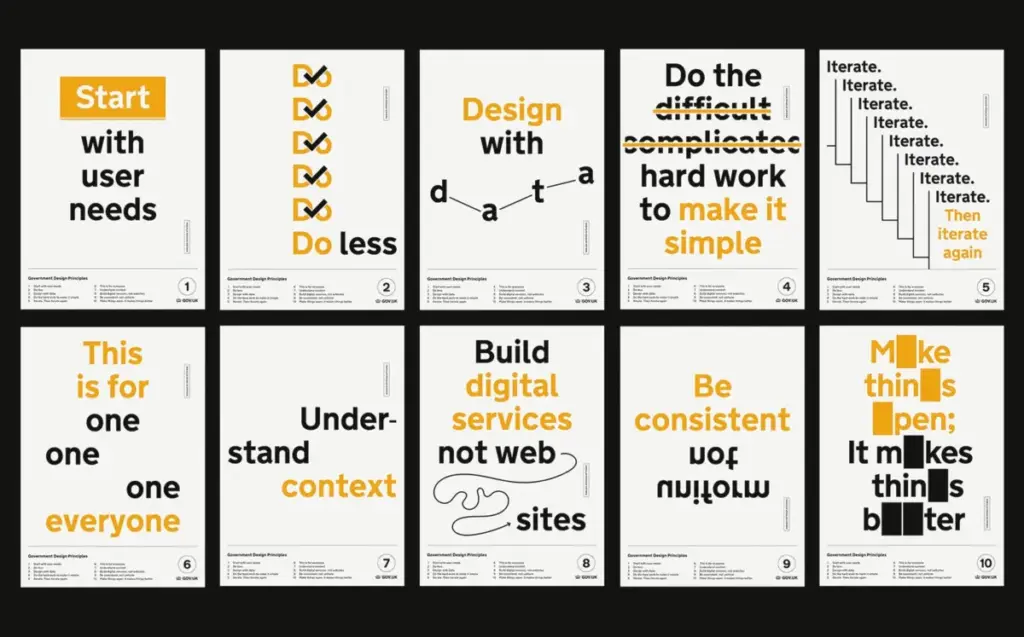
When organizations impose pages upon pages of dense instructions detailing what information can and cannot be shared with artificial intelligence tools, they inadvertently manufacture the exact climate of fear that stifles progress. Instead, organizations require a concise, easily digestible set of operating principles—something brief enough to fit onto a handful of posters—paired with a demonstrated willingness to trust their employees to exercise basic professional common sense.
While mistakes will inevitably happen as staff test the limits of the technology, that friction is simply the inevitable cost of organizational evolution. Management must accept that reality and build mitigation strategies into their rollout plans rather than attempting to legislate every human action.
Adaptive Technological Rollout
From an IT infrastructure perspective, organizations must also exercise extreme caution in how they technically deploy artificial intelligence. Once again, it remains remarkably easy for overwhelmed technology departments to lock down systems so tightly that they unintentionally strangle adoption in its crib.
Back in 2014, similar challenges plagued digital initiatives. Overstretched IT departments would select a rigid set of enterprise technologies and unilaterally mandate them across the entire organization, frequently with little to no consultation with the actual end-users. Any software or workflow residing outside of that narrow approved list was forced to navigate a complex, glacial approval process, usually bottlenecked by a bureaucratic steering committee. The resulting stagnation was a primary contributing factor to the high failure rate of digital transformation projects.
Today, organizations are witnessing the exact same bottleneck. Technology teams often purchase a broad enterprise license for a single tool, consider the task complete, and leave specialized departments stranded. For instance, specialized teams such as user experience researchers frequently find themselves pushed by management to adopt AI, only to discover that the mandated corporate tools are completely incapable of supporting advanced workflows like AI-powered research repositories or dynamic persona generation.
When official channels are blocked by bureaucracy, employees do not simply give up; instead, they inevitably resort to shadow IT. Just as workers once bypassed corporate restrictions by secretly signing up for consumer file-sharing services, modern employees are increasingly opening personal artificial intelligence accounts on their personal smartphones and laptops to get their daily work done.
This underground usage creates a far greater security risk than the restrictions were ever intended to prevent. Sensitive company data frequently ends up in consumer-grade tools over which the organization holds zero visibility, control, or auditing records. Rather than viewing shadow AI as a punishable offense, organizations should treat it as a valuable diagnostic symptom that clearly exposes where official enterprise toolsets are failing to meet operational needs.
Ultimately, while a chaotic, sprawling technology stack is far from ideal, leadership may simply have to tolerate a degree of disorganization during the early phases of adoption while employees explore the practical boundaries of what artificial intelligence can achieve for their specific roles.
A Dangerous Time
For many risk-averse organizations, navigating this transitional phase feels profoundly unsettling. Corporate executives naturally desire centralized control to ensure nothing goes disastrously wrong. However, meaningful organizational change always carries a degree of operational risk, and in a rapidly evolving technological landscape, the long-term risk of moving far too slowly vastly outweighs the short-term risk of moving too fast.
The single greatest danger facing businesses today is viewing artificial intelligence exclusively as a technological challenge while completely overlooking the human, cultural, and change management dimensions. The sooner organizations recognize the true scope of what they are dealing with, the better equipped they will be to survive the transition.