










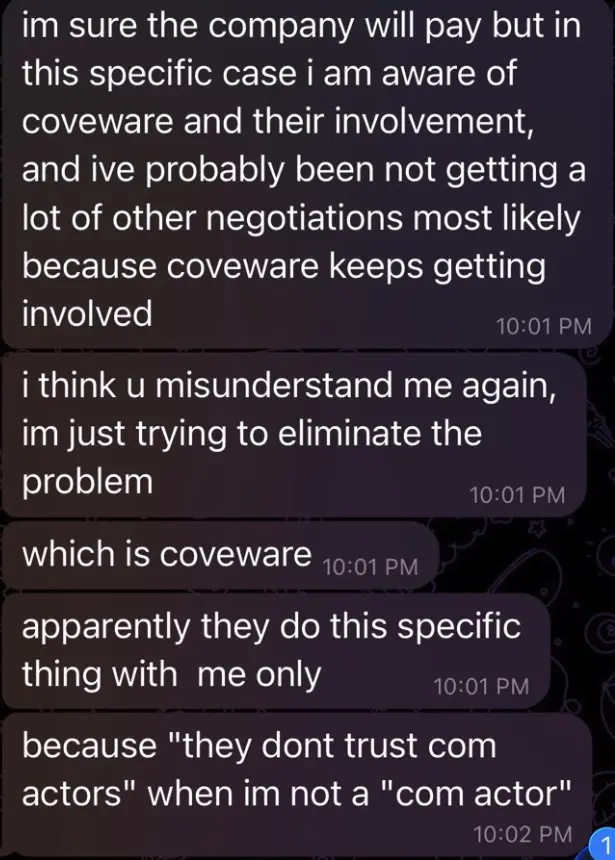
U.S. federal investigators are widening their net in a high-stakes investigation into the notorious hacking syndicate known as ShinyHunters. Recent findings have revealed that executives at two prominent ransomware negotiation firms maintained unnervingly close, and potentially criminal, relationships with the group, which has emerged as one of the most prolific and destructive cyber-extortion threats in recent years.
According to sources close to the investigation, the FBI has identified specific individuals—including a high-level executive within the United States—who allegedly went beyond mere negotiation. Investigators believe this executive actively assisted ShinyHunters in operating a digital portal specifically designed to pressure victimized organizations into meeting ransom demands. This development marks a significant escalation in the government’s efforts to dismantle an organization that has reportedly extorted more than $70 million from victims throughout 2026 alone.
A Legacy of Digital Extortion
Since its emergence in 2019, ShinyHunters has claimed responsibility for a staggering volume of data breaches. Originally spearheaded by cybercriminals operating out of France, the group’s leadership structure shifted as law enforcement agencies across Europe and North America began systematically identifying and apprehending its foundational members.

Control of the brand eventually coalesced around an individual known as "Rey," identified last year as a teenage hacker based in Amman, Jordan. Under this new leadership, the group’s operations became increasingly brazen. In a move that signaled a direct challenge to U.S. federal authorities, the group hacked the FBI’s recruitment portal, fbijobs.gov, in late September 2026. The breach exposed highly sensitive information, including the home addresses, Social Security numbers, and psychological records of bureau personnel, as well as details regarding their specific units and specializations.

The audacity of the fbijobs.gov attack triggered a rapid and aggressive response from the FBI. The bureau moved with unusual speed to detain and interrogate individuals suspected of maintaining contact with Rey. On October 3, 2026, Reuters reported that Jordanian authorities had detained the young hacker, who is currently cooperating with the FBI as part of the broader investigation.
The Downfall of a Key Operative
The transition of power to Rey occurred only after the arrest of a senior member of the ShinyHunters hierarchy. On September 15, 2026, Dutch authorities conducted a high-stakes raid on the home of Pepijn van der Stap, a convicted hacker and core suspect in the ShinyHunters investigation. Reports indicate that police utilized flash-bang grenades to neutralize Van der Stap while he was actively logged into several online accounts, effectively preventing the remote wiping of critical evidence.
Sources familiar with the investigation state that authorities successfully accessed Van der Stap’s Signal instant messaging account. This provided a window into his inner circle, revealing frequent, ongoing communications with ransomware negotiators based in Canada and the United States. Furthermore, these messages proved instrumental in uncovering a chilling murder-for-hire plot. Dutch media outlet RTL reported that the communications contained evidence of plans for two separate contract killings to be carried out abroad. While there is no evidence to suggest these orders were ever executed, the discovery added a violent dimension to what had previously been viewed primarily as a financial crime investigation.
The Arrest of Edward Dubrovsky
The investigation reached a turning point on October 9, when the FBI arrested Edward Dubrovsky, a 54-year-old Canadian cybersecurity executive, in connection with the case. Dubrovsky, who had recently published a book advocating for a policy of consistent engagement with hackers to resolve extortion, faces federal charges for threatening to disclose stolen data and interfering with interstate commerce through extortion. According to court records, federal prosecutors have requested that Dubrovsky remain in custody as the case proceeds, with significant portions of the record currently held under seal.

Internal intelligence suggests that the communications intercepted from Van der Stap’s device were the catalyst for this arrest. These messages purportedly show that Dubrovsky was in possession of confidential information regarding the FBI data breach well before the hackers threatened to leak the agency’s personnel files. Despite his professional obligation to report such critical security threats, investigators allege that Dubrovsky never alerted the bureau, instead maintaining a close, collaborative relationship with the attackers.
The "Shinywire" Extortion Portal
A particularly damning finding in the ongoing probe is the alleged involvement of a U.S.-based consulting firm in the administration of "shinywire[.]com," a now-defunct website used by the group to manage their extortion activities. The site was active from early May 2026 until mid-October and served as a central hub for listing roughly 100 victim organizations.
Each entry on the portal was designed to strip away the anonymity of the victim and force a quick resolution. The site hosted samples of stolen data, providing a countdown for victims to negotiate payment before their sensitive files were released on the group’s Tor-based "shaming" blog. For companies like the medical technology firm Intuitive Surgical, which suffered a major breach in March 2026, the portal served as a public venue for coercion.
Federal investigators believe that at least one executive at a prestigious U.S. consulting firm—which boasts more than 1,000 employees—played an active role in maintaining this site. While the firm and the individuals involved have not yet been formally charged, the existence of such a partnership between a professional service provider and a criminal syndicate highlights a profound breakdown in industry ethics.

A Web of Conflicts
The arrest of Dubrovsky has also cast a spotlight on the internal rivalries within the cybersecurity industry. Reports from The Globe and Mail reveal that earlier this year, Dubrovsky filed a lawsuit in Ontario against Daniel Tobok, the former CEO of the Toronto-based cybersecurity firm Cypfer. Dubrovsky claimed he had become a target in a vendetta by a former business partner.
Adding to the complexity, interviews with former colleagues of Tobok suggest he was known within ransomware circles as "Ghostbyte" as early as 2018. Correspondence from the Dharma ransomware group to a victim in 2018 explicitly directed the victim to reach out to an IT firm in Canada for "guarantees" during negotiations, providing the email address "[email protected]." While Tobok has not responded to requests for comment, digital forensics from services like Constella Intelligence show that email addresses frequently used by Tobok are associated with online accounts using the "ghostbyte" moniker.
Cypfer, for its part, has sought to distance itself from the controversy. In a statement, the company asserted that its business model does not include facilitating ransom payments and that it had no prior knowledge of Dubrovsky’s activities. The firm noted that it has undergone significant structural changes, including an acquisition by the Apros Group, led by former FBI special agent Jason Hogg.
Misaligned Incentives in the Ransomware Industry
The core of the issue, according to industry experts, lies in the financial structure of the ransomware negotiation business. While paying a ransom to recover data is not inherently illegal under U.S. law—unless the group is sanctioned by the Treasury—the practice creates a moral and legal gray area.

Mark Camillo, CEO of the industry group CyberAcuView, argues that the current model creates a dangerous conflict of interest. Many firms charge a percentage of the total ransom payment as their fee. "This makes no sense if they are also the negotiator," Camillo noted. "There needs to be more transparency in the process as no one in the ecosystem should be profiting purely on the size of the ransomware transaction."
This incentive structure appears to have been exploited by several high-profile figures. In July, Angelo Martino, a Florida-based negotiator, was sentenced to 70 months in prison for conspiring with the Blackcat/ALPHV ransomware group to maximize ransom payouts. Similarly, the DOJ recently charged Zohar Pinhasi, CEO of MonsterCloud, with wire fraud for allegedly secretly paying hackers $8 million while charging his own clients $19 million for "remediation" services.
As the FBI continues its investigation into ShinyHunters, the case serves as a stark reminder of the risks inherent in the shadow economy of cyber-extortion. With the bureau actively warning victims against paying ransoms—citing the reality that hackers rarely delete stolen data—the focus is shifting toward the intermediaries who have turned the victimization of corporations and government agencies into a lucrative, and sometimes criminal, business venture.