









For millions of gamers eagerly awaiting the return to the neon-soaked streets of Vice City, the dream of experiencing Grand Theft Auto 6 at a high frame rate on current-generation consoles has officially come to an end. Rockstar Games has confirmed that the highly anticipated title will remain capped at 30 frames per second (fps) across all platforms at launch, including on the recently released PlayStation 5 Pro. This decision settles months of speculation regarding whether the developer would eventually offer a performance mode to prioritize smoothness over graphical fidelity.
For those holding out hope that a post-launch patch might eventually unlock a 60 fps or even a 40 fps mode, the outlook is bleak. Rockstar has clarified that the limitation is not merely a design choice, but a fundamental hardware constraint rooted in the architecture of current-gen consoles. According to the studio, even the increased graphical capabilities of the PS5 Pro are insufficient to overcome the bottleneck that prevents a higher frame rate.
The CPU Bottleneck in Vice City
The primary culprit behind the 30 fps cap is the central processing unit (CPU) found in current-generation consoles. While much of the conversation surrounding console gaming in recent years has focused on the evolution of graphical processing units (GPUs) and their ability to push ray tracing and higher resolutions, Grand Theft Auto 6 represents a different kind of technical challenge. Rockstar’s technology production director, Marc Chambers, recently explained to Kotaku that the game’s complex simulation—the very thing that makes the open world feel alive—is what consumes the majority of the processor’s resources.

When players explore the game world, the console is not just rendering static geometry; it is managing a sophisticated simulation that includes everything from individual artificial intelligence routines for hundreds of NPCs to complex environmental variables, such as the behavior of wildlife, traffic patterns, and the intricate physics of the world. Chambers noted that while the PS5 Pro’s upgraded GPU and advanced upscaling technology significantly improve the game’s aesthetic presentation—adding refined ray-traced shadows and greater image clarity—the console’s processor is only marginally faster than that of the base PS5 model. Consequently, the hardware is simply not powerful enough to handle the immense computational load of the game’s simulation at the higher refresh rates that enthusiasts often demand.
This explanation addresses the common question of whether players might be able to achieve 60 fps by disabling advanced graphical features like ray tracing. Rockstar’s stance suggests that doing so would provide little to no benefit for frame rates, as the bottleneck exists within the logic and simulation engine, not the rendering pipeline. Essentially, the processor is already stretched to its absolute limit, leaving no overhead to drive a higher frame rate. The extra horsepower provided by the mid-cycle console refresh, such as the PS5 Pro, is being utilized to make the game look better—not to make it run faster.
Visual Realism vs. Performance Responsiveness
Despite the disappointment surrounding the frame rate cap, the consensus among technical analysts is that the visual payoff is significant. Digital Foundry, a leading authority on gaming hardware and performance, has characterized Grand Theft Auto 6 as a "landmark achievement in visual realism." Their extensive testing reveals that while both the base PS5 and the PS5 Pro render the game at a native 1440p, the Pro model leverages Sony’s PlayStation Spectral Super Resolution (PSSR) technology to upscale the image, resulting in a presentation that is substantially closer to a clean 4K image. In contrast, the base PS5 version can appear noticeably softer to the eye.
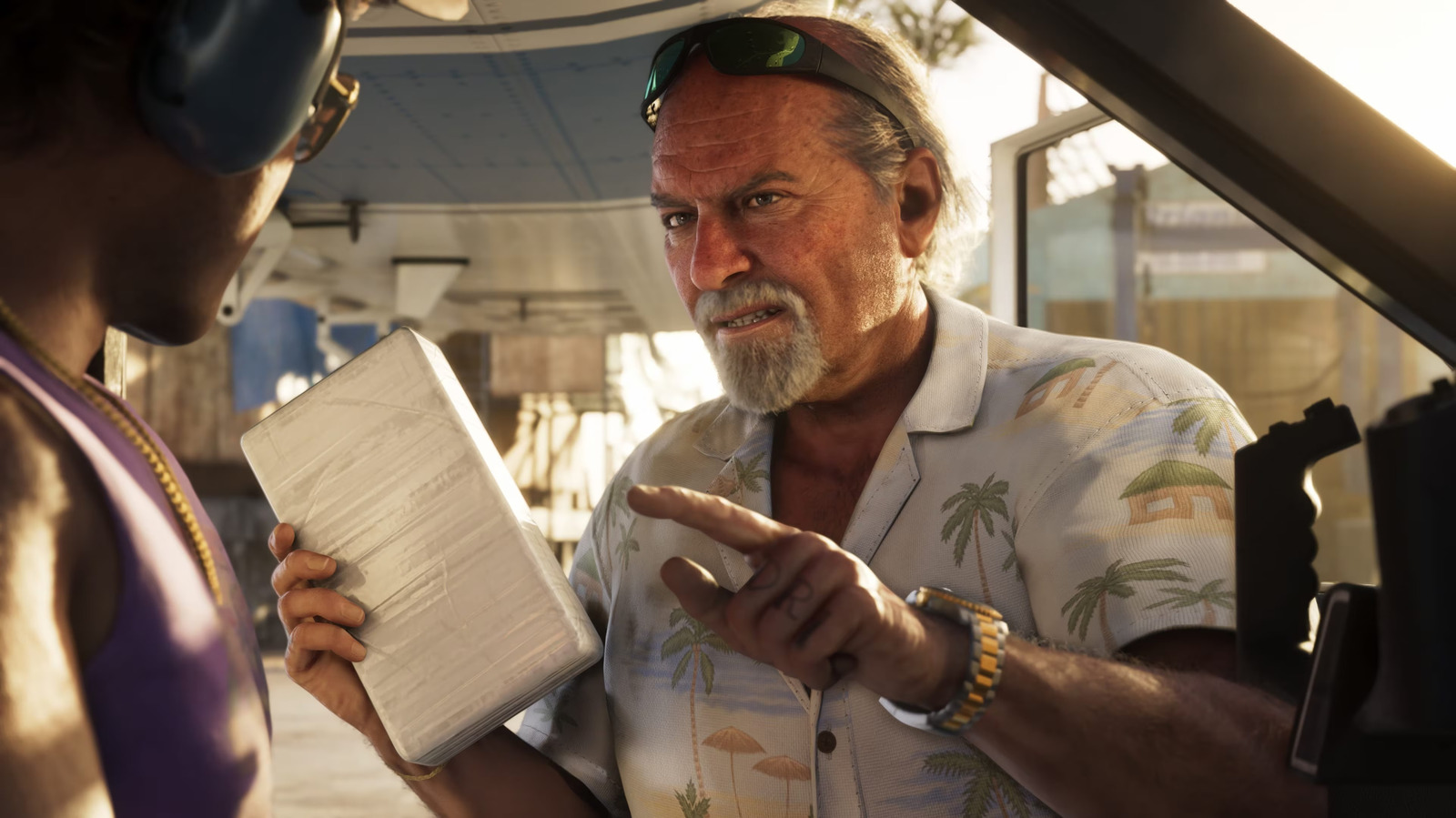
There is, however, a tangible benefit to playing on the more powerful hardware. While both consoles are locked to 30 fps, the stability of that frame rate varies. Digital Foundry reports that the PS5 Pro maintains a locked 30 fps with what they describe as "perfect frame pacing," ensuring a consistent and fluid experience even in the most demanding scenes. The base PS5, while capable of holding 30 fps for the majority of gameplay, is prone to occasional dips into the mid-20s during high-intensity sequences, such as massive explosions or complex scenes with heavy traffic and high NPC density.
This distinction highlights the trade-off inherent in modern console development. Rockstar has prioritized the density, complexity, and visual fidelity of its open world over the higher responsiveness of a 60 fps target. For a studio known for pushing the boundaries of what is possible in interactive media, this suggests that the vision for GTA 6 required a level of simulation depth that current-gen processors can only support at a 30 fps cadence.
The Path to PC and the Future of GTA 6
As it stands, the console version of the game is the only experience available. While Rockstar has yet to provide an official announcement or a release window for a PC port, the industry’s history suggests that one will eventually materialize. Historically, Rockstar has staggered its releases, often bringing titles to PC months or even years after their console debuts. Given the massive scale of Grand Theft Auto 6, it is widely anticipated that a PC version will offer the hardware flexibility required to unlock higher frame rates, provided the user has a sufficiently powerful machine to handle the simulation load that currently taxes console CPUs.
For the time being, players looking to explore the new and improved Vice City must rely on the PlayStation 5, PlayStation 5 Pro, or the Xbox Series X|S. Cloud streaming options are also available for those using older hardware, such as the Xbox One, but these platforms will similarly be tethered to the performance limitations defined by the game’s core engine.
The decision to cap the frame rate at 30 fps serves as a stark reminder of the constraints that developers face even at the start of a new generation of hardware. As the industry moves toward increasingly complex simulations and denser game worlds, the demand on CPU performance is likely to remain a focal point for both developers and gamers. While the inability to play at 60 fps may be a point of contention for some, the technical achievements showcased in the game’s environment and visual fidelity appear to be the priority for Rockstar Games. For those who prioritize raw performance and high frame rates above all else, the wait for a PC version remains the only viable horizon, continuing a long-standing tradition of waiting for the definitive, unlocked version of Rockstar’s most ambitious projects.