





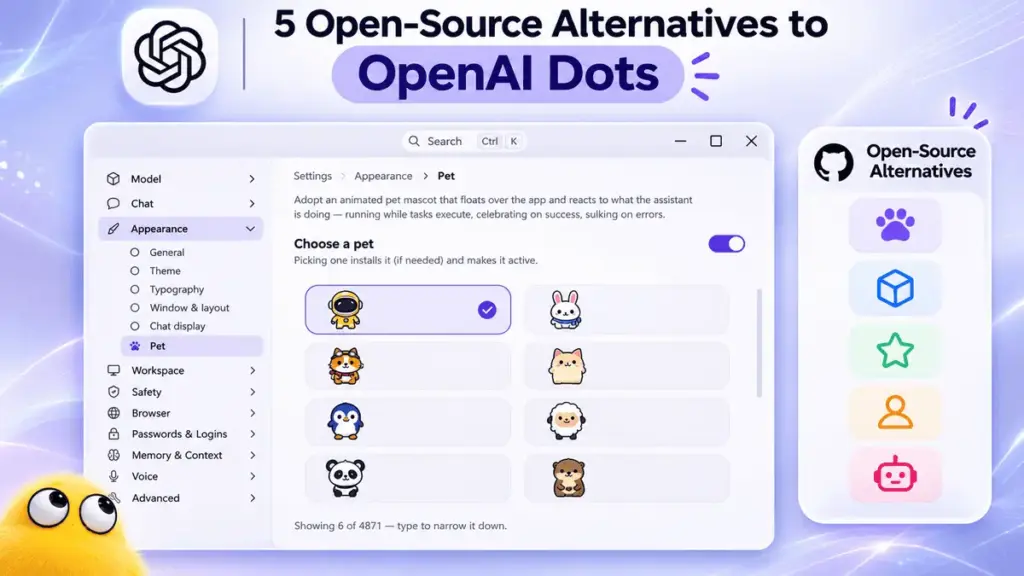
The landscape of artificial intelligence is rapidly shifting away from passive chatbots that wait for a prompt toward proactive, autonomous agents capable of operating around the clock. This paradigm shift has been significantly accelerated by concepts like OpenAI Dots, an always-on AI agent designed to bring a deeply personalized assistant experience directly into mainstream platforms like ChatGPT. Conceptualized to act as a tireless digital worker, an agent of this caliber can function seamlessly in the background even when users are away from their computers or asleep.
Such capabilities blur the line between traditional software applications and intelligent companions. Users can interact with these systems through their mobile devices, issue complex instructions, schedule long-term tasks, and integrate their preferred digital applications. Whether the objective is conducting exhaustive market research, managing a chaotic inbox, monitoring ongoing software projects, or building fully functional websites and applications, modern AI agents utilize specialized coding tools and reusable workflows to tackle intricate objectives.
Unlike standard conversational models confined to a single dialogue window, an always-on agent typically operates within a dedicated cloud environment, retains contextual memory of ongoing projects, and executes tasks asynchronously without requiring continuous human oversight. Crucially, these systems are designed to pause and seek user approval when encountering critical decision points, ensuring that autonomy remains balanced with human control.
However, this high degree of integration and cloud dependency has also sparked a growing demand for independence. A significant segment of developers, privacy advocates, and enterprise users prefer solutions that do not tie them entirely to a single commercial ecosystem. The desire to run localized agents, select specific underlying language models, install bespoke custom skills, and maintain absolute sovereignty over sensitive personal and professional data has fueled a vibrant open-source movement.
The Open-Source Ecosystem for Persistent AI Agents
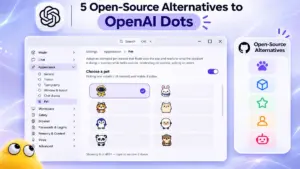
As the demand for decentralized automation grows, several open-source projects have emerged to challenge proprietary models, offering persistent memory, robust messaging integrations, and versatile automation toolkits. These alternatives empower users to construct and host their own always-on assistants with varying degrees of complexity and architectural focus.
Leading the charge in this domain is OpenClaw, widely regarded as one of the most comprehensive open-source equivalents to proprietary background agents. Designed to operate directly on a user’s personal computer or a dedicated remote server, OpenClaw bridges the gap between AI intelligence and daily communication by natively integrating with popular messaging platforms such as WhatsApp, Telegram, Slack, and Discord.
What distinguishes systems like OpenClaw from traditional interactive interfaces is their proactive architecture. Rather than sitting idle until a user initiates a chat, these assistants can be configured with scheduled tasks and routine heartbeat checks. This allows the software to continuously monitor ongoing workflows, dispatch periodic progress updates, and proactively remind users of critical deadlines or upcoming events. Furthermore, OpenClaw incorporates persistent memory modules, browser automation capabilities, support for custom skill extensions, and compatibility with a wide array of foundational AI models. Management of these disparate components is centralized through a comprehensive web-based Control UI, though the platform does demand a certain level of technical proficiency regarding setup, security configuration, and resource management.
Taking a slightly different philosophical approach to personal automation, the Hermes Agent, developed by Nous Research, focuses heavily on experiential learning rather than mere data retention. While standard assistants recall past conversations to maintain context, Hermes is engineered to transform successfully completed tasks into reusable programmatic skills. As users collaborate with the agent over time, it refines these acquired capabilities, searches through historical interaction logs, and builds a nuanced understanding of user preferences and project trajectories.
The Hermes ecosystem also supports scheduled background jobs, subagent delegation, diverse messaging integrations, and flexible language model selection. To make these advanced capabilities accessible, the project provides Hermes Desktop, a dedicated interface designed for seamless chatting, skill management, tool activity monitoring, and file manipulation, alongside a traditional browser dashboard. This makes it a compelling option for individuals seeking an assistant that demonstrates noticeable improvement in efficiency and contextual awareness the longer it is utilized.
Collaborative Intelligence and Multi-Layered Memory
As autonomous agents grow more sophisticated, developers are looking beyond single-agent architectures toward collaborative ecosystems capable of handling multifaceted workloads. Projects like QwenPaw, formerly known as CoPaw, address this need by structuring personal automation around advanced memory systems and multi-agent cooperation.
QwenPaw employs a sophisticated three-layer memory architecture designed to simultaneously maintain immediate working context, extensive conversation history, and an evolving personal knowledge base. A standout feature of this architecture is the ability to deploy multiple specialized agents, each equipped with distinct memories and custom skill sets, allowing them to collaborate collaboratively on complex, multi-step projects.
Supporting scheduled execution, native messaging platform connectivity, browser tools, and advanced document processing, QwenPaw offers a high degree of operational versatility. Users can interact with the system via a web console or a desktop application, the latter of which remains in active beta development. By supporting both commercial AI APIs and locally hosted models, the project grants users significant flexibility in balancing operational costs with strict data privacy requirements.
Local-First Efficiency and Lightweight Architecture
For users prioritizing local execution, hardware efficiency, and tight integration with desktop operating systems, OpenHuman presents a compelling alternative. Built using the Rust programming language, the project adopts a strict local-first philosophy regarding memory management, agent execution, and system-wide automation.
The OpenHuman desktop application enables users to interact directly with localized agents, manage complex workflows, and manipulate files and software applications natively. The system supports comprehensive browser and computer automation, persistent memory loops, scheduled workflows, and mandatory user approval gates for actions requiring explicit authorization. By leveraging Rust, OpenHuman achieves high operational efficiency and low infrastructure overhead, making it feasible to run multiple concurrent agents locally, though the project remains in early beta and still exhibits minor developmental rough edges.
At the other end of the structural spectrum lies nanobot, a project tailored for developers seeking a minimalist, lightweight approach to personal AI automation. Built in Python, nanobot is designed to run efficiently on local hardware or modest remote servers while maintaining core functionalities such as persistent memory, scheduled automations, web tools, file operations, and messaging platform integrations.
Despite its compact architecture, nanobot includes a browser-based interface for managing conversations, inspecting tool executions, configuring underlying models, and tracking automation tasks. Its flexibility is further enhanced by compatibility with both commercial AI providers and locally hosted open-source models via platforms like Ollama. For technical users interested in dissecting, customizing, and extending the foundational mechanics of a personal AI assistant, nanobot offers a transparent and practical entry point into the world of autonomous agents.
Comparative Landscape of Open-Source Agents
The rapid diversification of the open-source agent market has given rise to options with vastly different strengths, interfaces, and licensing frameworks. OpenClaw boasts widespread community engagement with hundreds of thousands of GitHub stars, focusing heavily on always-on assistance through web and application interfaces under an MIT license. Hermes Agent similarly utilizes an MIT license, prioritizing advanced memory retention and reusable skills via web and desktop environments.
Meanwhile, QwenPaw employs the Apache 2.0 license, leveraging web and beta desktop tools to champion multi-agent collaboration. OpenHuman opts for the copyleft GPL-3.0 license, centering its utility on computer automation through desktop and web interfaces. Finally, nanobot maintains an MIT license, serving as a lightweight personal agent manageable via web and terminal environments.
As the boundaries between human intent and software execution continue to blur, these open-source projects collectively illustrate that the future of AI assistance is not confined to proprietary cloud ecosystems. Whether through localized Rust applications, collaborative multi-agent frameworks, or lightweight Python scripts, users now have diverse pathways to deploy intelligent, persistent agents tailored to their exact operational and privacy requirements.
Abid Ali Awan is a certified data scientist professional who loves building machine learning models. Currently, he is focusing on content creation and writing technical blogs on machine learning and data science technologies. Abid holds a Master’s degree in technology management and a bachelor’s degree in telecommunication engineering. His vision is to build an AI product using a graph neural network for students struggling with mental illness.