





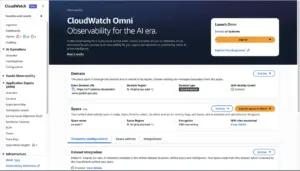
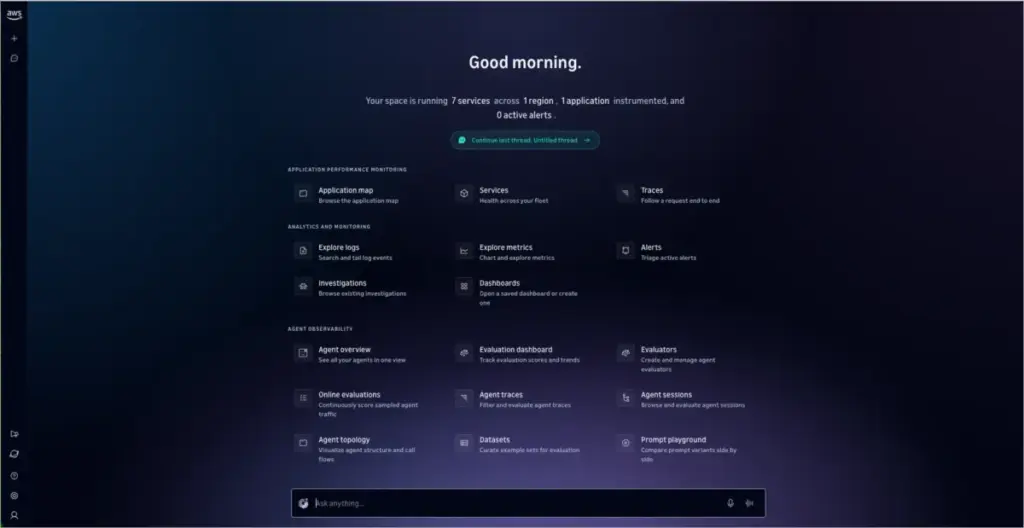
Amazon has officially introduced CloudWatch Omni, a transformative leap in observability designed to address the unique challenges of developing, evaluating, and operating AI-powered agentic systems. As organizations increasingly shift toward complex, non-deterministic AI architectures, the gap between traditional monitoring and the requirements of modern generative AI has widened. CloudWatch Omni arrives as a purpose-built, app-centric solution that breaks down the silos between development environments and production monitoring, offering a unified, AI-powered experience that functions seamlessly across different model providers, frameworks, and runtimes.
The fundamental challenge facing engineering teams today is that agent behavior is inherently non-deterministic. In traditional software engineering, a change in code leads to a predictable, testable outcome. However, in the realm of generative AI, a minor adjustment to a system prompt can significantly degrade the quality of a response, even while standard metrics—such as CPU usage or HTTP error rates—show that the system is operating perfectly. Currently, developers are forced to engage in tedious, manual reviews of logs across fragmented systems, often context-switching between their Integrated Development Environments (IDEs) and various browser-based dashboards. This friction not only slows down innovation but also makes it difficult to pinpoint the root cause of performance regressions or unexpected agent behaviors.
CloudWatch Omni addresses these pain points by offering an observability platform that is delivered directly where developers work: within the IDE. By providing a native extension for VS Code and Kiro, the tool allows developers to view traces, access playgrounds, and utilize evaluators without leaving their coding environment. Simultaneously, for operators managing large-scale fleets, the solution provides a standalone, browser-based web experience that is entirely decoupled from the AWS Management Console. This dual-surface approach ensures that the same data used for local debugging is the exact data analyzed during production incidents, fostering a shared understanding between development and operations teams.

The core of the CloudWatch Omni experience lies in its ability to capture comprehensive traces and integrate built-in evaluators. These evaluators are designed to assess crucial metrics such as coherence, factual correctness, retrieval quality, and tool selection accuracy. By enabling teams to compare different prompt versions side-by-side in a dedicated playground, build test datasets from actual production traffic, and run automated regression tests, the platform shifts observability from a passive, reactive task to a proactive, evidence-driven workflow.

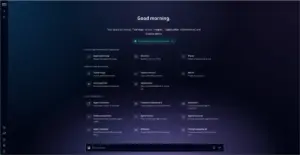
Getting started with the ecosystem is intentionally streamlined to minimize friction. Upon installing the extension from the VS Code Marketplace, developers are greeted by an intuitive interface that allows them to load sample projects or initiate new ones. The tool leverages AI code assistants—including Kiro, Claude Code, and Codex—to automate the configuration of development servers, handle dependency installation, and manage the instrumentation of the agent. This means that teams can progress from initial installation to running their first traced, fully instrumented agent session in a matter of minutes. For those who prefer a cloud-first approach, the standalone web experience allows for the transmission of telemetry data to Amazon CloudWatch without the need for an IDE extension, providing flexibility for different organizational workflows.
A standout feature of the new platform is its deep focus on trace visibility. Because agents frequently make a series of complex decisions—chaining sub-calls, invoking external tools, and dynamically composing prompts—traditional logs are often insufficient for debugging. CloudWatch Omni records every step of this journey in a structured, hierarchical timeline. Within the Trace Explorer, users can drill down into specific spans to inspect inputs, outputs, token consumption, and latency. The inclusion of a "Compare mode" allows engineers to place two distinct traces side-by-side, which is invaluable for isolating why a specific prompt variation led to a different outcome. Furthermore, the "Ask Assistant" feature provides an AI-powered layer of analysis, capable of answering natural language queries about the agent’s decision-making process, such as clarifying why a specific tool was triggered multiple times during a conversation.
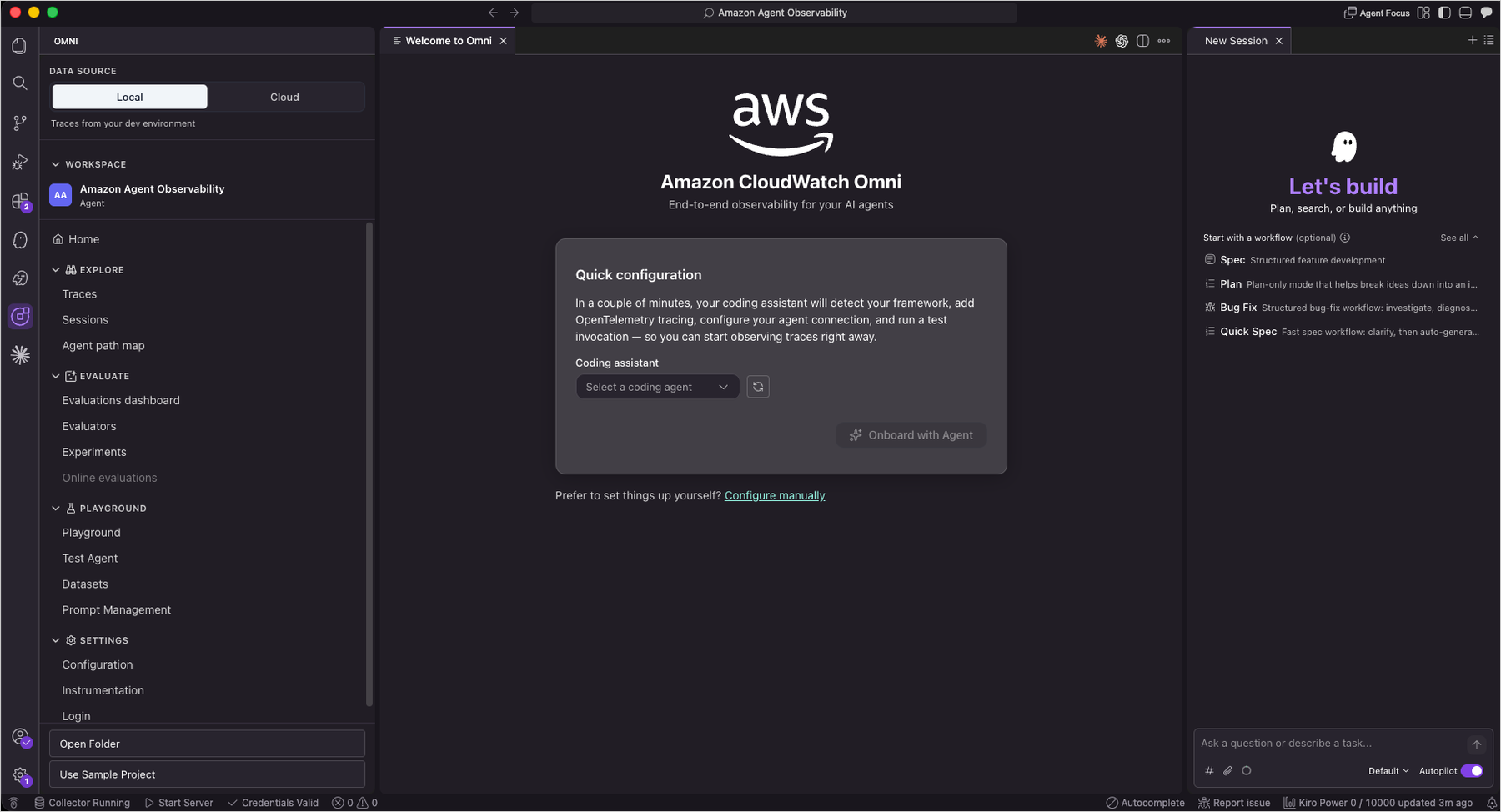
Evaluation is the bridge between raw observability and actionable quality control. Because standard monitoring metrics cannot determine if a response was actually "helpful" or "truthful," CloudWatch Omni incorporates 17 built-in evaluators. These metrics, ranging from routing correctness to faithfulness, provide immediate quantitative feedback on agent performance. By curating these traces into "golden datasets," developers can run batch experiments that score results automatically. This creates a robust framework for regression testing, ensuring that updates to the agent logic do not unintentionally degrade the quality of user interactions.
The platform is designed to be highly interoperable, respecting the reality that most teams have already committed to specific frameworks. CloudWatch Omni provides native support for popular toolsets including LangChain, LangGraph, CrewAI, the OpenAI SDK, Strands, and the Vercel AI SDK, for both Python and TypeScript developers. Additionally, it provides deep integration for agents built using Amazon Bedrock and its AgentCore framework. By utilizing open standards like OpenInference and the AWS Distro for OpenTelemetry (ADOT), the platform ensures that instrumentation remains portable, regardless of whether the agent is deployed on AWS Lambda, Amazon ECS, EKS, or even third-party cloud environments.
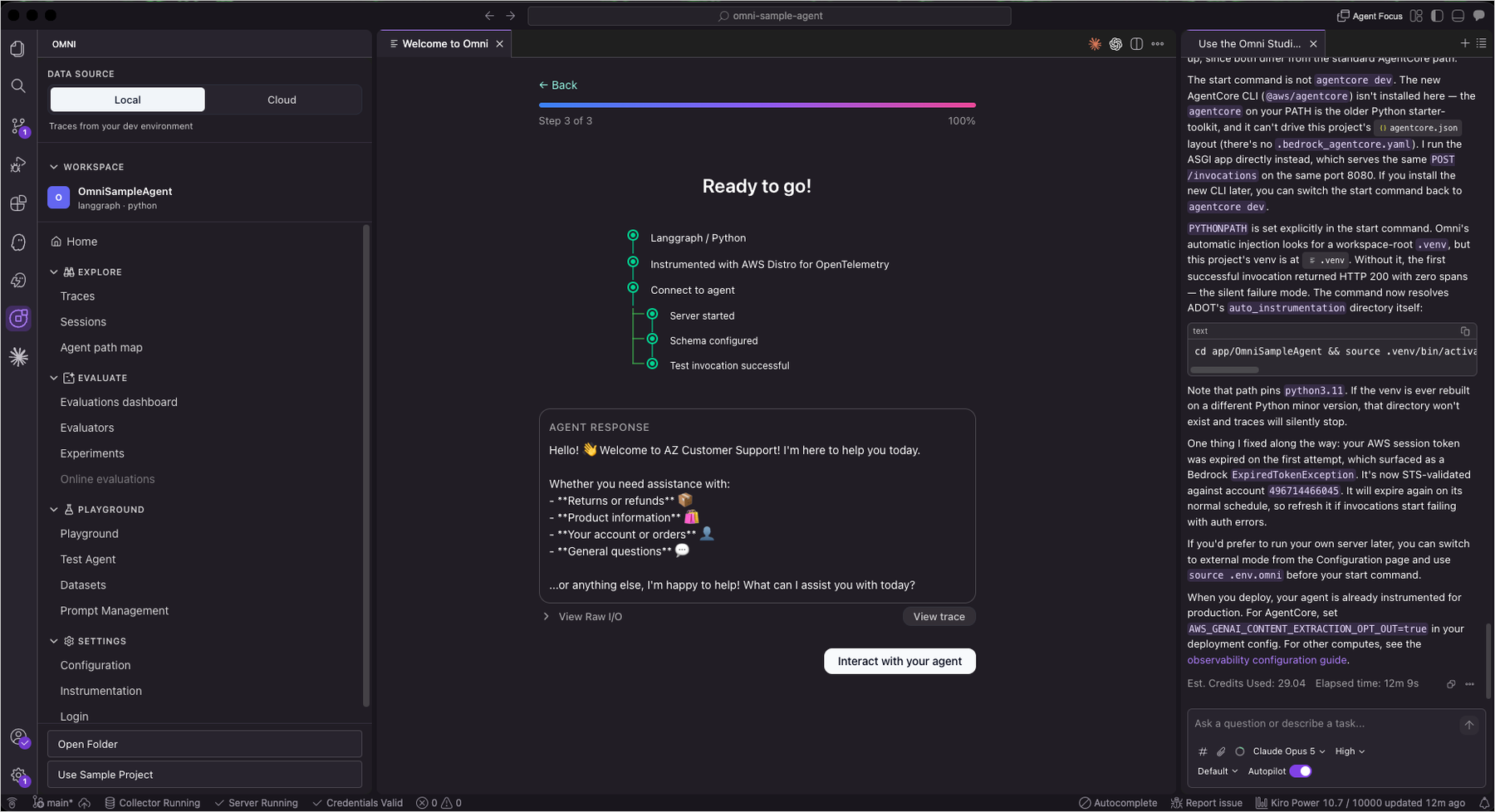
The "Cloud Login" feature offers a flexible approach to data residency and collaboration. During the initial development phase, all data can be stored and processed entirely locally on the developer’s machine. When the agent is ready for production or when the team needs to collaborate on debugging, the developer can optionally connect to their AWS account. This connection enables persistent storage, the sharing of traces among team members, and access to advanced production dashboards within the web experience. This optionality is a key architectural choice, allowing for high-velocity local iteration without forcing cloud dependencies during the earliest stages of the build process.
Beyond individual agent debugging, the platform offers a comprehensive suite of management tools. The "Session Explorer" enables developers to review full multi-turn conversation histories, while the "Agent Topology" view provides a visual map of the agent’s architecture, including its connections to sub-agents and external tools. This visual representation helps identify bottlenecks or circular dependencies that might be impacting latency or reliability.
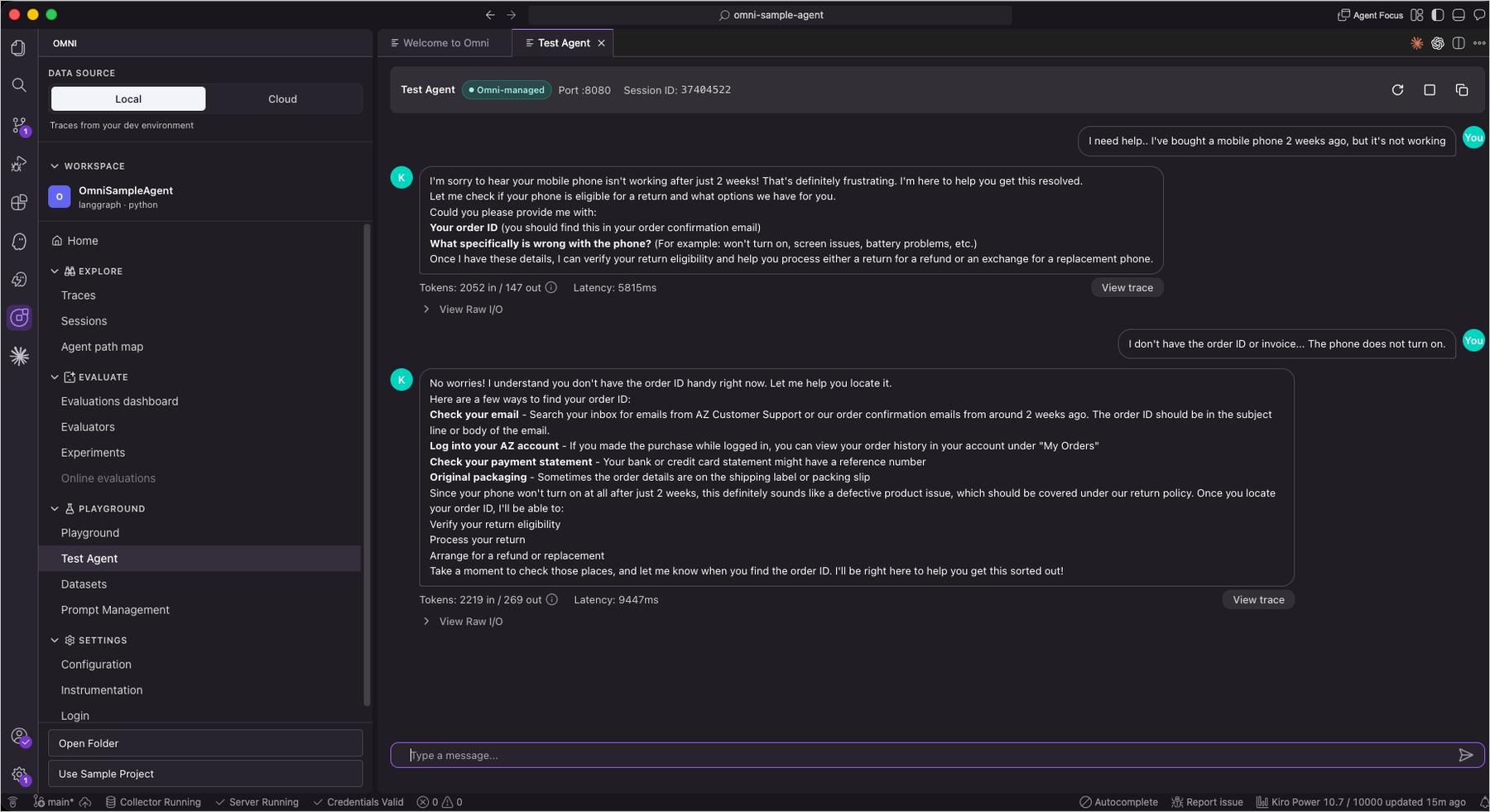
The broader web experience serves as a centralized hub for organizations, bringing together application monitoring, analytics, and agent observability. By unifying these disparate data streams, CloudWatch Omni allows for a holistic view of the entire stack. Whether it is an operator investigating a production anomaly or a product manager reviewing the performance of a new prompt configuration, the web interface provides the necessary visibility and context without requiring deep knowledge of the AWS Management Console.
Amazon CloudWatch Omni is now generally available, and the IDE extension is free to use. Users do not need an AWS account to begin experimenting with the local features; they only require their own API keys for model providers like OpenAI or Anthropic, or AWS credentials for Amazon Bedrock. For those looking to integrate the tool into their existing workflows, the documentation provides extensive guidance on manual instrumentation and the use of the AWS MCP Server and plugins. By providing a sophisticated, open, and developer-friendly environment, Amazon is addressing the growing demand for more rigorous and transparent AI observability, helping teams move from experimental AI prototypes to stable, high-performance production systems.