










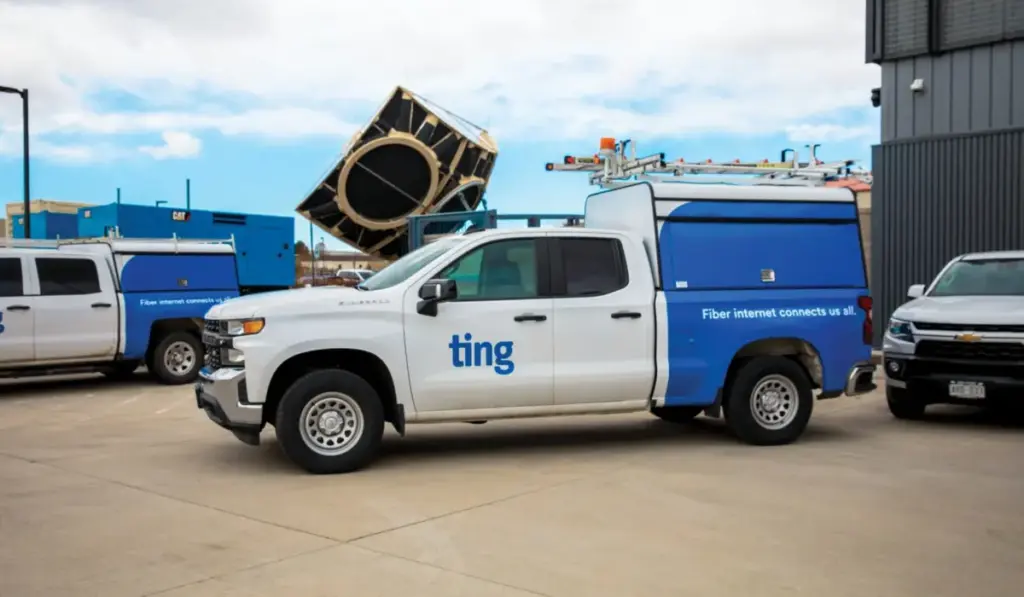
In a strategic maneuver that rescues a financially constrained competitor while scaling up its own regional presence, gFiber is stepping in to take over Ting Fiber’s dark fiber network lease in Colorado Springs. The transaction provides much-needed relief for Ting Fiber and its parent company, Tucows, as they grapple with ongoing financial pressures and operational restructuring, while granting gFiber a firm operational foothold in one of Colorado’s largest municipalities.
Under the terms of the agreement, Ting Fiber will continue servicing its broadband subscribers in Colorado Springs without interruption until the transaction officially wraps up. The transfer of the lease is targeted for completion on March 31, 2027. Upon closing, gFiber—formerly known as Google Fiber—will be formally substituted as the tenant on the high-speed infrastructure, effectively assuming Ting’s remaining obligations under the multi-decade agreement with Colorado Springs Utilities (CSU).
The transfer agreement comes in the wake of a turbulent period for Tucows, which initiated a broad review of strategic alternatives for Ting Fiber in late 2025 as the subsidiary continued to absorb mounting operational losses. By June of the following year, Tucows disclosed in regulatory filings that "substantial doubt" existed regarding Ting Fiber’s ability to meet its upcoming financial obligations within a one-year window unless it secured fresh capital injections. These financial headwinds followed a major cost-restructuring plan executed by Tucows in 2024, which forced the company to implement a 42% workforce reduction at Ting Fiber alongside a 17% cut across Tucows’ total workforce.

In a public FAQ addressing the Colorado Springs transition, Ting Fiber noted that it has made the difficult decision to curtail its local footprint in order to concentrate future investments and capital deployment in its other established markets. Beyond Colorado Springs, Ting Fiber operates fiber-to-the-home broadband networks in select regions across California, Idaho, Maryland, North Carolina, and Virginia.
Ting Fiber’s initial entry into Colorado Springs originated from a multi-phase infrastructure initiative undertaken by CSU to deploy an open-access fiber network capable of passing approximately 200,000 residential and commercial locations throughout the city. In August 2023, the municipal utility selected Ting Fiber to serve as the inaugural anchor tenant on the XGS-PON-based infrastructure.
According to CSU Chief Financial Officer Tristan Gearhart, speaking recently to the Colorado Springs Gazette, the utility-owned network currently passes roughly 75,000 homes. CSU anticipates that the overarching construction project will reach completion within just a few months of its original end-of-2028 target date.
The financial scale of the underlying infrastructure commitment is substantial. At the end of the second quarter of 2026, Ting’s remaining aggregate payment obligations tied to the original 30-year lease with CSU stood at approximately $322.8 million, as disclosed by parent company Tucows in an October 10-K filing. Under the terms of the initial 30-year contract signed with the utility, CSU was projected to generate approximately $670 million in total lease revenues over the life of the agreement.
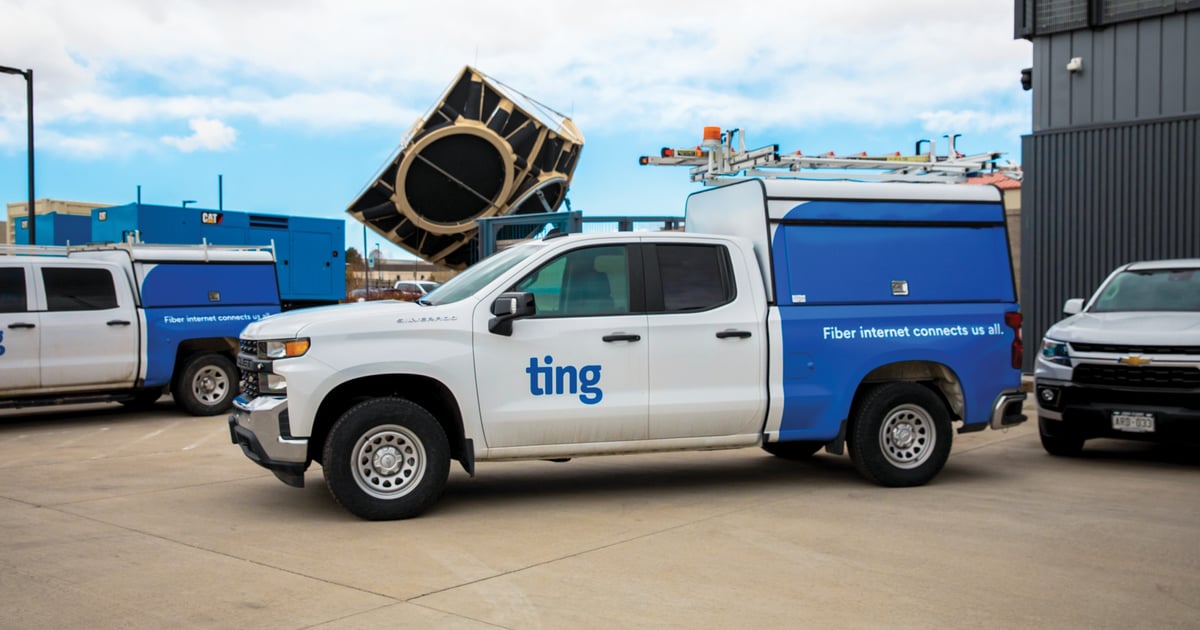
No Immediate Change for Ting Fiber Customers
For the more than 2,000 active Ting Fiber subscribers in Colorado Springs, day-to-day service will continue without disruption during the transition period. Customers will retain access to their current 2-Gig broadband packages—which are currently priced at $89 per month—as well as bundled home broadband and mobile plans starting at $99 per month, until they choose to cancel or transition to new offerings.
Once gFiber takes over the operational reins, the company is expected to introduce its own distinct service portfolio to the Colorado Springs market. Ting Fiber indicated in its customer FAQ that gFiber plans to begin taking orders in the region by the end of 2026, with customer installations scheduled to get underway in early 2017. In anticipation of the rollout, gFiber has already launched a dedicated regional landing page allowing local residents to sign up for availability alerts.
Partnering with a municipal utility on an open-access deployment model is a familiar strategy for gFiber. The company operates a similar collaborative arrangement with a utility provider in Huntsville, Alabama. Louis Lipner, gFiber’s head of strategic partnerships, noted that the company has been highly satisfied with the Huntsville deployment and has actively sought an entry point into the Colorado Springs market since at least 2022.
gFiber’s Expanding Footprint in Colorado
The Colorado Springs lease transfer significantly broadens gFiber’s geographical footprint across Colorado. The move builds upon the company’s ongoing and completed fiber rollouts in several surrounding front range communities, including Highlands Ranch and Douglas County, Wheat Ridge, Westminster, Lakewood, and Denver. In Denver, gFiber utilizes its proprietary Webpass fixed wireless access platform to deliver high-speed connectivity. Furthermore, the company has active plans to construct fiber infrastructure in additional Colorado markets, including Golden, Broomfield County, and Adams County.
This regional expansion also unfolds against the backdrop of a broader national consolidation effort. The Colorado Springs transaction coincides with a pending merger between gFiber and Astound Broadband, a transaction designed to create a unified fiber powerhouse passing more than 7.11 million locations. Expected to close later this year, the combined entity will be majority-owned by investment firm Stonepeak, while Alphabet—gFiber’s corporate parent—will retain a significant minority equity stake. Upon completion of the merger, the combined business will operate under the gFiber brand and remain under the leadership of gFiber’s current executive team.