










By Iain Morris, International Editor, Light Reading
November 13, 2026
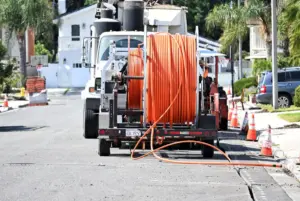
The construction of new mobile sites remains a relentless, seemingly never-ending undertaking for Rakuten Mobile, the loss-making Japanese telecommunications carrier that has continually struggled to make a decisive commercial impact on the highly competitive domestic market. Six years ago, when the ambitious greenfield operator was first starting out, executives confidently projected that it would only need between 40,000 and 50,000 cell sites to completely blanket Japan with high-speed wireless connectivity. At the time, company leadership argued that simplified, highly elegant radio designs would organically boost coverage by 30% to 40% compared with traditional, legacy infrastructure technology.
Following a series of subsequent strategic reappraisals, network adjustments, and expansions, the company today operates a staggering 106,000 sites in total across the country. Yet, despite this massive infrastructure buildout, Rakuten is still not finished constructing new locations.

The true degree to which Rakuten has historically relied upon a domestic roaming agreement with rival carrier KDDI to provide nationwide geographic coverage became starkly apparent earlier this year in August, when KDDI abruptly decided to wind down and terminate that arrangement. This sudden cutoff has forced Rakuten’s hand, compelling the company to commit substantial additional financial capital toward accelerated network rollouts to fill persistent coverage gaps as quickly as humanly possible. Meanwhile, the heavy corporate agony of ongoing financial losses stubbornly persists.
While the exact number of new cell sites Rakuten plans to construct has not been explicitly specified to the public, senior executives have openly disclosed that the enterprise now faces a massive, unprecedented spike in capital expenditure during the final quarter of the fiscal year. Over the course of 2025, the standalone telecom division of Rakuten invested approximately 63 billion Japanese yen (roughly US$390 million) in total capital expenditures, a figure significantly lower than what it had funneled into site deployments during earlier, formative years.
This year, however, the picture has shifted dramatically, with the company needing to secure roughly JPY200 billion ($1.3 billion) to fund its urgent infrastructure requirements. By the close of September, Rakuten had deployed only JPY105.7 billion ($660 million) of that total budget. The remaining financial obligation of JPY94.3 billion ($590 million) slated for the final quarter represents an outlay roughly 3.3 times greater than the capital it pumped into network capex during the corresponding final quarter of 2025.
Had the company chosen to proceed at a more deliberate or conservative pace, Rakuten would have risked losing a significant wave of subscribers directly affected by KDDI’s strategic decision to withdraw its roaming services. That acute business risk was openly acknowledged by Kazuhiro Suzuki, Rakuten Mobile’s co-CEO, during a financial results webcast held earlier today.
"We will continue strengthening our own network and improving service quality to dispel customer concerns about the network," Suzuki said through a translator, emphasizing the critical operational priority placed on network self-reliance.
Spectrum Shortage Compounds Infrastructure Burdens
Despite these aggressive infrastructure efforts, Rakuten explicitly blamed lingering customer "concerns" surrounding "roaming reduction" for a noticeable slowdown in the rate of customer additions during the previous quarter. A year prior, the operator successfully added 405,000 net subscribers over the August-to-September reporting period. By contrast, last quarter’s tally dropped markedly to 297,000 new users.
This deceleration leaves Rakuten serving around 11 million mobile customers within a mature, four-player market that accounts for approximately 234 million total mobile subscriptions, according to official regulatory data. By comparison, SoftBank, the third-biggest operator in the country, comfortably commands a base of 57 million subscribers. Rakuten’s current total translates into a paltry 5% share of the overall mobile market.
This subscriber base has proven stubbornly insufficient for the business to break even after absorbing the staggering costs associated with building out a nationwide network from scratch. Third-quarter financial results published this week demonstrate that operating revenues grew by a healthy 17.1% year-over-year, reaching JPY111.4 billion ($700 million). This top-line expansion was driven primarily by steady subscriber growth and higher average spending per customer.
While Rakuten Mobile’s operating loss did narrow to JPY30.3 billion ($190 million), down from an operating loss of JPY37.3 billion ($230 million) recorded during the same period a year earlier, true operational profitability remains frustratingly elusive for the challenger brand.
A primary structural disadvantage compounding Rakuten’s financial woes is a distinct shortage of prime wireless spectrum. Having entered the Japanese mobile market relatively late compared to its entrenched legacy competitors, Rakuten holds frequency licenses covering only 186MHz of usable spectrum—ignoring the somewhat commercially useless millimeter-wave bands that offer limited propagation. Furthermore, roughly 100MHz of its modest allocation resides within the 3.5GHz band, which represents a notoriously poor option for achieving cost-effective wide-area geographic coverage or deep in-building service penetration.
In sharp contrast, rival SoftBank’s frequency allocation comfortably covers more than 250MHz, while major network operators in other international regions command vastly superior bundles. T-Mobile US, for instance, operates with around 400MHz of spectrum resources. Lacking the lower-frequency assets that naturally amplify signals and propel them into difficult, hard-to-reach physical locations, Rakuten has found itself with virtually no strategic alternatives to aggressive network densification—except for the roaming partnership that KDDI has now chosen to abandon.
Virtualization and Open RAN Promises Face Reality Check
Discussing its ongoing network investment strategies earlier today, Rakuten executives could not resist mentioning the foundational concepts of virtualization and Open Radio Access Network (RAN) technology—advanced architectural paradigms that the company previously marketed heavily as revolutionary tools capable of radically lowering deployment costs while simultaneously boosting service quality.
Currently, the operator utilizes a RAN Intelligent Controller, a sophisticated feature embedded within its proprietary open architecture, to host specialized network software. This capability allows engineers to dynamically adjust the physical tilt of remote antennas without requiring manual, on-site intervention, thereby optimizing localized coverage and network capacity.
However, many of these exact same network optimization features are readily available to Japan’s other established telecommunications incumbents through traditional, legacy network equipment vendors. Despite insisting years ago that software-driven automation and simplified radio hardware designs would allow it to bypass traditional capital constraints and minimize site counts, Rakuten has clearly been forced by operational reality to construct tens of thousands more physical sites than it originally projected.
Since 2019, when the broader Rakuten corporate group first unveiled its ambitious telecom disruption plans, the division has accumulated cumulative net losses totaling approximately $7.9 billion. For all its early industry fanfare, virtualization and open RAN technologies appear to have been massively oversold as inherently transformative economic factors.
Typically, periods of severe financial distress prompt aggressive rounds of corporate cost-cutting, structural belt-tightening, and workforce layoffs by major telecom operators. Yet Rakuten has long prided itself on maintaining an ultra-slim operational profile, boasting a significantly smaller operational workforce compared to its older, legacy rivals. The corporate equivalent of an elite athlete, the company argues it has virtually no excess weight left to shed without directly compromising core network performance and reliability.
Rakuten Mobile spent approximately JPY105.3 billion ($660 million) in operating expenses during the third quarter of 2025, but that figure edged upward to JPY112.7 billion ($700 million) for the same reporting period this year, driven directly by "higher basestation construction costs." Given the steep capital expenditure increases projected for the current quarter, operating expenditures are widely expected to climb further.
None of these operational hurdles, however, currently attract the intense global industry scrutiny they would have commanded several years ago, back when Rakuten stood front and center as the primary talking point of the international telecommunications sector. The volume dial surrounding open RAN has been noticeably turned down across the broader industry after the vast majority of global telcos declined to adopt the architecture at scale, preferring instead to stick with traditional vendor ecosystems.
As the fickle telecommunications industry desperately latches onto whatever emerging trends the broader information technology sector introduces, market attention has decisively shifted away from open RAN toward artificial intelligence and the looming development of the 6G standard. Graphics giant Nvidia, for instance, has actively encouraged traditional telcos to look far beyond the standard Intel server chips utilized by Rakuten, urging them instead to base future 5G and edge workloads on its immensely powerful graphics processing units—the heavy hardware engines driving modern AI large language models. As the industry charts this next capital-intensive frontier, the fundamental economic questions facing alternative network operators remain as pressing as ever.