









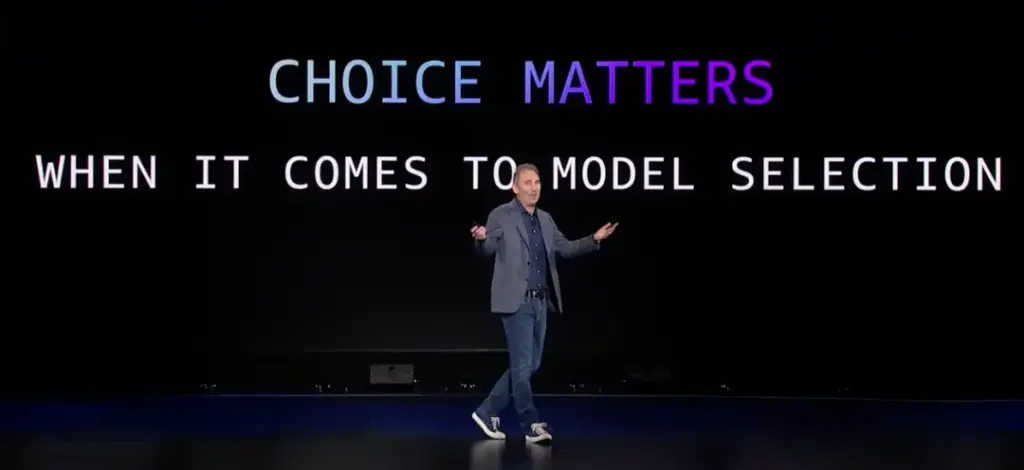
In the rapidly evolving landscape of generative artificial intelligence, the conversation has shifted. For much of the last two years, the industry was captivated by a single, overriding question: "How smart is this model?" Developers and enterprise architects were primarily concerned with raw capability, chasing the largest, most parameter-heavy models available to solve their most complex problems. However, as we move further into 2025, the focus has fundamentally changed. The defining theme of the current era is choice—specifically, the ability to select the right tool for the right job, balancing intelligence, latency, and cost to build sustainable, efficient AI-driven applications.
This shift toward strategic model selection is the driving force behind the latest significant update to Amazon Bedrock. Over the past several days, Amazon Web Services (AWS) has significantly expanded its managed model portfolio, introducing new options from industry leaders OpenAI and Anthropic. These additions provide developers with more granular control over the intelligence-versus-efficiency curve, allowing them to optimize their AI infrastructure for specific use cases rather than defaulting to a one-size-fits-all approach.
New Frontiers in Model Performance
The most notable additions to the Amazon Bedrock ecosystem include the arrival of the GPT-6 family from OpenAI, specifically the Sol and Luna variants, alongside the introduction of Anthropic’s Claude Opus 5.5. These models represent a departure from the "biggest is best" mentality that characterized the early adoption of large language models (LLMs).

GPT-6 Sol has been engineered to serve as a high-performance engine for demanding, recurring tasks. It is particularly well-suited for development and operations environments where accuracy and reasoning capabilities are paramount. By providing a model that is specifically tuned for these workflows, OpenAI and AWS are enabling organizations to automate complex technical processes that previously required human oversight or overly large, expensive models.
Complementing Sol is GPT-6 Luna, which is designed to handle focused, repeatable tasks at a high volume. In many enterprise applications, the bottleneck is not necessarily the complexity of a query, but the scale at which those queries must be processed. Luna offers a balance that makes high-volume automation financially and operationally practical, shipping at a significantly lower price point than the previous generation of GPT-5.6 models. This reduction in cost, coupled with high efficiency, allows companies to integrate sophisticated intelligence into the background processes of their applications without incurring the prohibitive overhead of older, larger models.
Simultaneously, the release of Claude Opus 5.5 marks the beginning of a new generation for Anthropic’s flagship family. Opus 5.5 is optimized to achieve superior results while consuming fewer tokens than its predecessor, Opus 5. This efficiency gain is particularly critical for agentic coding and long-running, complex tasks that require sustained reasoning over extended periods. By reducing token consumption, Claude Opus 5.5 lowers the cost of entry for sophisticated agentic workflows, enabling developers to deploy autonomous agents that can manage multi-step processes with greater economy and speed.
The Strategic Value of Matching Models to Workloads
The underlying philosophy guiding these additions to Amazon Bedrock is the concept of "right-sizing" the AI architecture. In a mature cloud environment, developers do not use a supercomputer to perform simple arithmetic, nor do they use a basic script to perform high-level architectural analysis. The same logic is now being applied to generative AI.
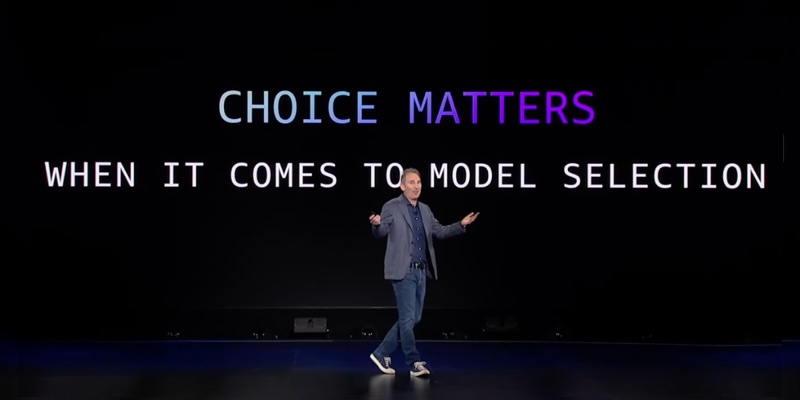
The ability to choose between models like GPT-6 Sol, GPT-6 Luna, and Claude Opus 5.5 empowers engineering teams to create a tiered infrastructure. For a single application, a developer might use a highly specialized, lower-cost model for simple categorization or data extraction tasks, while reserving the most capable models for high-level reasoning and decision-making. This approach not only optimizes latency—a critical metric for real-time user experiences—but also ensures that the total cost of ownership remains manageable as the application scales.
Furthermore, this expansion highlights the growing importance of observability in the agentic era. As AI agents become more autonomous and integrated into core business operations, the need for deep, transparent monitoring becomes essential. These models do not exist in a vacuum; they function as part of a complex, often opaque chain of operations. The recent updates to the AWS ecosystem, which include advancements in observability tools, are designed to work in tandem with these new models, ensuring that developers can track the performance and behavior of their AI agents with precision.
Looking Ahead: Building for the Future
As these models become available on Amazon Bedrock, the focus for the builder community remains on integration and experimentation. The shift toward specialized models provides a unique opportunity for developers to rethink how they architect their services. By moving away from the assumption that the most capable model is always the most appropriate choice, organizations can create more responsive, cost-effective, and scalable AI solutions.

For those looking to engage with these technologies, the AWS ecosystem continues to provide a variety of pathways for learning and collaboration. The AWS Builder Center remains a central hub for developers to connect, share their findings, and access the resources necessary to implement these new models into their existing pipelines. Whether through virtual forums or in-person developer events, the community-driven aspect of AWS is a critical component in navigating the rapid influx of new model capabilities.
As the industry continues to evolve, the distinction between "smart" models and "efficient" models will likely continue to blur, replaced by a nuanced understanding of model utility. With the integration of the latest models from OpenAI and Anthropic, AWS is reinforcing its commitment to providing a flexible, multi-model environment. This commitment is essential for businesses that need to remain agile, allowing them to pivot quickly as new model architectures arrive while maintaining the stability and security required for enterprise-grade applications.
For developers and architects, the path forward is clear: the most effective strategy is to continuously evaluate the requirements of each individual task within their application architecture. By leveraging the diversity of the Amazon Bedrock model library, teams can ensure they are not just keeping pace with the latest technological advancements, but are proactively building systems that are optimized for the realities of modern, high-scale computing. As we look toward the coming months, the focus will undoubtedly remain on refining these workflows, deepening the integration of agentic systems, and maintaining a clear-eyed view of how to deploy the right intelligence, at the right time, for the right cost.