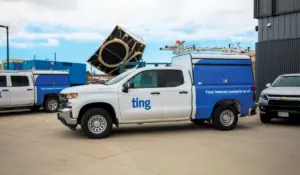










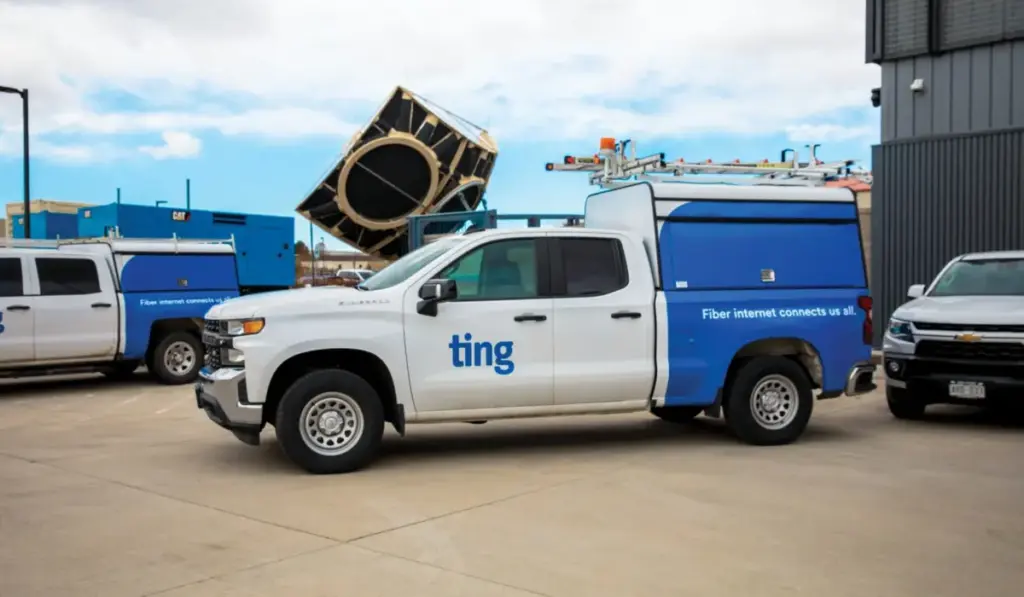
In a significant shift for the high-speed broadband landscape in Colorado, gFiber is stepping in to take over Ting Fiber’s dark fiber network lease in Colorado Springs. This strategic transaction offers much-needed financial relief to a heavily strained Ting Fiber while simultaneously allowing gFiber—formerly known as Google Fiber—to substantially expand its operational footprint within the state.
Under the terms of the transfer agreement, Ting Fiber will continue to maintain and serve its existing broadband customers in the city during an extended transition period. The complete handover of the network lease is officially scheduled to close on March 31, 2027. Once the transaction is finalized, gFiber will formally replace Ting as the primary tenant of the infrastructure, stepping into the remaining obligations of the long-term arrangement.
The agreement comes at a critical juncture for Ting Fiber and its parent company, Tucows. In late 2025, Tucows initiated a comprehensive review of strategic alternatives for its Ting Fiber subsidiary as the broadband division continued to absorb mounting operational losses. The financial strain became acutely public in June, when Tucows disclosed in a filing with the Securities and Exchange Commission (SEC) that there was "substantial doubt" regarding Ting Fiber’s ability to meet its financial obligations within a one-year window unless it successfully secured additional financing or external capital.
The pressures facing Ting Fiber are part of a broader corporate contraction that began years prior. In 2024, Tucows executed a major cost restructuring plan aimed at achieving capital efficiency. That internal overhaul included a severe 42% reduction in Ting Fiber’s workforce alongside a 17% layoff across Tucows’ total corporate staff.
In a public FAQ addressing the Colorado Springs transition, Ting Fiber noted that it has "made the tough decision to focus on investment in other Ting markets." Despite scaling back its ambitions in Colorado Springs, Ting Fiber continues to operate broadband networks in select parts of California, Idaho, Maryland, North Carolina, and Virginia.
Ting Fiber’s involvement in Colorado Springs originated from an ambitious multi-phase infrastructure initiative undertaken by Colorado Springs Utilities (CSU) to construct and deploy an open-access fiber network capable of reaching approximately 200,000 locations across the city. In August 2023, CSU formally selected Ting Fiber to serve as the inaugural anchor tenant on the newly engineered XGS-PON-based network.
According to recent updates provided by CSU Chief Financial Officer Tristan Gearhart in comments to the Colorado Springs Gazette, the utility’s open-access network currently passes about 75,000 homes. Despite the ownership and tenant shifts, CSU expects the full infrastructure buildout to wrap up successfully within just a few months of its original target date, which had been set for the end of 2028.
The financial weight of the original agreement was considerable. At the close of the second quarter of 2026, Ting’s remaining aggregate payment obligations tied to the original 30-year lease stood at approximately $322.8 million, according to a 10-K filing submitted by Tucows on October 22. Under the parameters of that foundational 30-year contract negotiated with Colorado Springs Utilities, the utility was originally projected to collect roughly $670 million over the lifetime of the lease. By substituting gFiber into the agreement, Ting successfully unloads a massive long-term financial liability while ensuring that the municipal network project remains viable under the stewardship of a major industry player.
No Immediate Change for Ting Fiber Customers
For the more than 2,000 active Ting Fiber subscribers currently connected in Colorado Springs, the immediate day-to-day service experience will remain uninterrupted. Customers will continue to receive their existing 2-Gig broadband speeds—which are currently priced at $89 per month—until they choose to cancel or transition. Ting Fiber has also maintained a home broadband and mobile bundle starting at $99 per month for local consumers.
As the March 2027 closing date approaches, gFiber is expected to introduce its own distinct service portfolio and customer management ecosystem to the market. According to Ting Fiber’s informational FAQ, gFiber anticipates starting to accept commercial orders in Colorado Springs by the end of 2026, with customer installations slated to begin in early 2027. To facilitate this transition, gFiber has already established a dedicated localized website allowing Colorado Springs residents to sign up for notifications and alerts regarding service availability.
Adopting an open-access utility partnership model is well-trodden territory for gFiber. The company operates a remarkably similar arrangement with a municipal utility in Huntsville, Alabama, where it utilizes city-owned infrastructure to deliver high-speed connectivity. Louis Lipner, gFiber’s head of strategic partnerships, noted that the company has been highly pleased with the performance and partnership dynamics of the Huntsville project. Furthermore, Lipner revealed that gFiber has actively sought an entry point into the Colorado Springs market since at least 2022, according to reporting by the Colorado Springs Gazette.
gFiber’s Expanding Footprint in Colorado
The pending absorption of the Colorado Springs lease represents a significant milestone in gFiber’s ongoing efforts to broaden its physical and commercial footprint across Colorado. This latest expansion builds directly upon the company’s existing and upcoming deployments in various Front Range communities, including Highlands Ranch, Douglas County, Wheat Ridge, Westminster, Lakewood, and Denver. Notably, gFiber delivers connectivity in Denver through its Webpass fixed wireless access platform, complementing its traditional fiber builds. Additionally, gFiber has active plans underway to construct infrastructure in other Colorado markets such as Golden, Broomfield County, and Adams County.
This strategic maneuver in Colorado Springs is also unfolding concurrently with another transformative corporate event: the pending merger of gFiber and Astound Broadband. That massive combination is set to create an expanded fiber giant that will collectively pass more than 7.11 million locations across the United States.
Expected to close later this year, the transaction will position investment firm Stonepeak as the majority owner of the newly combined company. Meanwhile, Alphabet—gFiber’s corporate parent—will retain a significant minority ownership stake in the enterprise. Following the close of the merger, the combined organization will operate entirely under the established gFiber brand and will continue to be led by gFiber’s current executive leadership team, further cementing the company’s aggressive trajectory in the national broadband sector.