









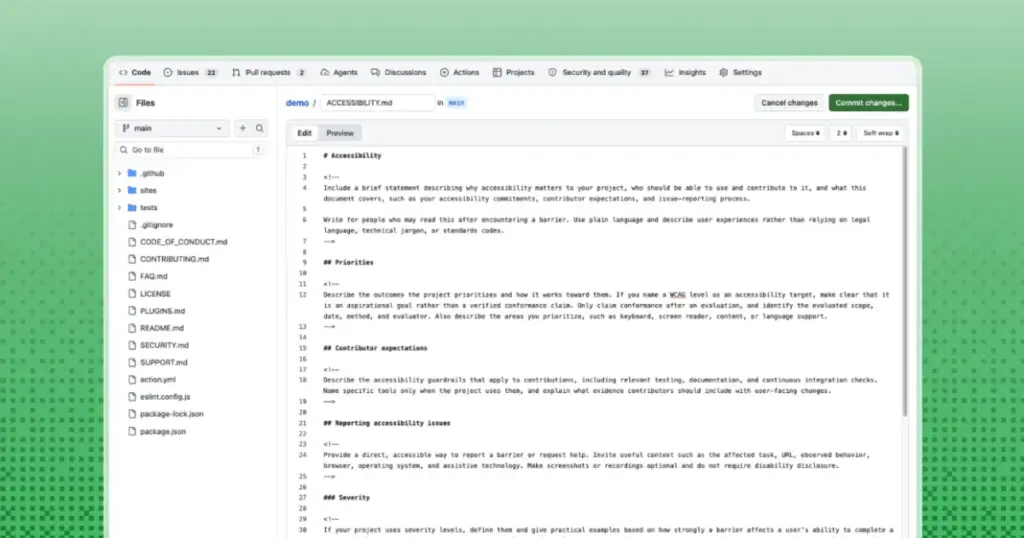
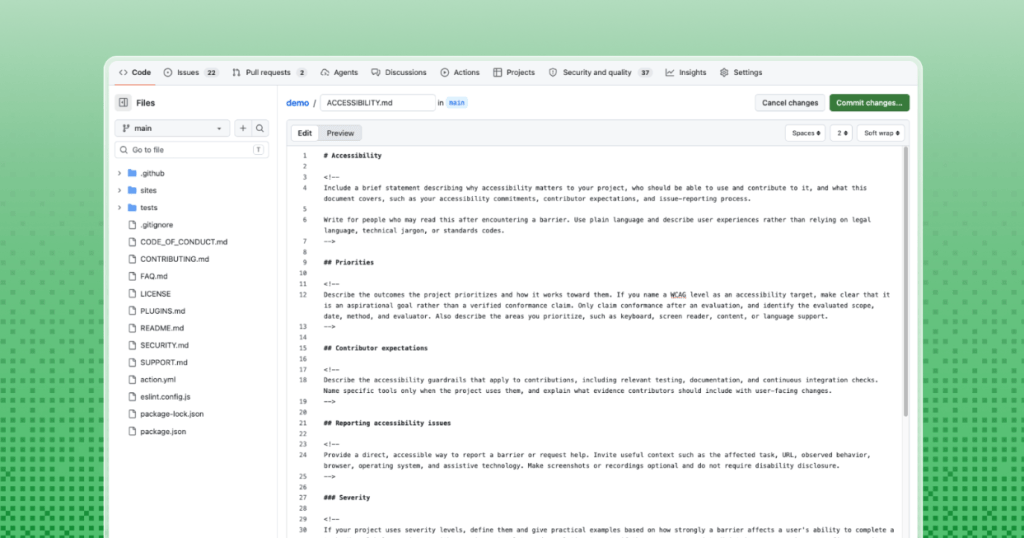
In a significant move to standardize how open-source projects communicate their inclusivity efforts, GitHub has introduced official support for ACCESSIBILITY.md files. This new feature allows repository maintainers to create a dedicated, easily discoverable home for accessibility goals, known barriers, supported environments, and clear protocols for reporting issues. By integrating these files directly into the repository overview and providing streamlined workflows for their creation, GitHub aims to move accessibility from fragmented, hidden conversations into a transparent, project-wide standard.
Addressing the Accessibility Information Gap
For years, accessibility information in the open-source ecosystem has been notoriously difficult to locate. Details regarding a project’s commitment to inclusivity, audit reports, or specific navigation barriers often existed in a state of digital limbo, buried within disparate issue trackers, outdated contribution guidelines, or private team knowledge. When this vital information lacks a predictable, centralized home, it creates a frustrating experience for users who encounter barriers, as they are often left to navigate an opaque process of reporting or troubleshooting without guidance.
Furthermore, this lack of documentation creates institutional memory loss. As project ownership changes and contributors move on to new endeavors, the context behind previous accessibility decisions is frequently lost. The new ACCESSIBILITY.md initiative addresses this by providing a durable, standardized location for projects to define their accessibility posture. By placing this information in the root directory, the .github/ folder, or the docs/ folder, GitHub ensures that whether a project is a massive web application or a lightweight command-line tool, its accessibility roadmap is front and center for both users and future contributors.

Making Accessibility Statements Discoverable
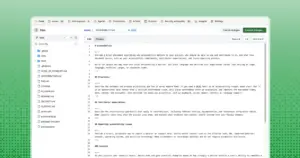
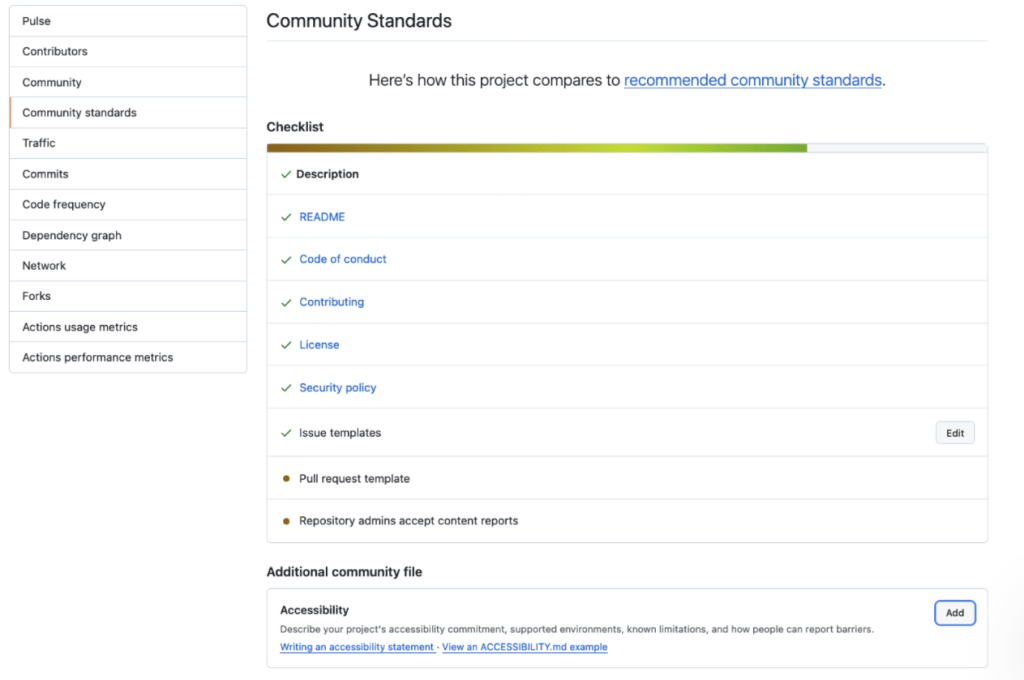
GitHub has prioritized the visibility of these statements to ensure they are not merely created but also easily found. Users can now see these files acknowledged on repository overview pages, and for public repositories, maintainers can generate a starter document directly through the Insights tab under Community Standards. This workflow encourages projects to adopt the standard by lowering the barrier to entry, offering a concise template that prompts maintainers to define their goals and expectations without needing to draft a complex legal policy from scratch.
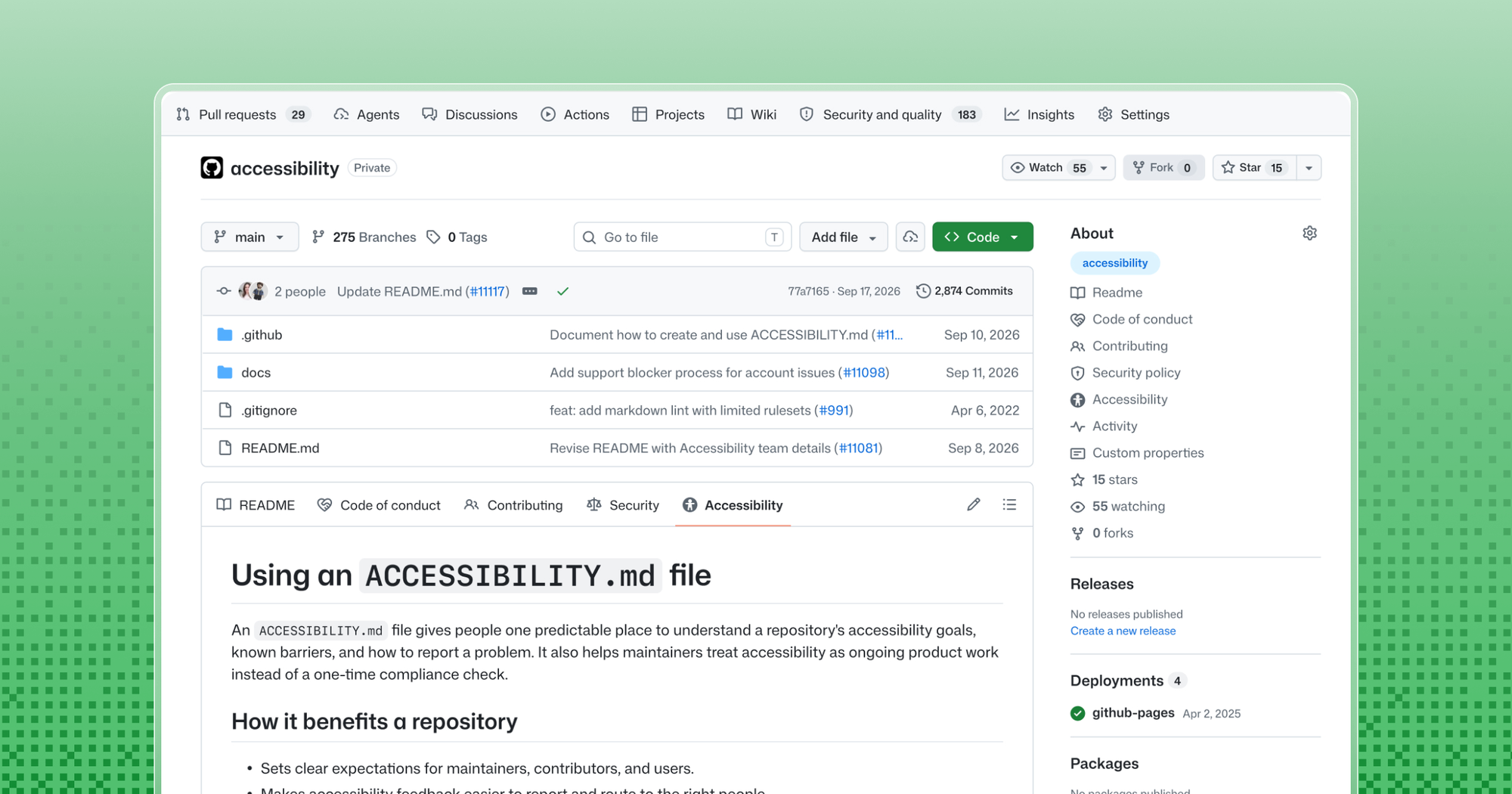
This integration is part of a broader push to improve community health. Just as GitHub has long supported standardized CONTRIBUTING.md or CODE_OF_CONDUCT.md files, the ACCESSIBILITY.md file serves as a signal to the community about how a project operates. By standardizing this, GitHub is fostering an environment where accessibility is treated as a core component of project maintenance rather than an afterthought. To further support this, new repositories will now include an accessibility issue label by default. This label works in tandem with the new documentation, allowing maintainers to organize accessibility-related tasks and providing a clear path for users to report barriers while understanding exactly what they can expect in terms of a response or resolution.
Real-World Applications and Transparency
The practical value of this transparency is already visible in projects that have adopted the practice. For instance, the GitHub CLI project utilizes its ACCESSIBILITY.md file to provide actionable, user-focused documentation. The file acknowledges a known limitation regarding table output, which can be challenging for screen readers, and proactively provides a specific command-line workaround that prints data in a more accessible, linear format. Crucially, the document also sets expectations for contributors, asking that any future changes to prompts or output be verified with accessibility settings enabled. This creates a two-way benefit: developers get immediate help with existing barriers, and contributors are given a clear roadmap for ensuring their code remains accessible from the start.
Similarly, the GitHub Annotation Toolkit provides a model for documenting complex accessibility limitations. Its statement explains that the project’s Figma library, which relies on visual relationships—such as connecting lines and matching numbers—may not always convey the same meaning to users of assistive technology. Rather than simply acknowledging the gap, the documentation provides a clear, alternative method for collaborators to provide structured text descriptions. This level of detail is invaluable for developers preparing or receiving design handoffs, as it explicitly defines what information must accompany visual assets to ensure they remain accessible. By stating clearly that the library has not yet undergone comprehensive keyboard-only or screen-reader testing, the project manages user expectations while maintaining an honest, transparent relationship with its community.
Documentation as a Living Practice
A recurring theme in GitHub’s guidance is that there is no "one-size-fits-all" format for these files. The needs of a small, experimental library are fundamentally different from those of a large-scale web platform. GitHub encourages projects to start with accurate, current information rather than waiting to draft a perfect, exhaustive policy. As projects mature, their accessibility statements can—and should—evolve.
When drafting these documents, the most successful examples avoid overly formal or standards-heavy language in favor of clear, plain language that focuses on the user experience. The goal is to assist individuals who encounter barriers, so the reporting guidance should be intuitive. Useful statements include details about the affected environment—such as the operating system, browser, and assistive technology being used—without requiring the user to prove their disability or jump through unnecessary administrative hoops.
Furthermore, these statements help maintainers define what they are realistically capable of supporting. If a project is not yet fully WCAG-compliant, it is better to state that clearly than to remain silent. A project can identify a target version of the Web Content Accessibility Guidelines, but it is important to distinguish between an aspirational goal and a verified conformance claim. A true conformance claim requires a rigorous evaluation process that includes the scope, date, method, and evaluator. By encouraging projects to "name the gaps," GitHub is promoting a culture of incremental improvement.
Moving Toward a More Inclusive Open Source Ecosystem
The initiative is not intended to produce a static legal document, but rather a living resource that bridges the gap between project maintainers and users. The Open Source Accessibility Toolkit serves as a primary example for those looking to see how these practices can be implemented at scale. For projects just beginning this journey, the GitHub Community Standards workflow acts as a scaffold, providing prompts that help maintainers think through their priorities, contributor expectations, and the mechanisms for reporting issues.
By normalizing the inclusion of accessibility statements across the open-source landscape, GitHub is helping to integrate inclusivity into the fundamental planning, building, and reporting phases of software development. As more projects adopt these standards, the cumulative effect will be a more predictable and inclusive ecosystem where users can quickly understand the capabilities and limitations of the tools they rely on.
Jan Maarten, an accessibility specialist at GitHub, has emphasized that this work is about creating resources that serve the wider design and engineering communities. By providing these tools, GitHub is bridging the gap between design-system infrastructure and the day-to-day realities of open-source maintenance. The move signals that accessibility is no longer a peripheral concern but a central pillar of project health, inviting a broader range of contributors and users into the open-source community by making the process of creating and consuming accessible software more transparent and intentional. As these practices continue to take root, the visibility of ACCESSIBILITY.md files will likely become a standard indicator of a project’s commitment to its users, ultimately driving higher standards for software accessibility across the industry.