









The anticipation surrounding Grand Theft Auto 6 has reached a fever pitch, but for thousands of PlayStation 5 owners, the long-awaited release has been marred by significant technical hurdles. As the official launch date of November 19 approaches, Sony’s PlayStation Network (PSN) appears to be struggling under the unprecedented weight of a global audience attempting to access, download, and prepare for one of the most significant entertainment events of the decade.
What happens when a potential pool of 250 million users attempts to interface with a digital ecosystem simultaneously? The answer, as many users discovered throughout the day on November 18, is widespread service degradation. While the official launch of the title on PlayStation 5 and Xbox Series X is scheduled for November 19, the digital infrastructure supporting these platforms is already showing signs of extreme strain, failing to keep pace with the massive influx of traffic from eager fans.
A Global Outage Triggered by Unprecedented Demand
Many PlayStation 5 users had attempted to preemptively navigate these challenges by utilizing the game’s preload feature, which became available on November 10. Given the immense cultural and commercial footprint of the Grand Theft Auto franchise, it is reasonable to assume that Sony anticipated a significant surge in network traffic. The company has treated the rollout of GTA 6 with the same level of infrastructure priority usually reserved for its own high-profile, first-party software titles. However, despite these preparations, the sheer volume of concurrent requests has proven difficult to mitigate.

Players across the globe have reported a variety of frustrating experiences, ranging from persistent login failures to interrupted download processes. Common error messages reported by users include "Sony services are busy," "Too many failed connection attempts," and a variety of alphanumeric codes such as WS-116449-5, CE-34861-2, and WS-37505-0. While each code is distinct, they collectively point toward the same underlying issue: the PlayStation Network’s authentication and content delivery servers are facing a level of strain that is currently exceeding their capacity to respond.
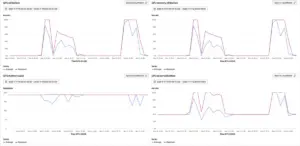
Interestingly, the divergence between user experience and official reporting has been a point of contention for many in the community. While Sony’s official PlayStation status tracker has, at various intervals, displayed the network as healthy and fully operational, independent monitoring services like Down Detector have recorded a sharp, undeniable spike in user reports regarding service outages. This discrepancy highlights the complexity of modern network management, where regional server clusters may be failing even as the core network diagnostic tools report nominal functionality. The reports are not limited to a single region, suggesting that the bottleneck is affecting the global PlayStation user base rather than being isolated to a specific geographic data center.

The Anatomy of a Digital Bottleneck
The root cause of this instability is the sheer scale of the Grand Theft Auto 6 launch. As the direct successor to one of the highest-selling and most influential video games in history, GTA 6 represents a unique challenge for digital storefronts. With millions of players in the United States and abroad finishing their workdays and attempting to log in, verify their licenses, and initiate massive downloads, the load on Sony’s servers has created a perfect storm.
While Grand Theft Auto 6 is fundamentally a single-player experience that does not require an active, constant internet connection for gameplay, the reality of modern gaming necessitates a significant "day-one" digital footprint. Players must be able to authenticate their purchases through the PlayStation Network and download mandatory updates and security patches before the game can be launched.
This requirement remains in effect regardless of whether a player purchased a physical disc or a digital copy. In an era where game files often reach hundreds of gigabytes, the pressure on content delivery networks (CDNs) is immense. Furthermore, the necessity for these updates has been underscored by recent security concerns—including incidents involving PS5 jailbreaking and piracy—which have forced manufacturers like Sony to implement rigorous, non-negotiable verification protocols. These protocols require a stable handshake between the console and the network, which is precisely where the current system is faltering.
For many players, the inability to download these essential files acts as a hard wall. The frustration is compounded by the fact that the gaming industry has increasingly moved toward a digital-first model, leaving players with little recourse when the servers required to "unlock" their purchased content fail. The situation serves as a stark reminder of the vulnerability inherent in relying on centralized digital storefronts for access to media that has been bought and paid for.
The Path Toward Stabilization
As of the evening of November 18, there is no official timeline for when the PlayStation Network will return to full stability. Technical teams at Sony are undoubtedly working to reallocate bandwidth and expand server capacity to accommodate the unprecedented demand, but the nature of such traffic spikes often requires a period of natural dissipation as the initial wave of users completes their authentication and downloads.

The strain on the network is expected to persist into the launch day of November 19 as those who were unable to preload the game begin their own attempts to access the title. For those currently facing error codes, the standard troubleshooting advice—restarting the console, checking for local internet fluctuations, or attempting to connect during off-peak hours—may provide limited relief. However, in most cases, the issue resides entirely on the server side, meaning that patience is the only reliable solution.
The launch of Grand Theft Auto 6 is a landmark event in the history of interactive entertainment, and while the current network congestion is a significant inconvenience for many, it is also a testament to the enduring popularity of the franchise. Rockstar Games has invested years into the development of this title, and the community’s eagerness to dive into the world of GTA 6 is reflective of that dedication.
As the industry observes this launch, it serves as a case study in the challenges of modern digital infrastructure. The transition from physical media to a download-heavy ecosystem has brought convenience and accessibility to millions, but it has also created centralized points of failure that can disrupt the experience for an entire global community in an instant. For now, the focus for both Sony and the players remains on the restoration of services, ensuring that the gates to the latest iteration of Rockstar’s iconic open-world experience can be opened for everyone.
Grand Theft Auto 6 is set to officially launch on November 19 across both PlayStation 5 and Xbox Series X platforms. Whether the networks will hold up under the pressure of the launch day rush remains the primary question for a community that has waited years to experience what promises to be a defining moment in gaming history.