










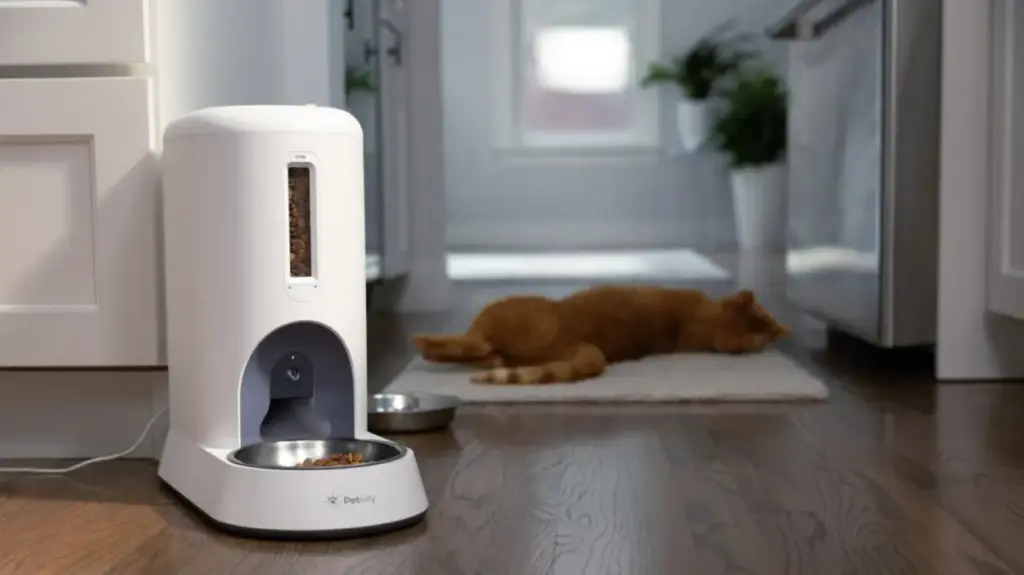
The landscape of pet care technology is undergoing a significant transformation, moving beyond simple automated dispensers toward sophisticated, data-driven wellness tools. Purina, a titan in the pet nutrition industry, has officially entered this space with the introduction of the Petivity Smart Feeder for Cats. This new device represents a major leap forward in how pet owners monitor their feline companions, utilizing advanced artificial intelligence and facial recognition technology to track eating habits with unprecedented precision. As the "flockification" of smart home technology continues to expand, this device arrives as a targeted solution for one of the most persistent challenges faced by cat owners: accurately monitoring the health and dietary intake of individual pets in multi-cat environments.
For owners of multiple cats, the struggle to manage individual diets is a familiar one. Whether one cat requires a specialized medical diet, a weight management program, or simply has a different appetite than its housemates, ensuring that the right animal consumes the right food—and the right amount of it—can be a logistical nightmare. Traditionally, this has required constant human supervision or the use of expensive, bulky microchip-based feeders that rely on collars or chips. The Petivity Smart Feeder approaches this challenge from a different angle, utilizing a camera-based AI system to learn and distinguish between individual feline users based on their unique facial features and feeding behaviors.
By recognizing each cat as it approaches the bowl, the feeder can effectively police the dinner table. While the device cannot physically prevent a "sneaky" cat from stealing a bite—it does not possess internal barriers to block access—it serves as an essential monitoring tool. It logs exactly who is eating, how much they are consuming, and how often they visit the bowl. For a household where one cat is on a prescription diet, the owner can finally receive clear data on whether their pets are adhering to their respective feeding plans. This level of granular insight turns what was once a guessing game into a source of actionable health intelligence.

The integration of AI into this consumer-facing product is the result of extensive research and development. To ensure the reliability of the facial recognition algorithms, the company trained its system on a massive dataset comprising 21,000 real-world feeding sessions, 1,400 hours of high-definition video, and over 15,000 individual photographs of cats. This rigorous training process was designed to account for the subtle variations in feline appearance and behavior, allowing the device to distinguish between up to five different cats within a single home. According to Purina, the technology is robust enough to handle the complexities of daily life, and during extensive product testing, an impressive 99.5 percent of cats showed no hesitation in using the device, signaling a high rate of acceptance among even the most discerning feline eaters.
Beyond the facial recognition capabilities, the Petivity feeder functions as a high-end smart home appliance. Like other premium feeders on the market, it offers remote control features through a dedicated mobile app. Owners can dispense food from their smartphones, set customized feeding schedules, and receive push notifications when the hopper is running low on kibble. The inclusion of a built-in camera allows users to perform remote "check-ins" on their pets, offering peace of mind for owners who work long hours or travel frequently. From a maintenance perspective, the designers have prioritized practicality; many of the components are dishwasher-safe, a significant advantage over many complex smart feeders that can be notoriously difficult to clean and sanitize.
The primary value proposition of the Petivity system, however, lies in its potential for long-term health monitoring. By tracking portion sizes, the frequency of visits, and the specific timing of each meal, the app builds a comprehensive profile of a cat’s behavior. This longitudinal data can be invaluable during veterinary visits. Many feline health issues, such as diabetes, hyperthyroidism, or kidney disease, often manifest first through subtle changes in appetite or water consumption. By detecting these shifts early—often before a human observer might notice a trend—the device empowers owners to bring objective data to their veterinarians, potentially leading to earlier diagnoses and more effective treatment plans.
Despite its technological sophistication, the device is subject to the same physical limitations that constrain almost all automatic pet feeders currently available on the mass market. The Petivity Smart Feeder is designed exclusively for dry kibble. The mechanical nature of the dispensing system, which relies on an auger or gravity-based flow, is not compatible with wet food, which requires refrigeration to remain safe for consumption over time. While there are some specialized automatic feeders designed for wet food, they typically involve complex, refrigerated compartments that significantly increase the price and the physical footprint of the device. For households that rely on a mix of wet and dry food, the Petivity feeder will serve as a partial, rather than a total, solution for their nutritional management.
Available for purchase immediately, the Petivity Smart Feeder is priced at $150. In a market where many smart home devices are increasingly locked behind "freemium" models or mandatory monthly service fees, the decision to forego a subscription requirement is a notable one. Users gain full access to the AI-driven health tracking, historical data, and video features as part of the initial purchase price, without the burden of recurring costs.
The introduction of this feeder marks a broader trend in the pet industry, where "smart" is no longer just about convenience, but about wellness and longevity. By digitizing the feeding routine, Purina is providing pet owners with a window into their pets’ daily lives that was previously inaccessible. As technology continues to bridge the gap between human caregivers and their animal companions, the Petivity Smart Feeder stands as a prime example of how machine learning can be applied to solve the practical, day-to-day challenges of modern pet ownership. Whether for the multi-cat household managing dietary restrictions or the dedicated owner who simply wants a deeper understanding of their pet’s health, this device provides a modern, data-centric approach to a fundamental daily task. As the industry evolves, it is likely that such tracking capabilities will become the standard for domestic pet care, making the home environment not just more convenient, but also more attuned to the subtle needs of our feline friends.