











A growing number of engineering teams are rethinking heavy automated processing pipelines that rely exclusively on massive foundational large language models. While using a single frontier model to handle every phase of a complex task—from transcribing a support call and parsing attached invoices to extracting names, determining routing, and drafting customer replies—offers convenience, it often introduces significant financial overhead billed at premium rates.
Industry data shows that many operational steps in modern workflows are discrete jobs that can be handled more efficiently by compact, task-specific architectures. A new wave of open-weight artificial intelligence systems, each operating under 10 billion parameters, demonstrates that smaller models can frequently match or outperform much larger generalist systems on specific benchmarks while requiring only a fraction of the computational footprint.
Evaluating the Specialist Models
Establishing a clear comparison requires focusing on systems that meet strict criteria, including open weights, a well-defined primary capability, published performance benchmarks demonstrating competitiveness against much larger counterparts, and a footprint compact enough to run on standard single-machine hardware. Rather than treating all large systems uniformly, performance evaluations typically contrast these compact models against massive chat LLMs, closed enterprise APIs, or larger specialist competitors depending on the task domain.
Deploying these architectures locally requires careful environment management. Because individual stacks rely on distinct versions of PyTorch and related foundational libraries, isolating each model in a dedicated virtual environment prevents dependency conflicts between complex frameworks. Certain specialized models also require specific pre-requisites, such as authenticating through repository access tokens for gated weights or installing underlying system packages like speech toolkits to handle phonetic processing.
Transcription and Optical Character Recognition
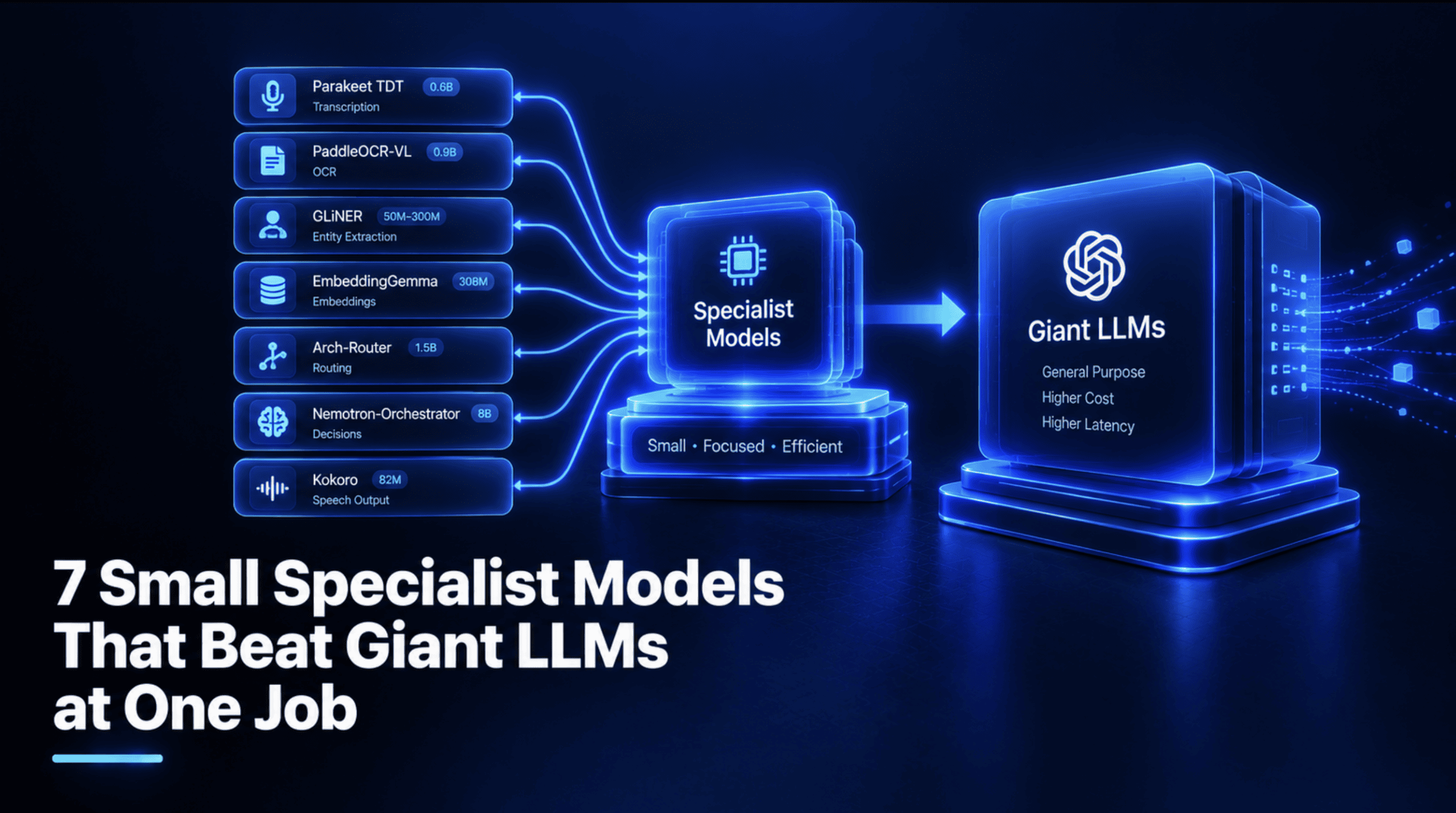
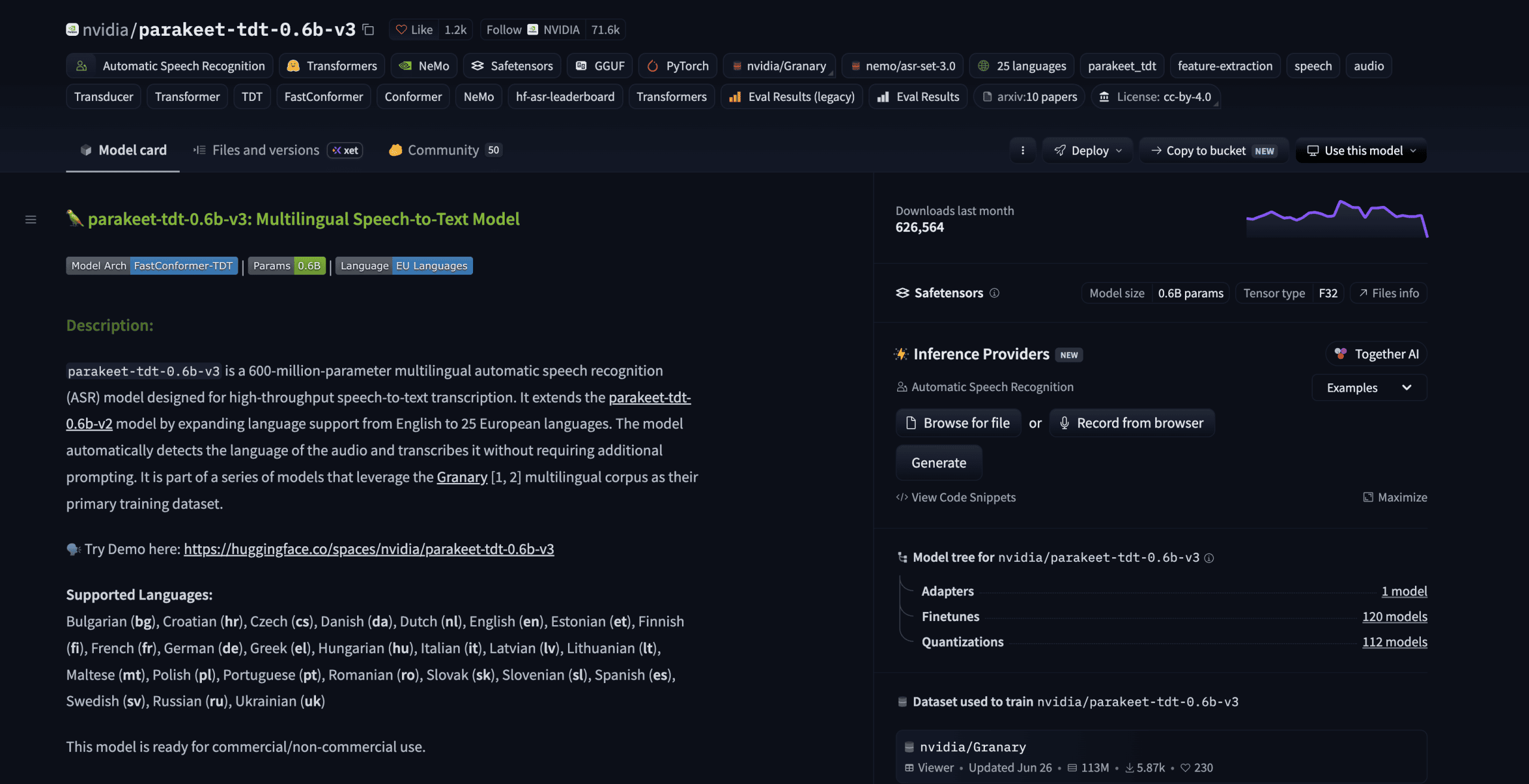
In the realm of speech-to-text processing, compact audio architectures are challenging traditional dominance. Models like the 600-million-parameter Parakeet TDT v3 have demonstrated higher throughput and lower word error rates compared to larger established speech systems. While widely used alternatives maintain an advantage in total language coverage, specialized speech models achieve significantly faster processing speeds for high-volume English and regional European language transcription tasks.
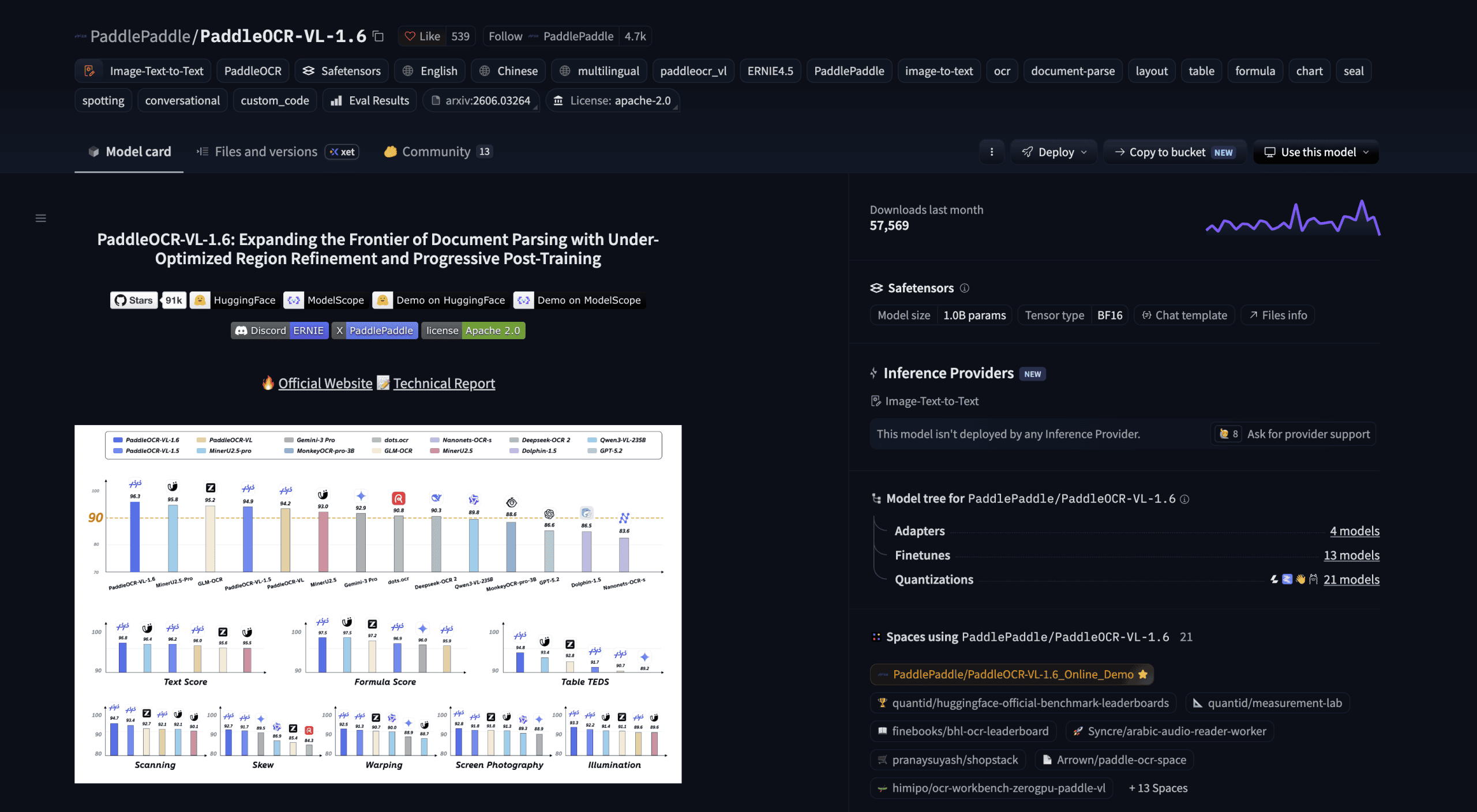
Similarly, document understanding and optical character recognition have evolved beyond traditional parsing methods. Advanced multimodal systems operating under one billion parameters, such as PaddleOCR-VL-1.6, have achieved superior scores on document benchmarking suites like OmniDocBench compared to several flagship proprietary multimodal systems. These compact parsers are capable of simultaneously handling layout detection, structural table extraction, and text transcription, producing clean structured outputs like JSON and Markdown for downstream processing.
Entity Extraction and Embedding Generation
Data extraction tasks are also shifting toward nimble architectures. Zero-shot named entity recognition frameworks, such as GLiNER, enable engineers to extract precise spans of text using dynamic, run-time string labels without requiring model retraining or fine-tuning. Benchmarks indicate that these compact models outperform earlier generation conversational LLMs in zero-shot entity extraction scenarios while maintaining a minimal computational footprint.
In information retrieval workflows, high-efficiency embedding models like EmbeddingGemma offer a lightweight solution for multilingual semantic search. Operating at roughly 300 million parameters, these models optimize token vectorization for search and clustering tasks while consuming minimal memory. Although context windows require careful chunking for extensive documents, such models deliver competitive retrieval performance on Massive Text Embedding Benchmark evaluations within a highly constrained resource budget.

Routing, Decision-Making, and Speech Output
As multi-model architectures become more prevalent, intelligent traffic routing has emerged as a critical efficiency layer. Specialized routing models, such as Arch-Router-1.5B, utilize compact instruction-tuned frameworks to direct user queries to the most appropriate downstream model or system component. Operating with minimal latency compared to large generalist architectures, these routers analyze plain-language route descriptions to achieve high classification accuracy without requiring costly system retraining.
For complex orchestration and tool selection, mid-sized decision models like Nemotron-Orchestrator-8B demonstrate competitive performance against significantly larger frontier systems on advanced reasoning and tool-use benchmarks. By managing the delegation of tasks between specialized tools and larger generalist models, such systems optimize both speed and operational cost in complex automated agent loops, though licensing restrictions often limit their deployment strictly to research environments.

Finally, text-to-speech generation has benefited from ultra-compact audio models like Kokoro-82M. Despite possessing only 82 million parameters, the model has ranked strongly on community-driven speech synthesis arenas, producing high-fidelity natural audio chunks from text input. As the artificial intelligence ecosystem continues to evolve, the integration of these task-specific specialist models allows organizations to optimize pipeline performance, reduce inference costs, and reserve massive generalist LLMs exclusively for tasks that demand broad foundational reasoning.