










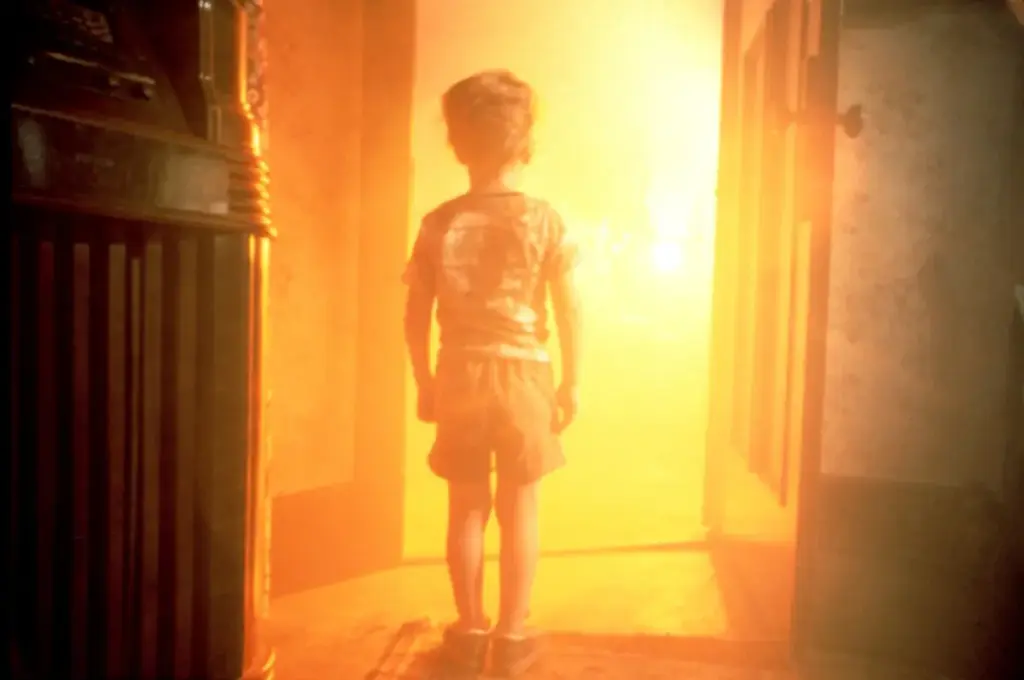
Few filmmakers in the history of cinema have managed to fundamentally alter the DNA of the medium, but Steven Spielberg stands as a rare exception. Throughout a career spanning over half a century, he has crafted at least half a dozen projects that can be classified as truly revolutionary. While his filmography is certainly marked by the occasional misfire or critical stumble, his ability to redefine genres and influence the global cultural landscape is unparalleled. From the high-stakes, serial-inspired adventures of Indiana Jones to the visceral, gritty realism of Saving Private Ryan and the template-setting creature features that followed Jaws, Spielberg’s fingerprints are found on the bedrock of modern entertainment.
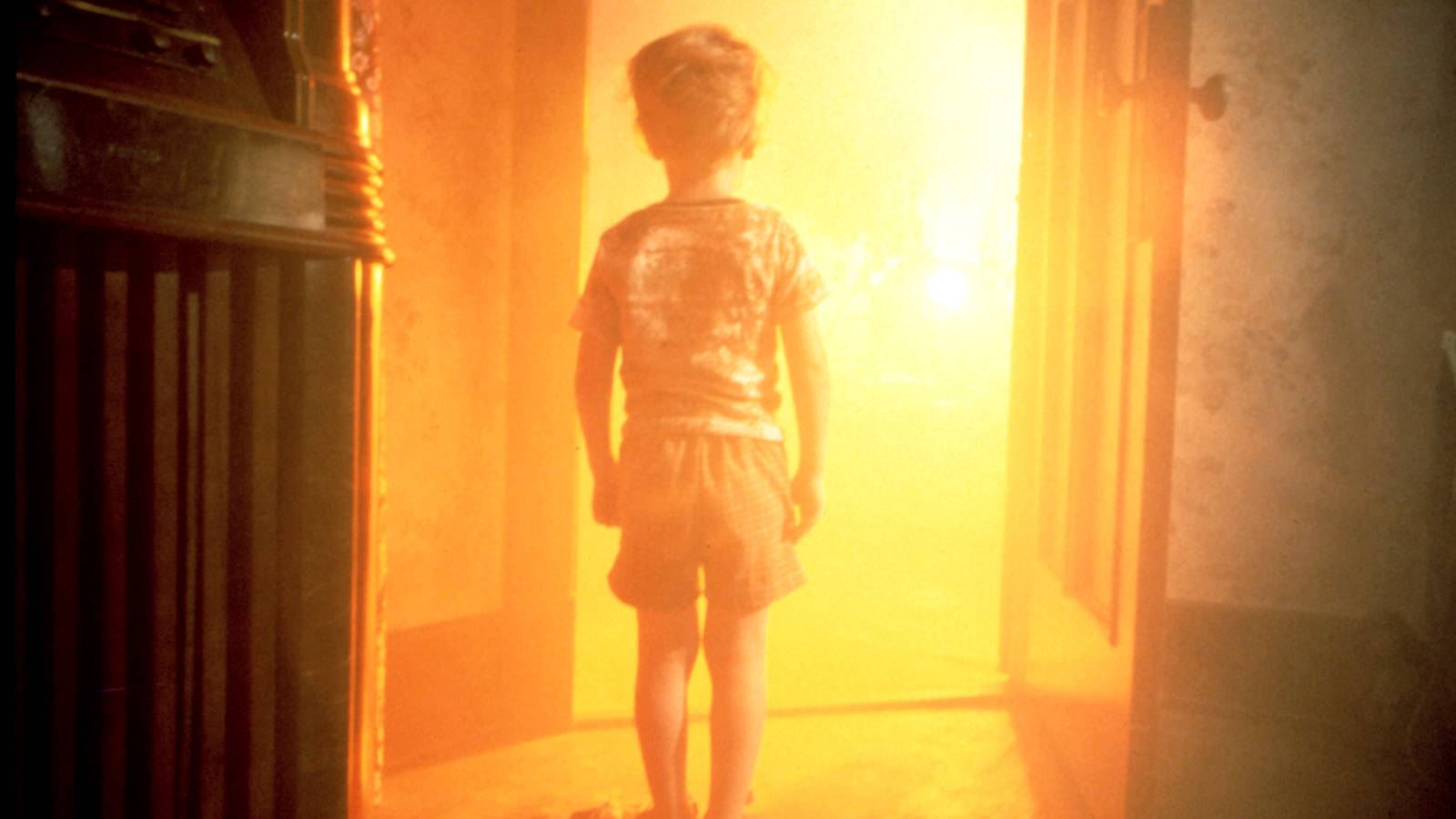
Yet, despite his immense body of work, there remains one specific subgenre that arguably does not receive the level of appreciation it deserves: the alien conspiracy thriller. Released in 1977, Close Encounters of the Third Kind served as the follow-up to the cultural juggernaut that was Jaws. While it may not occupy the same space in the popular imagination as some of his later blockbusters, its impact on the wave of abduction-themed films and television programs that populated the 1980s and 1990s is undeniable. As we approach the film’s 50th anniversary, audiences are being given a rare opportunity to revisit this foundational piece of science fiction, as YouTube is currently streaming the film for free—supported by advertisements—for those interested in witnessing the birth of the modern UFO thriller.
Notably, the version currently available is the 1998 Director’s Cut, an edit personally endorsed by Spielberg. This version is particularly significant for enthusiasts, as it restores the director’s original vision, effectively reversing several creative choices that were imposed upon the 1980 Special Edition. By watching this iteration, viewers are seeing the most definitive version of the story, untethered from the studio-mandated adjustments that once clouded the film’s narrative flow.
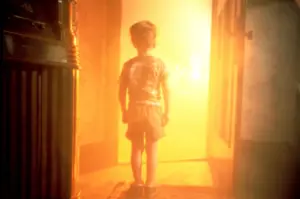
I guess you’ve noticed something a little strange with Dad
For many viewers, the title Close Encounters of the Third Kind has always carried a sense of mystery. As a child, it is easy to assume the title implies a third entry in a series, but the nomenclature actually finds its roots in serious scientific inquiry. The title is derived from the 1972 book The UFO Experience: A Scientific Inquiry, written by J. Allen Hynek. An astronomer and ufologist who served as a scientific consultant for the United States Air Force, Hynek was a vital contributor to the production of the film and even makes a brief cameo appearance—appearing as a pipe-smoking observer at the iconic Devils Tower site.
In his seminal work, Hynek proposed a classification scale for UFO sightings designed to bring a level of scientific rigor to the study of the phenomenon. The scale began at Level 1, which referred to the observation of strange lights or objects in the sky, and progressed through various stages of interaction. A "close encounter" occurred when a UFO came within a proximity that allowed for detailed observation. The third stage—the "third kind"—referred to an encounter where the object was accompanied by an "animated entity," such as a human-like pilot or a non-human visitor. In modern parlance, this has largely been superseded by the term "first contact," but in 1977, the title was a bold, intellectual hook for a high-concept science fiction film.
The story begins in a state of global unease. In 1977, long-lost aircraft that had vanished decades prior suddenly reappear in the middle of the California desert, pristine and untouched by time. As international scientific teams scramble to comprehend the impossible, a series of UFO sightings begins to occur across the globe, creating a mounting sense of dread and anticipation.

The heart of the narrative, however, is found in Muncie, Indiana, with Roy Neary, portrayed by Richard Dreyfuss. Neary is an ordinary man, a technician called out to resolve a local power outage, when a near-miss with an unidentified craft leaves him physically and mentally altered, including a severe burn across half of his face. This singular moment triggers an obsessive descent. Neary’s life begins to unravel as he becomes fixated on the images and sensations the craft has imprinted upon him. His behavior, increasingly erratic and desperate, places an immense strain on his marriage to his wife, Ronnie, played by Teri Garr, and alienates his children.
Neary finds himself compelled to construct physical representations of a specific mountain he cannot identify, using any material at his disposal—from household dirt and clay to the mashed potatoes on his dinner plate. What the audience knows, and what Neary does not, is that his subconscious obsession is tracking toward a grand, government-sanctioned conspiracy that will ultimately bring him to the foot of Devils Tower for a moment of historic significance.
The descent into the conspiracy
Watching Close Encounters today, it is striking how much of the film functions as a psychological drama rather than a traditional sci-fi spectacle. The second act is a harrowing portrait of mental disintegration. While the viewer is granted the perspective to understand that Neary is witnessing a genuine phenomenon, the characters around him—and indeed, the film’s world—view him as a man losing his grip on reality. One particularly poignant scene finds Neary sitting alone in his home, surrounded by mountains of debris, news clippings, and crude models. It is a moment that feels remarkably ahead of its time, serving as a prototype for the modern "conspiracy theorist" archetype that has become a staple of pop culture, from the sprawling investigations of The X-Files to the frantic, red-string-laden wall of Charlie Day in It’s Always Sunny in Philadelphia.
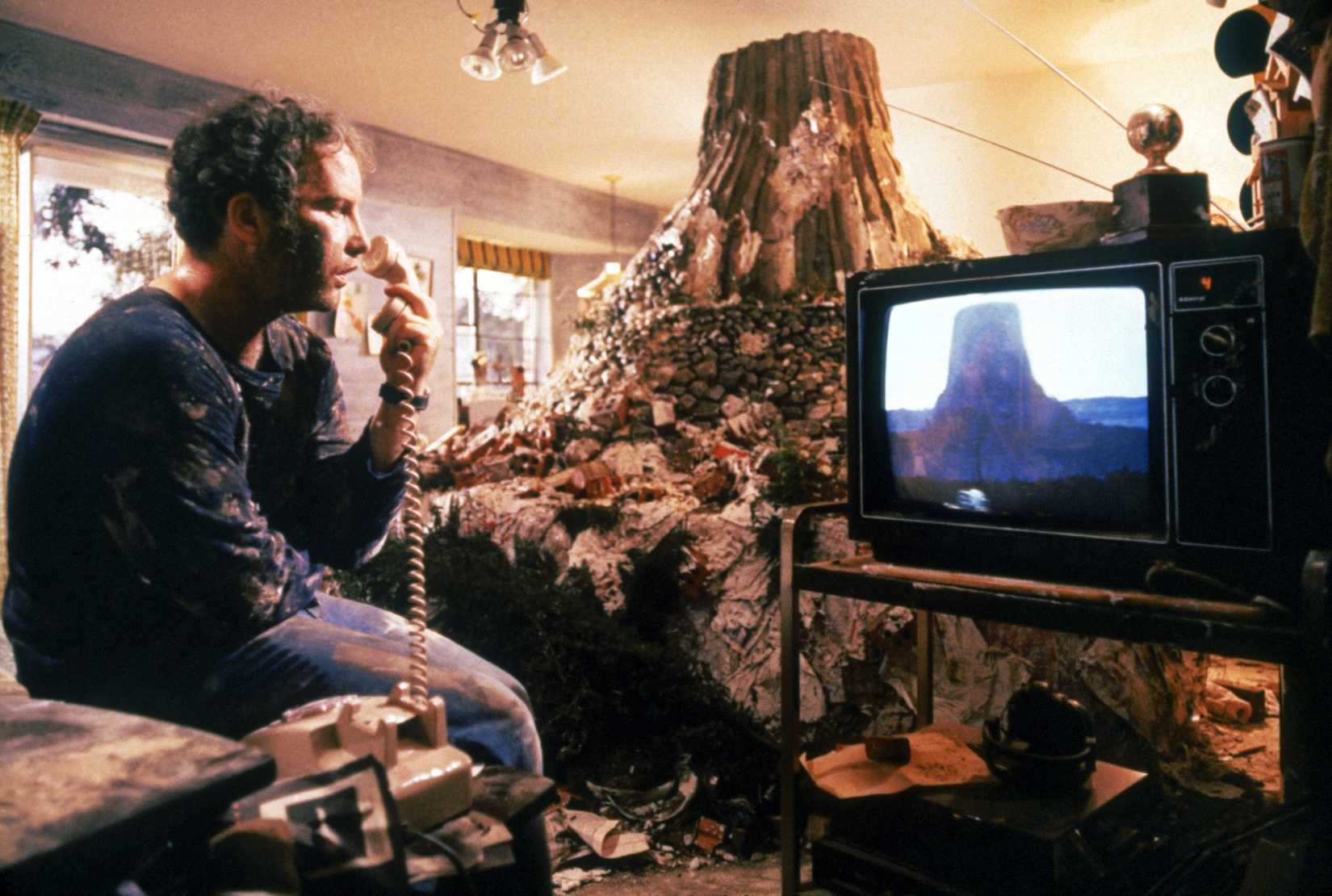
Roy Neary represents the quintessential Western protagonist of the paranoid thriller: the individual who is driven to the brink of insanity in search of the "I told you so" moment that will validate their experience to a skeptical world. This focus on the human toll of the encounter may explain why the film has, in some ways, faded from the front of the public consciousness compared to Spielberg’s other works. It lacks the explosive kinetic energy of an action movie and the warm, accessible sentimentality of his later alien film, E.T. the Extra-Terrestrial. In many ways, E.T.—released only five years later—effectively absorbed the cultural oxygen that Close Encounters had generated, cementing the image of a child on a bicycle against the moon as the definitive Spielbergian alien memory, while Neary’s slow, agonizing collapse at the dinner table became a secondary image.
Despite this, Close Encounters of the Third Kind remains a cinematic classic that demands reappraisal. It is a film that balances the wonder of the cosmos with the fragility of the human psyche. It operates on the premise that the most profound experiences are often the most isolating. Almost half a century after its release, the film serves as a testament to a time when science fiction was willing to be quiet, meditative, and intensely human.
For those who have yet to see it, or those who haven’t revisited it in years, the current availability of the Director’s Cut on YouTube offers an excellent entry point. It is a rare opportunity to engage with a linchpin of modern science fiction, provided the viewer approaches it as an intimate, strange family drama rather than a fast-paced thriller. It remains an essential piece of Spielberg’s evolution as a director, proving that the most compelling mysteries aren’t always found in the stars, but in the people left behind on Earth to contemplate them.