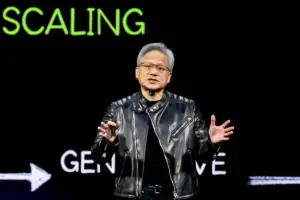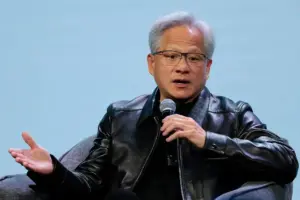











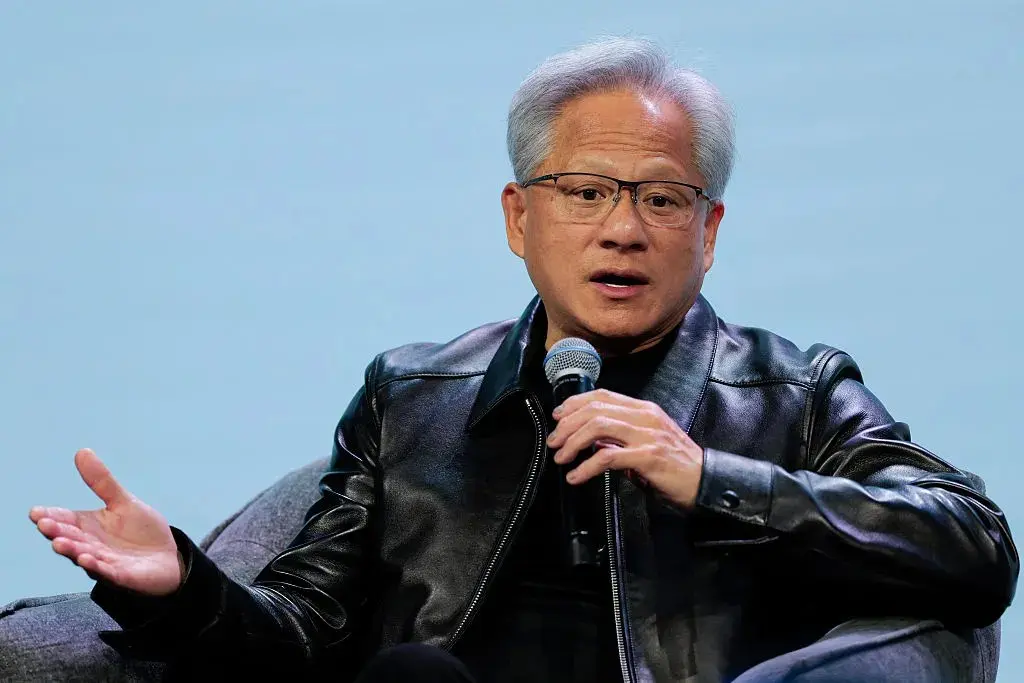
The departure was as sudden as it was seismic, reverberating through the halls of Silicon Valley and across the global technology landscape. Jensen Huang, the visionary co-founder who steered Nvidia through three decades of evolution, has officially stepped down. His resignation marks the end of a 33-year tenure that saw Nvidia transition from a niche graphics card manufacturer into the indispensable engine room of the modern artificial intelligence revolution. As the news broke, the initial reaction from industry insiders was one of genuine shock. “It’s like a bomb went off,” remarked one prominent neocloud founder, capturing the sense of instability that has gripped the sector in the immediate aftermath of the announcement.
For years, Huang was more than just a CEO; he was the primary architect of an AI-driven investment strategy that fundamentally reshaped how startups were funded and scaled. Under his leadership, Nvidia evolved into one of the most prolific corporate investors in the world, funneling tens of billions of dollars into the startup ecosystem annually. According to data from PitchBook, Nvidia participated in 105 funding rounds this year alone, often positioning itself as the lead or largest investor. This capital-heavy strategy was instrumental in bridging the gap for young companies attempting to tackle the astronomical costs associated with building AI models and infrastructure.
The void left by Huang is not merely managerial; it is existential for many of the companies currently sitting on Nvidia’s cap table. Maria Davidson, founder of Relational Capital, articulated the concern shared by many in the venture capital community: “If that direction changes, it will be a big blow to so many young companies.” The consensus among investors is that the startup ecosystem now faces a future with significantly less available capital, which will inevitably ripple outward, affecting everything from deal flow and valuations to the intensity of competition in the AI space. Shamillah Bankiya of Dawn Capital summarized the reliance of the sector on the departing executive’s vision, noting, “Nvidia is carrying almost every AI-native startup from application to neocloud.”

The centralization of power within Nvidia’s investment strategy was, by many accounts, a direct reflection of Huang’s personal conviction. Umesh Padval, managing partner at Seligman Ventures, who served on the board of Mellanox Technologies—a company Nvidia acquired for approximately $7 billion in 2020—pointed out that the most significant investment decisions frequently originated with Huang himself. While there is a sliver of hope among the investment community that a future successor might eventually revive this aggressive dealmaking spree, there is little expectation that such a transition will occur in the short term.
The immediate responsibility for navigating this uncertainty falls to Nvidia’s interim CEO, Colette Kress. Reports indicate that Kress is expected to pivot the company toward a more conservative fiscal strategy, particularly regarding investments in AI startups that sit at the center of the ongoing multi-billion-dollar data center build-out. Huang’s rapid-fire dealmaking in this sphere had become a point of mounting concern for Wall Street, where analysts have grown increasingly wary of the potential risks associated with such heavy exposure to pre-revenue or high-burn-rate infrastructure firms. “She’s much more conservative,” one investor observed regarding the leadership shift. “I don’t think she’s going to commit the same amount of money to keep the early-stage ecosystem going.”
This change in temperament could have profound implications for the specific sub-sectors Nvidia championed, particularly neocloud providers, inference service providers, and open-weight model developers. These areas are notoriously capital-intensive, requiring massive hardware outlays that would be prohibitive for smaller firms without the financial backing and deep-pocketed partnerships Nvidia previously provided. Zain Javaid, co-founder of the hardware company Ghost, emphasized that the current existence of this vibrant ecosystem is a testament to Huang’s specific vision. “Jensen’s initiatives are a big reason an ecosystem has emerged despite that,” Javaid noted.
The footprint of Huang’s investment strategy is extensive. Nvidia was an early backer of CoreWeave, providing the company with vital support while it was still private. It participated in two of Crusoe’s funding rounds, including a $1.4 billion Series E, and made headlines with its $13 billion agreement to acquire Hugging Face—a deal expected to close in 2027. Furthermore, the company holds significant stakes in Mistral AI, Lambda, and Black Forest Labs. In many of these cases, Nvidia acted as the largest participant, providing not just cash but a stamp of institutional approval. The Wall Street Journal reported that last year, Nvidia poured $800 million into a $2 billion Series B round for Reflection AI, a move that occurred before the open-source startup had generated any significant revenue.
Beyond the domestic impact, Huang’s global outlook is also expected to shift. “Jensen believed in open source and, frankly speaking, Europe,” Bankiya noted. The potential cessation of support for startups outside of the United States, particularly in the European market, represents a looming funding gap that many fear no other entity is currently prepared to bridge.
However, the departure of Huang also brings the complexities of Nvidia’s market position into sharper focus. The company’s influence had become so pervasive that some observers viewed its investment strategy as a form of market capture. By backing a vast network of startups with generous capital injections, Nvidia effectively incentivized these companies to build their entire technology stacks around its chips and the CUDA software platform, thereby reinforcing its own monopoly-like dominance. With the possibility of a more conservative investment stance, some industry analysts suggest that room may finally open for rivals and smaller competitors. Indeed, the competitive landscape is already shifting; Google announced two new specialized AI chips this week, a move that coincided with the broader market fallout surrounding the Nvidia leadership change.
Whether other players will step in to fill the void is the subject of intense debate. Dharmesh Thakker, a general partner at Battery Ventures, suggests that while Big Tech rivals may compete for Nvidia’s "investment crown," the outcome depends on who can offer the best combination of products, developer ecosystems, and financial power. Yet, Thakker and other experts are skeptical that competitors like Amazon, Microsoft, or Google will replicate the scale of Nvidia’s risk-taking. Under Huang, it was common for infrastructure startups to secure hundreds of millions of dollars in GPU credit and cash at valuations exceeding $1 billion, often before they had fully commercialized their offerings. This Nvidia backing acted as a safety net, giving other venture capitalists the confidence to participate in these high-stakes, high-valuation rounds.
The absence of that safety net is likely to cause a contraction in valuations. As Nvidia pivots toward selectivity and smaller check sizes, traditional venture capital firms may hesitate to deploy capital into infrastructure-heavy AI startups, potentially leading to a temporary slowdown in dealmaking. “When Nvidia was on the cap table, everyone felt safe,” Padval noted. Without that constant, the calculus for early-stage investment becomes significantly more complicated.
Despite the prevailing anxiety, few industry leaders believe that this shift marks the end of the AI boom. While the loss of Huang is viewed as a significant blow to the continuity of Nvidia’s strategy, there is a recognition that the momentum of the technological shift is larger than any single executive. Amulya Vishwanath, a former Nvidia employee who now manages her own venture capital fund, offered a pragmatic perspective on the transition. While acknowledging that Huang’s departure is a major loss, she emphasized that the ecosystem must look forward. “Founders and leaders must be held accountable,” Vishwanath stated, adding that the sector remains robust. “That talent will, and must, continue to thrive.” As the industry braces for the post-Huang era, the focus now turns to how the AI sector will mature in an environment where the most generous benefactor of the last decade has left the stage.