









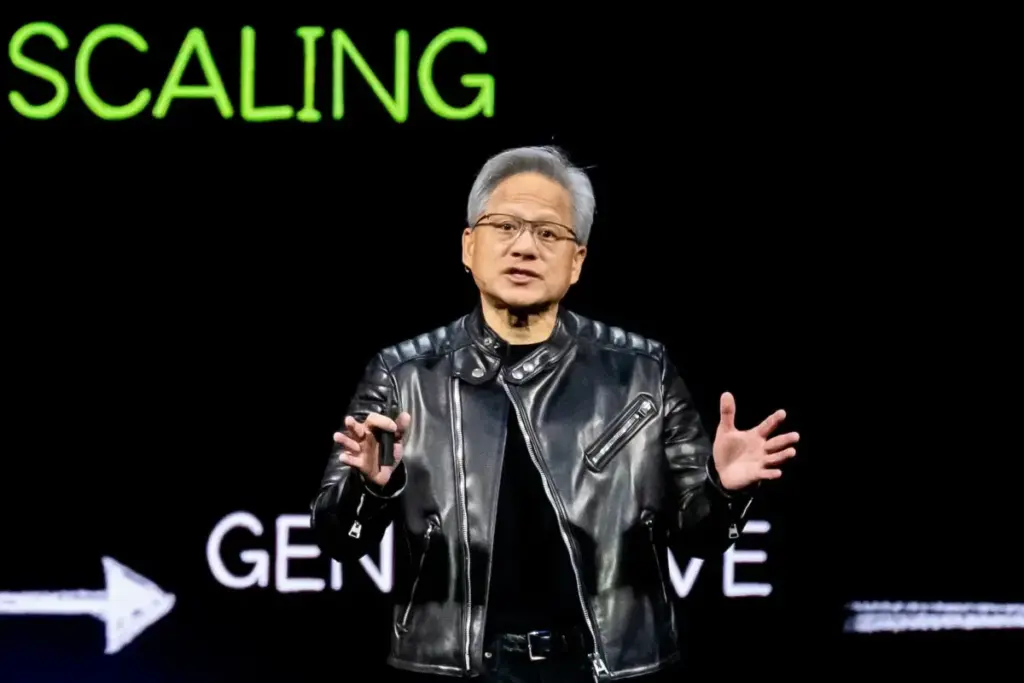
In a major escalation of the political fallout surrounding one of the world’s most influential technology companies, Democratic lawmakers on Thursday launched a formal inquiry into the Trump administration’s oversight of Nvidia’s chip exports to China. This move comes on the heels of a chaotic Thursday for the Santa Clara-based semiconductor giant, which saw the sudden ouster of longtime CEO Jensen Huang following a series of high-profile personal scandals that have now entangled the company in a web of national security and ethics investigations.
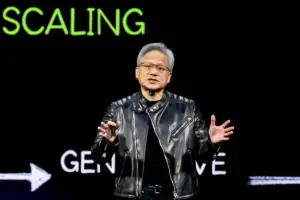
The turmoil at Nvidia reached a breaking point this week when it was revealed that Huang, the face of the company’s meteoric rise during the AI boom, had been removed from his post. The board’s decision followed Huang’s public admission of an extramarital affair with a woman identified as Alice Huang—no relation—who has been accused by U.S. officials of acting as an operative for Chinese intelligence. As the scandal expanded, further reports emerged alleging that the former CEO had engaged in multiple other affairs with subordinates within the company, deepening the corporate governance crisis.
The Legislative Push for Transparency
The new inquiry is being spearheaded by two of the most powerful voices in the Democratic caucus: Rep. Richard Neal (D-Mass.), the ranking member of the House Ways and Means Committee, and Sen. Ron Wyden (D-Ore.), the ranking member of the Senate Finance Committee. In a joint, strongly worded letter addressed to Commerce Secretary Howard Lutnick, the lawmakers have demanded the preservation of all records related to what they describe as a "questionable and, they allege, illegal" arrangement between the Trump administration and Nvidia regarding chip exports to China.

While as the minority party they lack the subpoena power to compel testimony or the immediate release of documents, the lawmakers are using their positions to exert significant political pressure on the Commerce Department. The core of their argument centers on a controversial policy that permitted the sale of high-end Nvidia H200 chips to Chinese entities, provided that the hardware first transited through the United States. Upon arrival in the U.S., the shipments were subject to a specific tariff, effectively allowing the federal government to capture a portion of the revenue from every chip sold to Chinese buyers.
In their letter, Neal and Wyden characterize this setup as an "unconstitutional export tax system." The lawmakers argue that the administration’s role went beyond mere regulation, morphing into a revenue-sharing partnership that prioritized fiscal gain over the stringent export controls usually applied to sensitive dual-use technology.
The "Revenue Sharing" Deal
The existence of this arrangement was not entirely secret. In August 2025, public reports confirmed that both Nvidia and competitor AMD had reached a unique agreement with the U.S. government. Under the terms of this deal, both chipmakers agreed to hand over 15% of their revenue from China-bound sales to the U.S. Treasury in exchange for the issuance of export licenses. At the time, the administration framed this as a way to ensure national security while allowing U.S. companies to maintain a foothold in the global market.
However, the inquiry led by Neal and Wyden suggests that the reality was far more opaque. The letter specifically probes the Commerce Department’s decision-making process under Secretary Lutnick, questioning why the department continued to green-light sales to Megaspeed—a Singapore-based firm where Alice Huang served as an executive—even after the Commerce Department was reportedly briefed by U.S. intelligence on her alleged espionage activities and her personal relationship with the Nvidia CEO.
Beyond the specific case of Megaspeed, the inquiry casts a wider net, asking for clarification on how the department authorized sales to a network of Asian companies that, according to the lawmakers, appear to be shell entities with "no physical presence at their listed addresses." This suggests a broader failure in the government’s "know your customer" protocols, leading Democrats to aim their investigation squarely at the administration’s internal enforcement mechanisms.
Conflicts of Interest and Political Donations
A particularly explosive aspect of the inquiry involves the financial relationship between Nvidia and President Trump. The letter highlights the timing of the export deal, noting that it was finalized only after the administration was made aware of Jensen Huang’s "compromised position" regarding the alleged Chinese spy.
Furthermore, the lawmakers point to a series of significant financial contributions. Records indicate that Nvidia donated approximately $26 million to various projects associated with President Trump, including renovations to a prominent ballroom. The inquiry poses a pointed question: Did the administration leverage its knowledge of the CEO’s personal indiscretions to secure financial contributions from the company? The implication is a potential quid-pro-quo, where national security interests were secondary to the political and financial objectives of the executive branch.
This political scrutiny mirrors a broader trend of intimidation tactics described by the President himself. In a recent interview on "60 Minutes," President Trump claimed that his administration had successfully compelled a top AI executive to fall in line by threatening them with jail time, remarking that the executive "totally changed" after the interaction. While the President did not name the executive in that instance, the timing of the comment has only added fuel to the fire surrounding the Nvidia investigation.
A Two-Pronged Congressional Response
The investigation by Neal and Wyden is the second major congressional probe into the matter. Simultaneously, a Republican-led coalition—comprising members of the House Select Committee on the Chinese Communist Party, the House Committee on Foreign Affairs, and the House Intelligence Committee—has launched its own investigation. This group is focused heavily on the national security implications of the chips reaching China and the potential for technology leakage that could bolster the Chinese military’s AI capabilities.
The Republican-led inquiry has taken a more aggressive posture from the outset, demanding that the former CEO appear for a closed-door deposition. Faced with the threat of a formal subpoena, Jensen Huang agreed to testify on Thursday, the same day his resignation was made official. His upcoming testimony is expected to be a pivotal moment in the scandal, as lawmakers from both sides of the aisle seek to reconcile the company’s corporate strategy with the administration’s export policies.
As the situation unfolds, the resignation of Huang marks the end of an era for Nvidia. Colette Kress, the company’s former CFO, has been named interim CEO, tasked with stabilizing a firm that is currently reeling from the dual shocks of a leadership vacuum and mounting federal oversight. For the Commerce Department and the Trump administration, the inquiry promises a prolonged period of scrutiny, as lawmakers push for a full accounting of how one of the most critical supply chains in the world was managed—and whether the security of the nation was compromised in the process.
The documents requested by the Democratic inquiry remain a central point of contention. If the Commerce Department refuses to comply, the standoff is likely to intensify, potentially leading to further demands for public hearings and a deeper look into the administration’s decision-making during one of the most tumultuous periods in the history of the semiconductor industry. For now, the tech world watches closely, awaiting the testimony of a man who until recently was the undisputed titan of the silicon age, now at the center of a federal investigation that could reshape the landscape of U.S.-China technology relations.