










Replacing decades-old JavaScript patterns with sleek, modern CSS features can feel like an immediate victory for any codebase. Swapping out a complex ResizeObserver for a lightweight container query often results in a pull request diff that is overwhelmingly red, prompting swift approvals from teammates before lunch. However, a growing body of developer discussion and engineering analysis suggests that while a native CSS feature can dramatically simplify a single localized piece of code, it can simultaneously make the broader frontend architecture significantly harder to reason about if engineers fail to account for how the new style relates to existing logic.
Gabriel Shoyombo, examining the friction points of modern web development, recently raised critical questions regarding what happens when conditional logic is split between CSS and JavaScript, and how developers can effectively debug styles without a clear view of what originally triggered them. While modern CSS has undoubtedly grown more intelligent and expressive over the years, the assumption that writing less JavaScript automatically reduces systemic complexity in practice requires a much closer look. A native browser feature only truly reduces complexity when it completely replaces what was there before without disturbing the delicate ecosystem of layout behaviors, cascade layers, and rendering engines it interacts with.
The challenges of these migrations often manifest in unexpected ways across a shared web application. One prominent issue arises when behavior is effectively managed by two separate owners: JavaScript and CSS. In a typical scenario, a card component might initially toggle a class for a wide layout using a JavaScript observer while relying on specific stylesheet rules for styling. When developers introduce CSS container queries to handle the layout natively, the pull request frequently removes only the partial layout rules while leaving the JavaScript observer intact in another file, along with forgotten class selectors elsewhere in the codebase.

When design requirements later shift and a breakpoint is updated in the container query, the orphaned JavaScript or forgotten classes can create unintended hybrid states that no developer actually wrote. Debugging these intermediate states requires developers to simultaneously inspect multiple disparate files and understand that a single component’s behavior is being pulled in different directions by legacy scripts and modern CSS rules. Completing a migration requires thoroughly purging the old observers, classes, and associated selectors rather than merely layering new CSS on top of old foundations.
Furthermore, introducing modern CSS layout tools can inadvertently trigger massive shifts in surrounding layout contexts. Declaring a container type for inline-size queries instructs the browser to apply style and inline-size containment to the element. This single declaration can quietly rearrange the living room of a component by altering block formatting contexts, stopping margins from collapsing, modifying how floats push elements aside, and causing content-sized cards to unexpectedly collapse to zero width if proper contextual dimensions are missing. A card that appears to fill its parent cleanly in isolation may behave entirely differently when placed as a flex item, positioned near a floated image, or seated beneath a paragraph whose margins it previously absorbed.
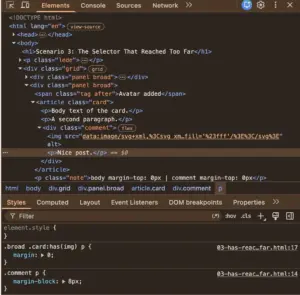
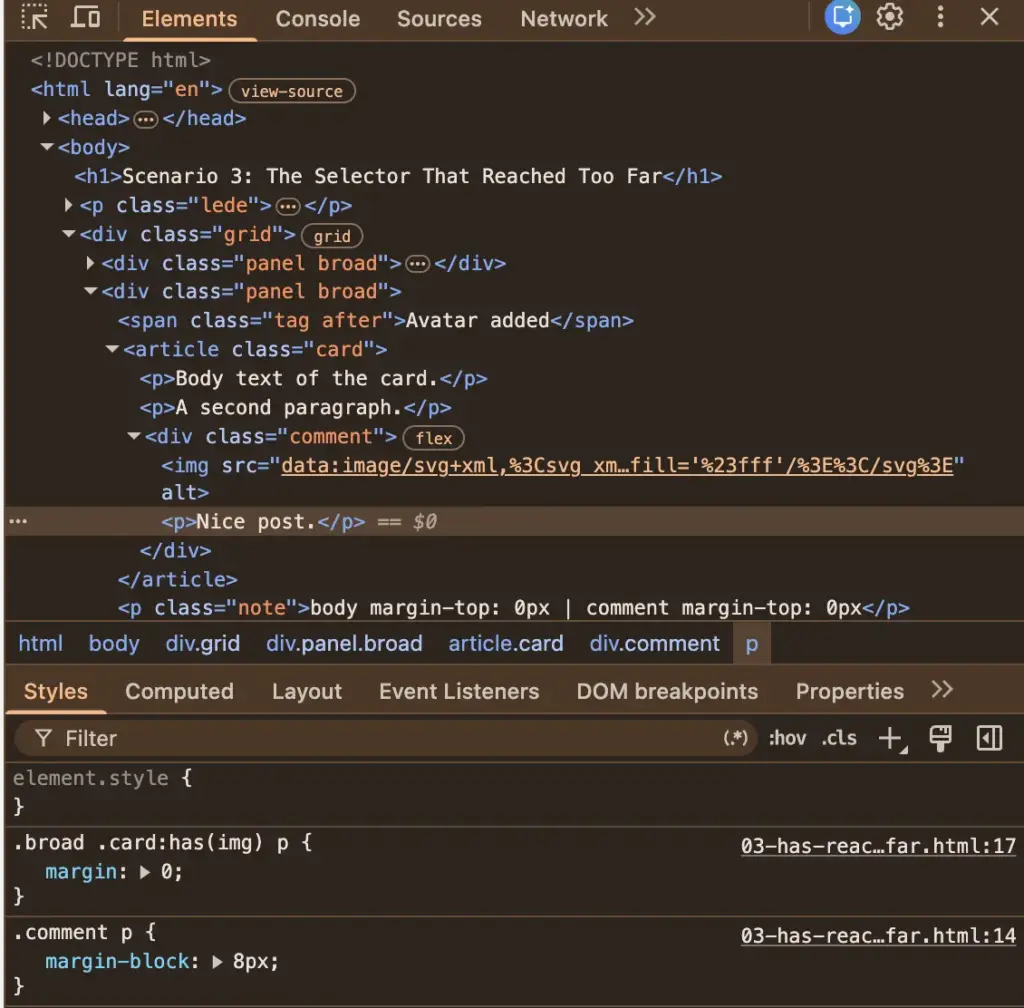
The intricacies of the CSS Cascade introduce yet another layer of potential friction. Modern additions like the :has() selector and native CSS nesting enable developers to write remarkably concise code, but these short selectors can easily reach further and weigh heavier than intended. A selector designed to modify paragraph margins inside a specific card containing a hero image can inadvertently strip margins from unrelated paragraphs nested deep inside comment components elsewhere in the container.

Similarly, native nesting borrows specificity through the & selector based on the largest specificity in the associated selector list, frequently sparking unintended cascade wars with existing button or link states. While cascade layers and specific selector scoping tools like :where() offer potential remedies, half-layered codebases often introduce even more ordering rules for developers to keep in mind, mirroring long-standing arguments historically associated with CSS-in-JS build orders and specificity conflicts.
Performance considerations also complicate the narrative that moving logic from JavaScript to CSS is an automatic upgrade for speed. While CSS shifts the computational burden directly to the browser’s rendering engine, complex selectors—particularly broad :has() conditions anchored high in the document tree—can force the browser to restyle thousands of elements on a page for even minor state changes. Traces in development tools occasionally reveal that multiple seemingly harmless stylesheet rules, when combined, can exponentially increase the number of elements restyled during routine interactions.
Ultimately, most discussions surrounding new web platform features stem from greenfield projects, whereas the vast majority of engineering work involves legacy migrations. Navigating these transitions successfully requires looking beyond localized code reduction and carefully evaluating how new CSS capabilities interact with existing scripts, surrounding layout contexts, cascade hierarchies, and rendering performance. By thoroughly assessing these factors before merging a pull request, development teams can harness the true power of modern CSS without introducing hidden complexities into their applications.