











Anyone who has weathered the fury of a hurricane understands that the world’s oceans—the primary engines of these massive storms—contain a staggering, almost incomprehensible amount of energy. As global warming continues to accelerate, the planet’s oceans are absorbing more heat than at any point in recorded history. While this trend represents an existential threat to coastal communities and marine ecosystems, a new startup based in Washington, D.C., believes it has found a way to turn this massive thermal reservoir into a solution for one of the most pressing infrastructure challenges of the digital age: the insatiable energy demands of artificial intelligence.
Drogue, a startup that has operated under the radar since its inception six months ago, is developing a novel system designed to harvest heat from the ocean to power data centers housed on board floating vessels. According to co-founder and CEO Sam Sipe, the company’s first prototype is already in development and is expected to be deployed at sea, actively processing data, in less than two years.
The timing of this venture is far from coincidental. As the AI industry undergoes a period of explosive growth, the traditional data center sector is struggling to keep pace. Sipe notes that the current model for building data centers is essentially a real estate play, often requiring eight to 10 years to move from concept to operation. This timeline involves complex negotiations regarding land acquisition, interoperability with existing utility providers, and coordination with independent system operators that manage regional power grids. In contrast, the demand for AI compute has surged tenfold in just the last three years. Sipe argues that these two realities—the slow-moving, land-bound infrastructure of the past and the hyper-accelerated requirements of modern AI—are fundamentally incompatible.

To bridge this gap, Drogue has secured a significant vote of confidence from the investment community. The company recently confirmed that it has raised $20 million in funding. The investment round includes participation from a diverse group of venture capital firms, including XYZ Venture Capital, Toyota Ventures, Tamarack Global, Dream, FDVC, Garuda Ventures, Flexcap, Boost VC, and Slow Ventures.
In the short time since its founding, the company has already designed a multi-megawatt prototype. The initial plan involves installing this system on a traditional, oceangoing ship, which will be sent out to sea in early 2028. Looking further ahead, the company envisions future iterations of these data centers built on floating structures that more closely resemble offshore oil platforms, providing a more stable and permanent foundation for high-density computing.
For Sipe, the decision to look toward the ocean was not a leap of faith but a logical deduction based on his professional background. After years of service as a pilot flying E-2D Hawkeyes off U.S. Navy aircraft carriers, Sipe developed a deep, firsthand appreciation for the immense power and utility of the marine environment. Where others might see the ocean as a hostile landscape defined by punishing waves, violent storms, corrosive salt air, and the biological challenges of marine growth, Sipe sees a majestic, underutilized resource.
The scale of the opportunity is difficult to overstate. As the planet warms, the oceans have been absorbing an additional 5.8 million terawatt-hours of energy every single year. To put that figure in perspective, the entirety of human civilization consumes approximately 180,000 terawatt-hours annually. Even if a company like Drogue were to harness a fraction of that thermal energy, the impact on the ocean’s overall temperature would be negligible, yet the energy yield could potentially power a vast network of global computing infrastructure.
The core of the company’s technology utilizes a process known as ocean thermal energy conversion (OTEC), a concept that dates back to the 1950s. At its simplest, the system functions like a heat pump operating in reverse. While a standard heat pump uses electricity to move heat from one location to another, OTEC leverages the natural temperature difference between different depths of the ocean to generate electricity.

Surface waters are significantly warmer due to solar radiation, while deep-ocean waters, at a depth of roughly 1,000 meters, remain consistently cold—averaging about 39°F (4°C). Sipe emphasizes the stability of this resource, noting that the sheer volume of the ocean ensures that the temperature differential is effectively inexhaustible.
The operational cycle of the Drogue system is elegant in its reliance on physical laws. The system draws in warm surface water, which is first used to cool the onboard data center equipment. The water, now slightly warmer, is then directed to a heat exchanger where it boils ammonia—a chemical chosen for its low boiling point of -28°F. The resulting ammonia gas is routed through a turbine to generate electricity. Once the gas has passed through the turbine, it enters a condenser, where cold water drawn from 1,000 meters deep is used to absorb the remaining heat, returning the ammonia to its liquid state. The now-warmed water is then pumped back down to the 1,000-meter mark to dissipate into the depths, and the closed-loop ammonia cycle repeats.
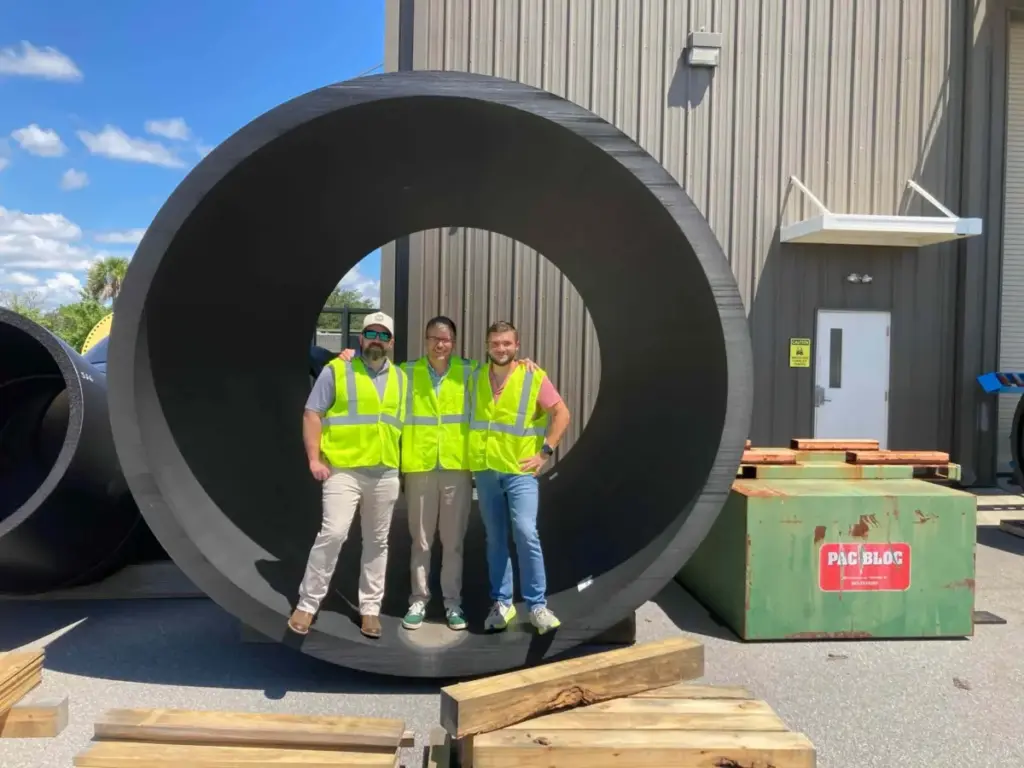
While the fundamental physics of OTEC were tested in the 1980s, the technology was largely sidelined due to the limitations of the era. Sipe explains that the landscape for such technology has shifted dramatically in the decades since. The primary advancements are not in the basic concept itself, but in modern manufacturing techniques, specifically regarding the durability and efficiency of the piping and heat exchange systems.
To refine his approach, Sipe spent significant time interviewing engineers and scientists who worked on the original 1980s-era OTEC projects. The consensus among those veterans was that the technology is sound, but it requires a specific scale to be economically viable. The challenge, according to Sipe, was not just engineering, but raising the capital necessary to build a project large enough to hit the "sweet spot" of efficiency and cost-effectiveness.
Beyond the technical hurdles, there is the question of economic utility. Historically, the challenge with OTEC was that it required expensive, long-distance subsea cables to deliver power to shore, or the costly transportation of materials and goods to and from the offshore site. Data centers provide an ideal solution to this logistical problem. Servers are remarkably compact compared to traditional industrial equipment, and the "product"—data—can be transmitted back to shore via fiber optic cables at an incredibly low cost. Sipe envisions each of these vessels remaining at sea for approximately a decade, serving as a self-contained, power-autonomous hub for high-performance computing.
The company is already making significant progress toward its 2028 deployment goal. Drogue has secured "approval in principle" from the American Bureau of Shipping, a critical milestone that indicates the project meets the preliminary safety and design standards required for maritime operations. The team is currently in the process of acquiring its first ship, which will serve as the platform for the maiden prototype.
In many ways, the mission of Drogue mirrors the logic behind other ambitious tech initiatives, such as proposals for orbital data centers. Both approaches are driven by the same fundamental objective: finding a source of abundant, cheap power and locating data centers as close to that energy as possible to minimize transmission losses and infrastructure costs. However, unlike space-based alternatives that require the massive expense and complexity of rocket launches, Drogue’s model relies on the age-old practice of maritime navigation. By utilizing the ocean, the company aims to tap into an ancient, persistent, and massive energy source, effectively bringing the data center industry back to the sea to secure its future on land.