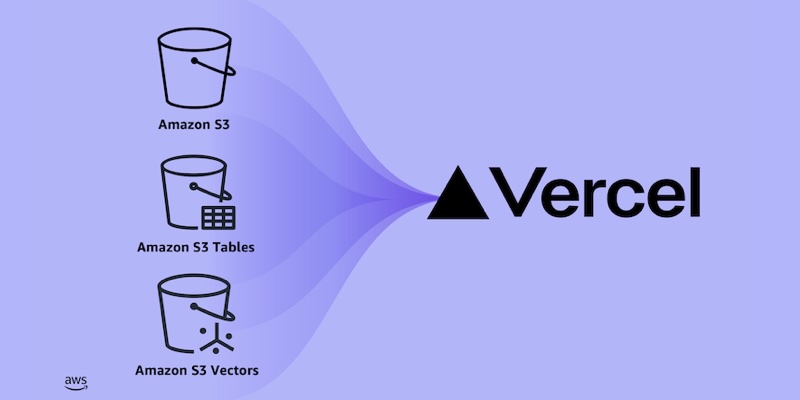
Developers leveraging Vercel to build, deploy, and scale their web and AI-driven applications now have access to a more streamlined infrastructure experience. In a significant expansion of its cloud ecosystem, Vercel has announced the native integration of Amazon Simple Storage Service (Amazon S3) directly into its platform. This new capability allows developers to provision, manage, and connect S3 storage resources—including specialized S3 Tables and S3 Vectors—without ever leaving the Vercel dashboard or the v0 generative AI interface.
For years, the industry standard for cloud-native development has often involved a fragmented workflow: writing code on a frontend-focused platform while manually jumping between browser tabs to the AWS Management Console to configure storage buckets, identity policies, and access credentials. By bringing Amazon S3 directly into the Vercel Marketplace and the v0 environment, the company is effectively closing the gap between application logic and underlying infrastructure. This integration ensures that the durability, massive scalability, and performance of S3 are accessible through the same familiar provisioning workflows that Vercel users already employ for their frontend and serverless functions.
A Unified Developer Experience
The move is designed to simplify the development lifecycle by treating storage as a first-class citizen within the application stack. With this update, developers can now combine their existing Vercel workflows with a comprehensive suite of AWS services, including Amazon Aurora for relational data, Amazon DynamoDB for NoSQL needs, and Amazon OpenSearch Serverless for search indexing. By centralizing these resources within the Vercel environment, developers can manage their entire application architecture—from the database layer to object, vector, and analytical table storage—under a single AWS account with a consolidated billing structure.
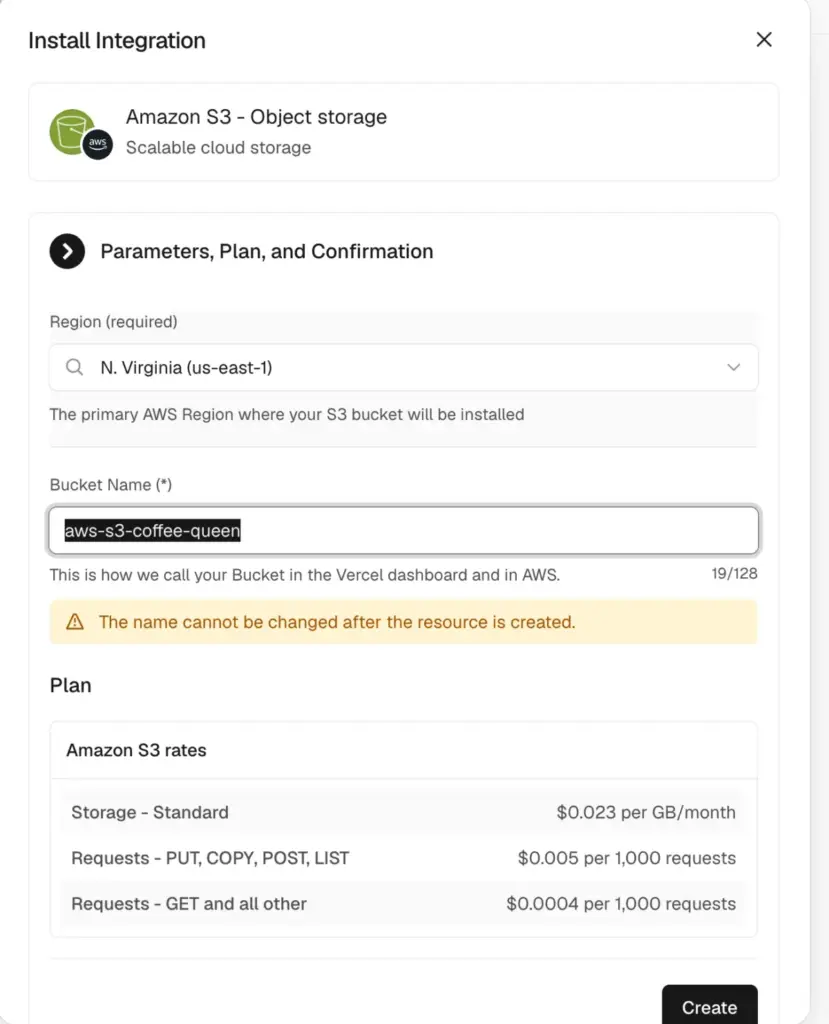
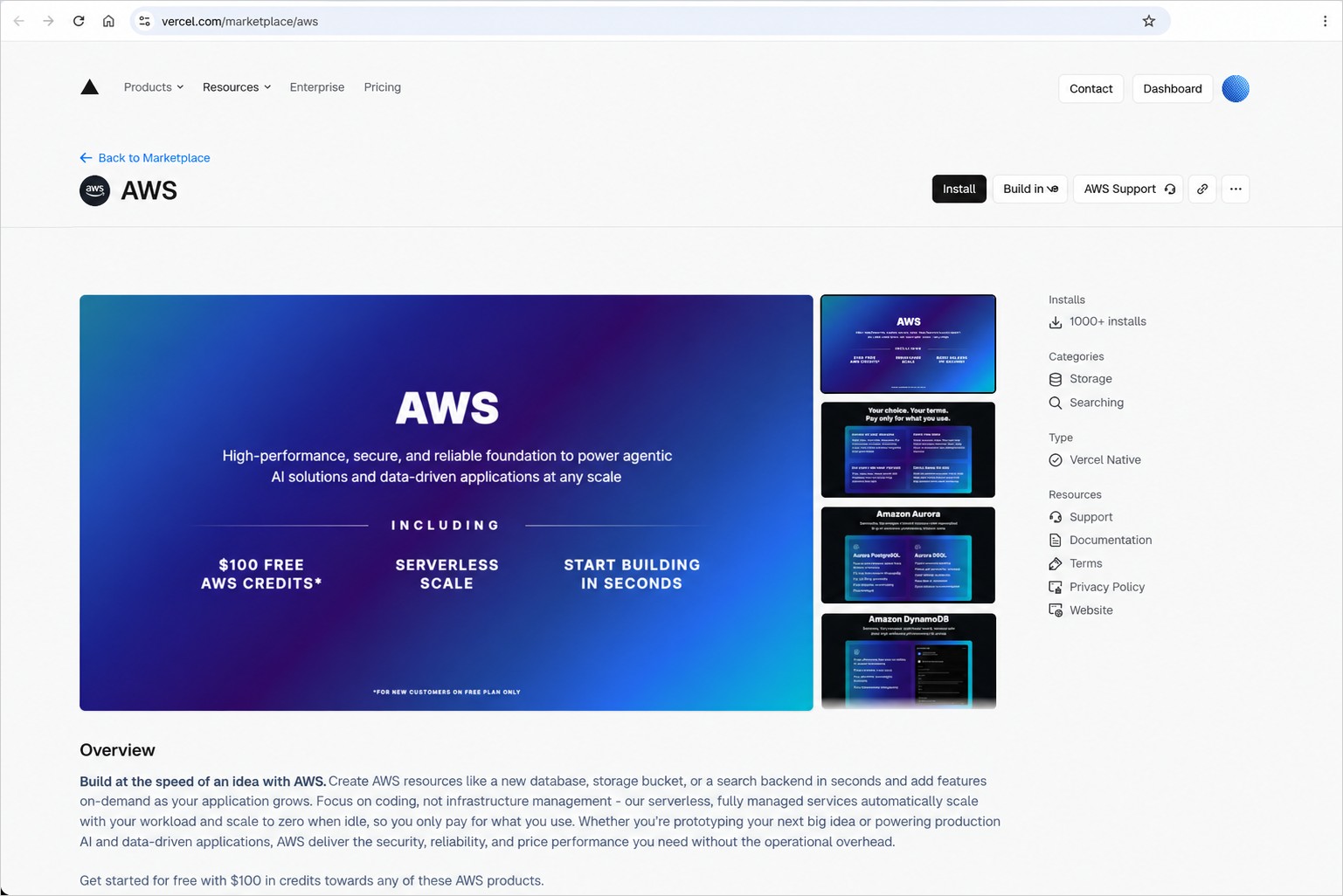
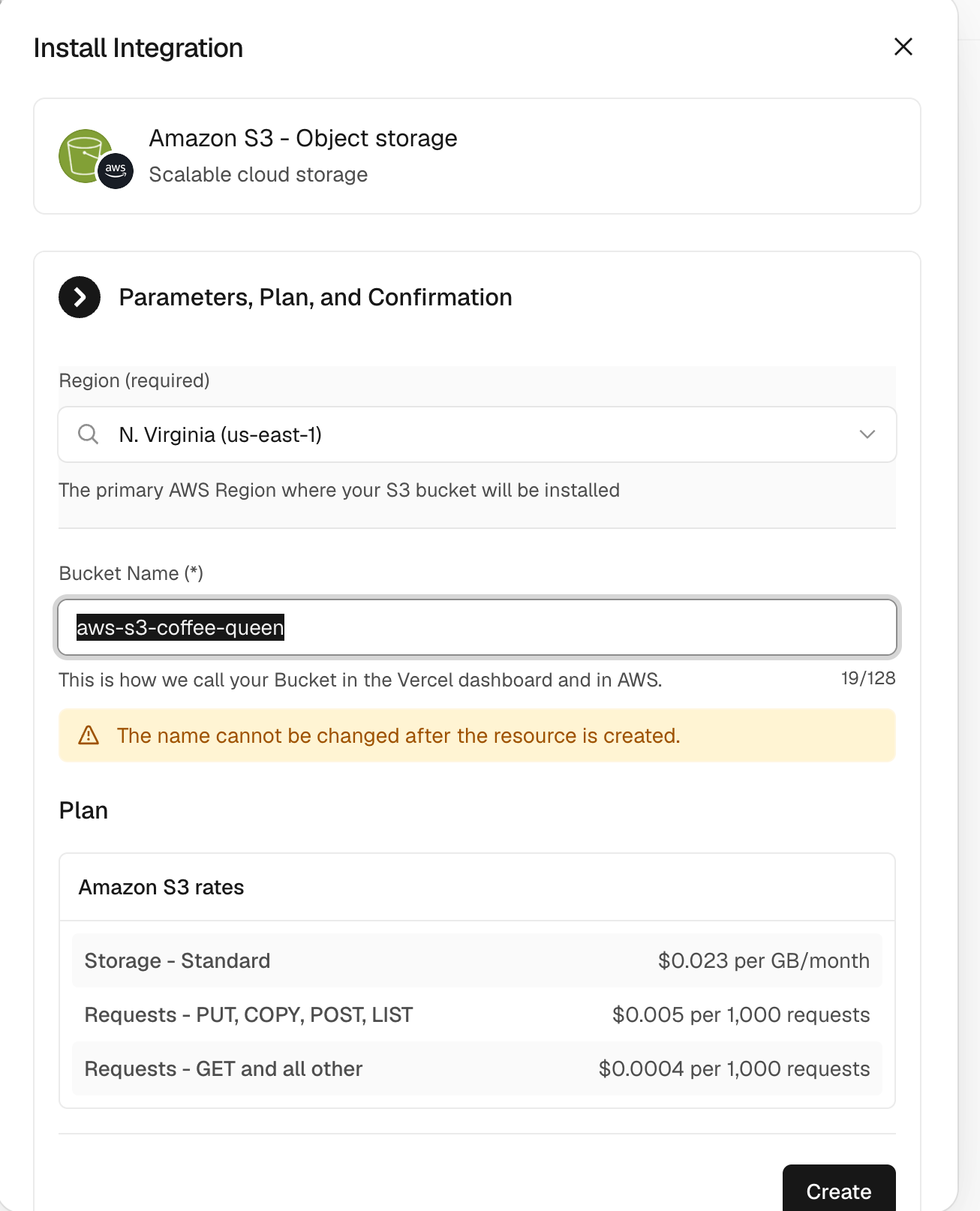
The provisioning process has been engineered for efficiency. From the Vercel dashboard, a developer simply navigates to the Storage tab and selects the "Create" option. By choosing the AWS integration and selecting the desired S3 bucket type and geographical region, the resource is deployed in a matter of seconds. Once the bucket is active, connecting it to a specific project is automated. Using the Vercel CLI, developers can pull the necessary environment variables—such as AWS_REGION, AWS_ROLE_ARN, and the specific bucket identifiers—directly into their local development environment.
A key security feature of this integration is the move away from static, long-lived credentials. At runtime, the platform utilizes the awsCredentialsProvider from the @vercel/functions/oidc package. This mechanism facilitates a secure exchange of short-lived OpenID Connect (OIDC) tokens with the AWS Security Token Service (AWS STS). These tokens provide temporary, granular access to the storage resources, ensuring that no static API keys or secrets are ever exposed or stored within the codebase, a critical advancement for enterprise-grade security.
Storage Solutions Tailored for Modern Workloads
The integration is not limited to generic object storage; it encompasses the full range of S3’s modern capabilities, targeting three distinct workloads: everyday file storage, high-performance analytics, and AI-driven vector search.

For general-purpose object storage, developers can now easily manage file uploads and retrievals within their Next.js routes. The integration provides a seamless bridge to the S3 SDK, allowing developers to handle complex file operations with minimal boilerplate code. By using the provided credentials provider, developers can instantiate an S3Client and perform standard operations like PutObjectCommand or GetObjectCommand with ease, ensuring that the application remains responsive and secure.
The inclusion of S3 Tables marks a major step forward for developers looking to build data-heavy applications. S3 Tables are purpose-built for analytics, designed to optimize query performance automatically as data volumes scale. By providing fully managed Apache Iceberg tables, the service handles table maintenance and compaction, allowing developers to focus on insights rather than infrastructure management. When paired with tools like DuckDB within a Vercel Function, developers can execute complex analytical queries—such as aggregations on clickstream data—directly against their S3-resident tables, providing a high-performance alternative to traditional, more expensive data warehouse setups.
Perhaps most timely is the support for S3 Vectors. As the demand for AI-augmented applications grows, the need for cost-optimized vector storage has become paramount. S3 Vectors provide a native, scalable way to store and query the high-dimensional embeddings required for AI agents, inference engines, and semantic search applications. Because the vector storage is integrated directly with the rest of the AWS stack on Vercel, developers can store raw document text in Amazon DynamoDB while keeping their corresponding semantic embeddings in S3 Vectors, creating a robust architecture for Retrieval-Augmented Generation (RAG) workflows.
Building with AI Assistance via v0
The integration is deeply embedded into v0 by Vercel, the platform’s generative AI tool. By using natural language prompts, developers can now instruct v0 to architect and provision the necessary infrastructure for their specific use cases. A developer might prompt the system to create a photo gallery application, and v0 will automatically provision the necessary general-purpose S3 buckets. Similarly, asking for a support bot that can process PDF documentation will prompt v0 to set up an S3 Vectors index.
This AI-assisted workflow goes beyond mere infrastructure provisioning; v0 configures the connection strings and generates the working code, effectively lowering the barrier to entry for complex cloud deployments. By handling the heavy lifting of service orchestration, the platform allows developers to focus on the business logic of their applications rather than the underlying connectivity requirements.
Integration with Existing AWS Ecosystems
Vercel maintains a flexible approach for developers who already have established cloud footprints. Users can choose to create a new AWS account through the Vercel integration, which includes a $100 credit for new users, or they can link an existing AWS account. When an existing account is linked, the platform respects the user’s current billing and AWS-native configuration. This allows teams to maintain control over their AWS-native tooling, such as CloudWatch for monitoring or IAM for user management, while enjoying the accelerated development speed provided by the Vercel interface.
Because every resource provisioned through this integration exists within the user’s own AWS account, there is no vendor lock-in regarding the data itself. The storage remains under the user’s control, ensuring that the architecture remains portable and consistent with broader organizational security and compliance policies.
For those looking to deepen their integration or troubleshoot specific deployment scenarios, the ecosystem also supports the AWS Model Context Protocol (MCP) server. By utilizing these tools and plugins, developers can query documentation, search for regional availability, and debug their infrastructure configurations through their preferred AI-enabled development tools. As the industry continues to move toward more integrated, serverless-first architectures, the convergence of Vercel’s developer experience and AWS’s storage durability represents a significant shift in how modern web and AI applications are built and maintained.