







Verizon’s chief technology officer has delivered a sobering initial assessment of the 7GHz spectrum band for future 6G networks, warning that early field test results point to significant challenges for indoor coverage and will require substantially higher power from future network radios.
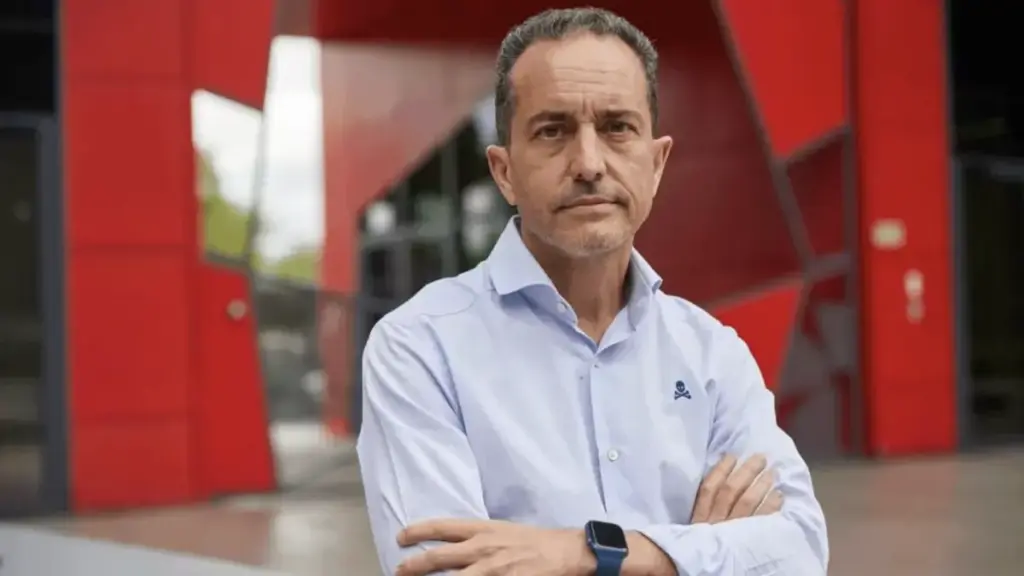
Speaking at the Brooklyn AI-Native 6G Summit, Verizon CTO
Yago Tenorio outlined the carrier’s latest technical evaluations regarding upper midband frequencies. While carriers and regulators are increasingly eyeing the 7GHz range as a cornerstone for next-generation mobile technology, Tenorio’s real-world observations suggest that bridging the gap between theoretical capacity and practical deployment will demand considerable engineering breakthroughs.

"7GHz versus 3.5GHz, not surprisingly, has some challenges in penetrating buildings," Tenorio told attendees at the summit, describing the initial performance metrics as "not super encouraging" when it comes to maintaining robust indoor signals without additional network densification and hardware enhancements.
The remarks follow a milestone technical trial conducted last month, in which Verizon and Ericsson successfully executed the first-ever outdoor-to-indoor 6G call using pre-commercial equipment operating within the 7GHz spectrum. Designed specifically to measure signal propagation and the attenuation caused by architectural materials, the field test utilized a specially constructed small house outfitted with a variety of common wall and window components. The objective was to quantify in-building signal losses across a multitude of real-world scenarios.
Unsurprisingly, given the fundamental physics governing higher frequency bands, the findings confirmed that 7GHz lacks the natural propagation capabilities of traditional midband spectrum when attempting to pierce exterior walls and deliver seamless cellular coverage indoors. However, Tenorio emphasized that these physical limitations do not render the band unusable, provided the telecommunications industry commits to rigorous hardware optimization.
"It doesn’t mean that we can’t sort it out. It means that a lot more work needs to happen on more density in the antenna, higher active element number, higher output power, higher EIRP limits," Tenorio said, referring to effective isotropic radiated power constraints.
Even with those advanced technological mitigations in place, Tenorio cautioned that 7GHz will likely struggle to match the broad, reliable footprint currently delivered by standard C-band spectrum, which generally occupies the frequency range between 3.7GHz and 4.2GHz.
US Backs 7GHz for 6G
Verizon’s cautious technical assessment arrives at a critical juncture for domestic telecommunications policy, as the United States actively positions the 7GHz band as a primary spectrum block for future 6G development. The band is currently one of four specific spectrum ranges being studied closely by the National Telecommunications and Information Administration (NTIA) as part of broader government initiatives to identify and clear airwaves for future mobile services.
Alongside the 7GHz band, which spans from 7125MHz to 7400MHz, the NTIA is evaluating the 1.6GHz range (1675MHz-1695MHz), the 2.7GHz range (2700MHz-2900MHz), and the 4GHz range (4400MHz-4940MHz).

The NTIA is scheduled to publish a comprehensive report on the 7GHz band. This forthcoming documentation is expected to outline critical parameters, including the specific volume of spectrum that can be successfully cleared for commercial application, estimated timelines for user access, and the financial costs associated with relocating existing federal operations currently occupying the band.
Industry stakeholders anticipate that once the federal report is made public, regulatory bodies like the Federal Communications Commission (FCC) will act swiftly to initiate formal rulemaking procedures for a 7GHz spectrum auction. The ultimate goal is to introduce this vital block of midband capacity to the commercial market as expeditiously as possible.
Furthermore, the United States government is actively lobbying for the 7GHz band on the international stage, promoting it at the International Telecommunication Union’s World Radiocommunication Conference (WRC). Policymakers view the band as an essential component of a national strategy designed to secure adequate midband resources for 6G while simultaneously countering efforts by international adversaries to steer global standardization toward alternative allocations, such as the broader 6 GHz band.
Pipeline Needs Bigger Bandwidth
Despite the ongoing regulatory push to expand the domestic spectrum pipeline, Tenorio reiterated persistent industry concerns that he first raised at the previous year’s Brooklyn summit. The core dilemma, according to Verizon’s technology leadership, is securing reliable access to channel widths spanning up to 400MHz—benchmarks currently being mapped out within developing 6G technical standards.
"That’s still true," Tenorio said when reflecting on the continuing challenge of channel size availability.
Evaluating the various spectrum options currently moving through the regulatory and testing pipelines, Tenorio categorized the 2.7GHz band as "narrow," the 4GHz band as "uncertain," and the 7GHz band as "challenged." None of these options, he noted, currently provide a clear and straightforward path toward achieving the desired 400MHz channel bandwidths.
Acquiring these larger channel widths will be paramount for supporting advanced mobile use cases, most notably integrated sensing and communication (ISAC). Tenorio pointed out that the critical relationship between bandwidth and network capability was clearly demonstrated during two separate technical trials conducted by Verizon in collaboration with Nokia and Qualcomm.
"Your ability to detect and resolve targets is proportional to bandwidth. Beyond capacity alone, if ISAC becomes a use case for 6G, then you really want wide channels because that gives you precision and accuracy in sensing," he explained.
The evaluation underscores what has been a remarkably active year for Verizon’s 6G research and development division. Beyond the high-profile 7GHz field test call, the carrier secured a temporary experimental license from the FCC to investigate 6G use cases utilizing the 4GHz spectrum in and around its Los Angeles laboratory facilities. Additionally, Verizon recently expanded its 6G Innovation Forum by welcoming nine new members. This collaborative initiative is designed to flip traditional deployment scripts by identifying practical, consumer- and enterprise-driven use cases before building out the underlying 6G technical capabilities to match them.
As these collaborative efforts progress, Tenorio noted that specific use cases are beginning to crystallize, ranging from advanced artificial intelligence wearables and ISAC capabilities to a growing operational demand for symmetrical uplink performance. Nonetheless, he stressed that a substantial amount of foundational engineering and strategic planning remains ahead of the telecommunications sector.
"We have a lot of work in front of us to get us to 2030—sorting out the spectrum pipeline for wideband, midband spectrum opportunities, coming up with solutions for AI wearables, and making sure that 6G is going to be the generation that fuels these applications," Tenorio concluded.