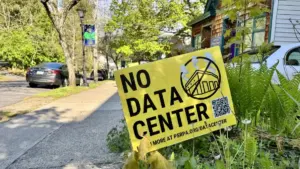









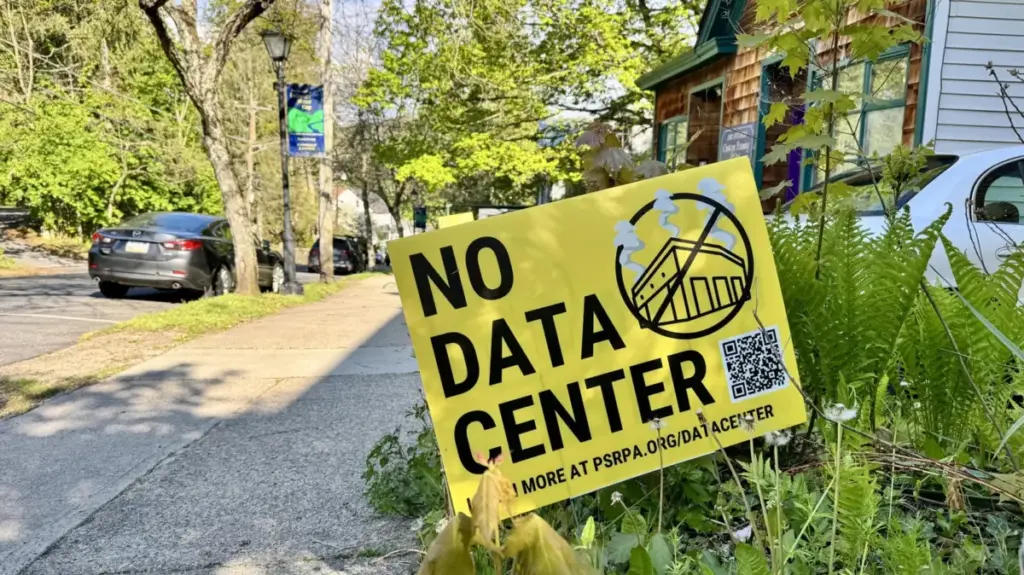
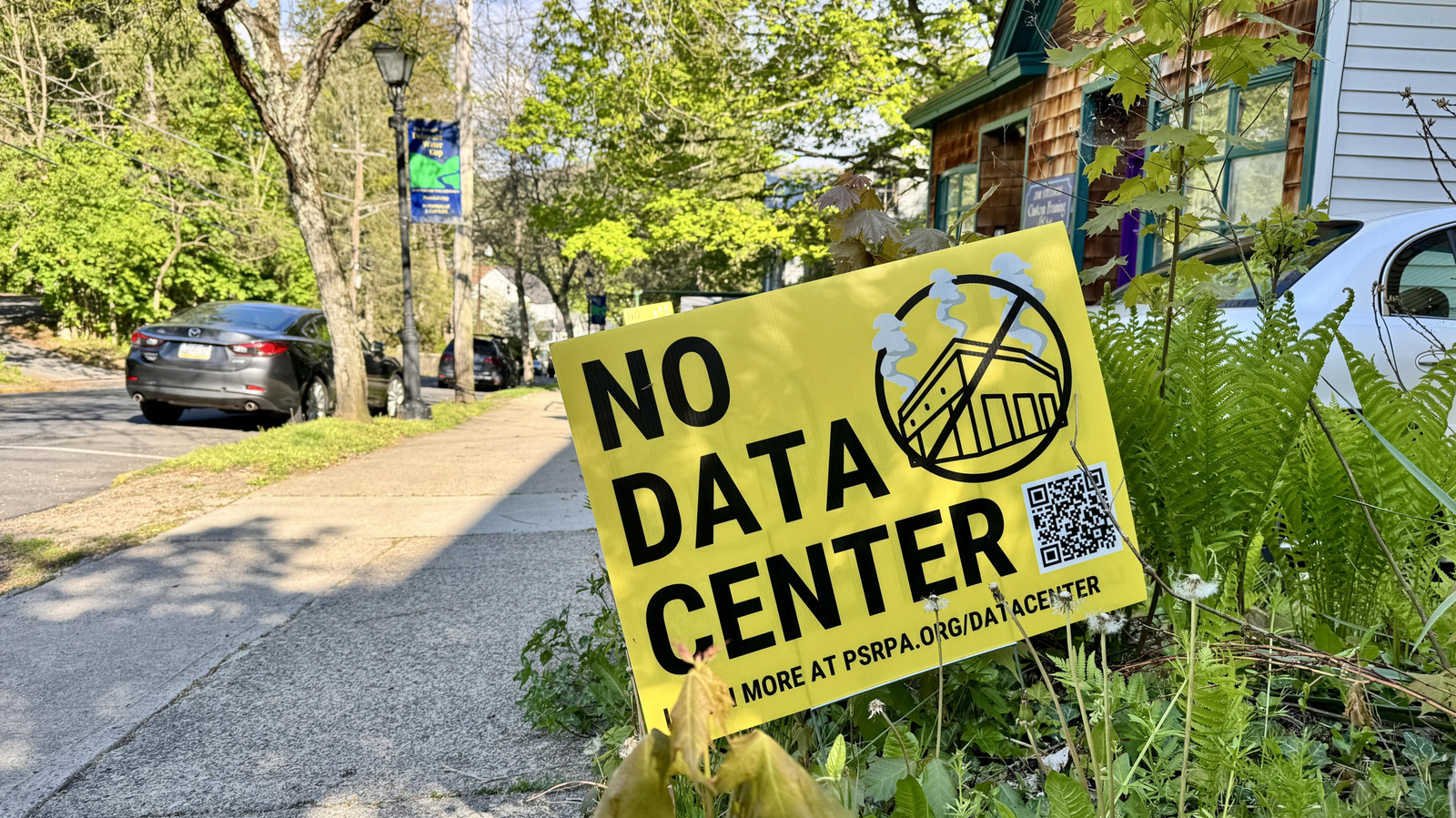
In a significant display of grassroots political mobilization, American voters turned out in record numbers this past Tuesday to express deep-seated frustration with the rapid, often unchecked expansion of the nation’s data center infrastructure. Across a wide array of local elections and municipal ballot initiatives, citizens decisively signaled that the industrialization of their communities for the sake of digital infrastructure is no longer a welcome proposition. The results, tracked extensively by the watchdog group Data Centers on the Ballot, represent a major shift in the political landscape, suggesting that the "data center boom"—long seen as an inevitable byproduct of the artificial intelligence and cloud computing revolution—is facing a powerful and organized democratic blockade.
The scope of the opposition was widespread, spanning 10 states and manifesting in 45 distinct ballot measures. By early Wednesday morning, as the dust settled on the election results, it became clear that the anti-data center movement had secured a sweeping victory. A total of 33 measures designed to restrict the construction or operation of these facilities had passed, with another six projected to move in the same direction. These measures varied in their legal and regulatory approaches, ranging from outright bans on new construction to the implementation of temporary moratoriums, stringent limits on energy consumption, and new requirements for mandatory public hearings before any large-scale industrial projects could be approved by local councils.
The trend was so pervasive that only one municipality in the entire country, the City of Harwood in North Dakota, opted to reject a proposed amendment. That particular measure would have required local government officials to hold public hearings before approving massive industrial projects, such as 100-megawatt data centers. In every other instance tracked, voters chose to exert control over their local landscapes, favoring increased oversight and strict limitations over the rapid, developer-led expansion that has defined the sector for the better part of the last decade. Five additional localities, having not yet finished the tabulation of their votes, remain pending, though the broader trend is already firmly established.
Nowhere was this rebuke more profound or more uniform than in Ohio. Long considered a burgeoning hub for the data storage industry—the state currently hosts approximately 257 active data centers—Ohio became the epicenter of the backlash on Tuesday. With 20 different ballot initiatives across the state specifically addressing the industry, the results were unequivocal: in every single instance, voters backed restrictions or outright prohibitions.
The scale of the rejection in Ohio suggests a deep-rooted cultural and environmental concern among residents. In the cities of Urbana and Hubbard, where voters were presented with ballot measures that would impose outright bans on new data center construction, the support for the initiatives was overwhelming. Residents in Urbana approved the ban by 76 percent, while voters in Hubbard followed suit with 77 percent in favor. These margins indicate that the opposition is not merely a fringe movement led by a few activists, but rather a consensus position held by the vast majority of the voting population in these communities.
The political fallout from this movement extended well beyond local zoning boards and municipal councils, reaching into the highest levels of federal representation. In the closely watched U.S. Senate race in Ohio, the issue of data center expansion became a cornerstone of the campaign rhetoric. Democrat Sherrod Brown, the eventual winner of the contest as declared by The Associated Press, positioned himself as a staunch opponent of the industry’s rapid proliferation. Throughout his campaign, Brown drew a clear line in the sand, characterizing his opponent, Senator Jon Husted, as the "face of data centers." Brown repeatedly argued that Husted was the primary political architect behind the expansion, pinning the responsibility for the presence of more than 200 facilities directly on the Senator’s policy platform.
The effectiveness of this messaging highlights how quickly the issue of infrastructure development has become a wedge topic in American politics. Voters are increasingly viewing the massive energy requirements, environmental impacts, and land use changes associated with data centers as a matter of significant public interest, rather than merely an issue for local developers and city planners to manage behind closed doors.
The implications of this shift are further underscored by national data. According to an NBC exit poll conducted on Tuesday, a remarkable 56 percent of voters reported that the growth of artificial intelligence and the supporting data center infrastructure played either a "crucial" or "major" role in their decision-making process for congressional races. This figure suggests that the movement is not isolated to specific rural or suburban pockets; rather, it is a national phenomenon that reflects a growing public anxiety regarding the speed of technological change and its physical footprint in the real world.
The tension between the digital economy and the local communities that host its physical components has been building for years. Data centers are power-intensive, land-hungry, and often quiet, windowless monoliths that generate significant amounts of heat and require massive electrical grid upgrades. While they have been championed by tech companies as the essential engines of the AI era, local residents have frequently raised concerns about noise pollution, the strain on local power grids, and the aesthetic disruption of their neighborhoods.
The ballot measures that passed this week serve as a formalization of these grievances. By moving the debate from community meetings to the ballot box, residents have effectively stripped tech developers and their political allies of the ability to fast-track projects through local government channels. The success of these measures forces a new, more transparent, and potentially more adversarial regulatory environment for the industry.
For the data center sector, the results represent a daunting hurdle. The industry has thrived on a model of rapid deployment and regulatory ease, often relying on local officials to provide incentives and expedited permitting processes. If the trend seen on Tuesday continues—with voters across the country demanding, and winning, the right to vote on these facilities—the future of the "data center boom" may be significantly curtailed. Companies will now have to navigate a complex landscape of public opinion and legal restrictions that were largely nonexistent just a few years ago.
Furthermore, the integration of this issue into national electoral politics suggests that the "not in my backyard" (NIMBY) sentiment—often dismissed by proponents of industrial growth—has matured into a sophisticated political force. When voters in Ohio and elsewhere choose to reject these projects, they are not just voting against a building; they are voting for a vision of their community that prioritizes local control, environmental stability, and a measured approach to technological development.
As the country moves forward, the success of these ballot measures will likely serve as a blueprint for other communities looking to assert their autonomy against large-scale industrial projects. The data center industry, which has long operated in the background of the digital economy, is now firmly in the spotlight of public scrutiny. Whether this leads to a new era of compromise and better-integrated infrastructure, or to a prolonged conflict between tech developers and local communities, remains to be seen. However, one thing is certain: the era of unchecked, silent expansion is over, and the public has made it clear that they intend to have a seat at the table when it comes to the future of their own neighborhoods.
The outcome of these midterms marks a defining moment in the relationship between citizens and the digital infrastructure that powers their daily lives. By overwhelmingly rejecting the status quo, the American public has signaled that the growth of the digital world must be compatible with the values and desires of the communities that host it. For now, the momentum lies with those who seek to slow, regulate, and in some cases, entirely halt the march of these massive facilities. As municipalities begin to implement the new restrictions, the tech industry will be forced to contend with a new political reality—one where the public, not the boardroom, holds the ultimate authority over the landscape.