












The notorious consumer data broker Radaris.com, long criticized for its aggressive stance on personal data harvesting and its persistent refusal to honor requests for information removal, has finally faced a significant judicial reckoning. In a landmark development, a court has ordered the transfer of Radaris.com and more than a dozen associated data broker domains to the plaintiffs, marking a rare and decisive victory in the ongoing struggle against the shadowy industry of people-search services.
This outcome stems from a lawsuit filed in February 2024 by Atlas Data Privacy Corp, an organization actively litigating against data brokers accused of violating New Jersey’s “Daniel’s Law.” Named in memory of Daniel Anderl, the son of a federal judge whose tragic murder highlighted the dangers faced by public officials when their personal information is easily accessible, the statute provides a critical safeguard. Under this law, state law enforcement officials, government personnel, judges, and their family members are entitled to the complete removal of their personal data from commercial databases. Critically, the legislation mandates fines of $1,000 per violation for companies that fail to comply with removal requests.
For years, Radaris maintained a reputation for stonewalling and obfuscation. However, the company’s legal strategy—characterized by frequent shifts in corporate jurisdiction and the use of shell entities—ultimately failed to shield it from the New Jersey court. Following a period of procedural maneuvering and what the plaintiffs described as a "shell game" of corporate identity, the judge ordered the seizure of the domains. Radaris.com, once a hub for detailed dossiers on millions of Americans, now serves only to display a notice regarding the court-ordered transfer.
Unmasking the Operators
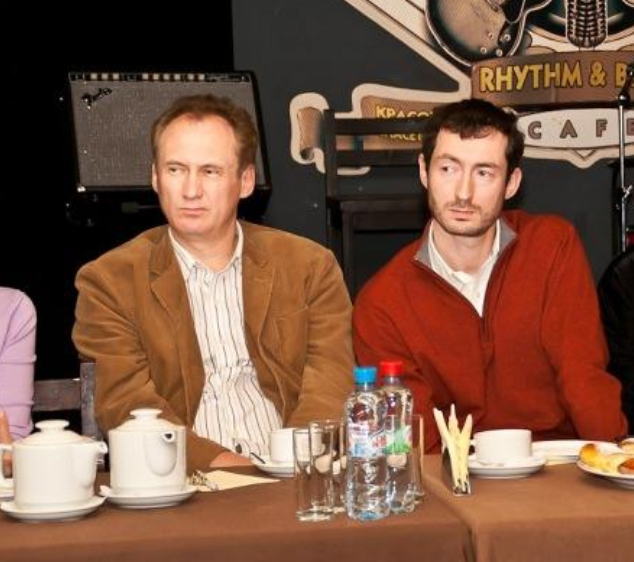
The legal pressure on Radaris coincided with intense scrutiny regarding its actual ownership. In early 2024, investigations revealed that the company was operated by Igor and Dmitry Lubarsky, Russian-born brothers based in Massachusetts. These individuals oversee a complex network of people-search companies, alongside various Russian-language dating services and affiliate programs.
When these details first surfaced, attorneys for the Lubarsky brothers threatened defamation lawsuits, claiming the reporting was inaccurate and alleging the company was owned by Ukrainians living in Ukraine. However, subsequent findings dismantled these claims. It was discovered that the brothers had employed a fictitious CEO, "Gary Norden," to front the company. Radaris had even issued multiple press releases quoting this non-existent executive to solicit interest from potential investors.
This reliance on artifice extended to their legal defense. Throughout the litigation, Radaris’s counsel—initially represented by Val Gurvits of the Boston Law Group—often waited until the final moments to contest claims, only to argue that the plaintiffs had failed to serve the "actual" owners of the company.
Matt Adkisson, the CEO of Atlas Data Privacy Corp, described the company’s defensive strategy as an "island-hopping phase." According to Adkisson, Radaris frequently updated its terms of service to claim management by entities in jurisdictions like the Marshall Islands, the British Virgin Islands, and the Seychelles. Whenever a court began to close in on one entity, that entity would be discarded, and a new one would emerge, forcing plaintiffs to restart the process. In one instance, Atlas hired an investigator in the Marshall Islands to verify a company that Radaris claimed was managing its operations, only to find that the entity did not even exist.
A Pattern of Evasion
The recent judgment is not the first time Radaris has been embroiled in such litigation. In 2017, the company lost a class-action lawsuit by default because it failed to appear in court. When the plaintiffs attempted to collect a $7.5 million judgment, the court ordered the transfer of the Radaris.com domain. That effort was ultimately halted after Radaris appealed, arguing that the true owner was a Cyprus-based firm called Bitseller Expert Limited, and that seizing the domain violated the due process rights of the actual owners.
Reflecting on these tactics, Raj Parikh, a partner at PEM Law in New Jersey, noted that the company’s modus operandi has historically been to win by attrition. "Plaintiffs’ attorneys tired of the procedural games and just gave up," Parikh said. "That strategy worked for a decade, and it probably would have worked in this case too, since any financial recovery from foreign actors will be difficult." However, the commitment to protecting law enforcement and public officials in New Jersey ensured that this time, the plaintiffs were prepared to exhaust all necessary resources.
By August 2026, the court had seen enough. The presiding judge determined that the defendants had been afforded numerous opportunities to defend themselves and had failed to do so. In response to the domain transfer, current legal counsel for the defendants, Victor Worms, argued that the judgment was void, asserting that "Radaris.com" is a domain name, not a legal entity capable of being sued. Worms indicated that his clients intend to pursue appeals, characterizing the domain seizure as an unconstitutional forfeiture.
The Ecosystem of Surveillance
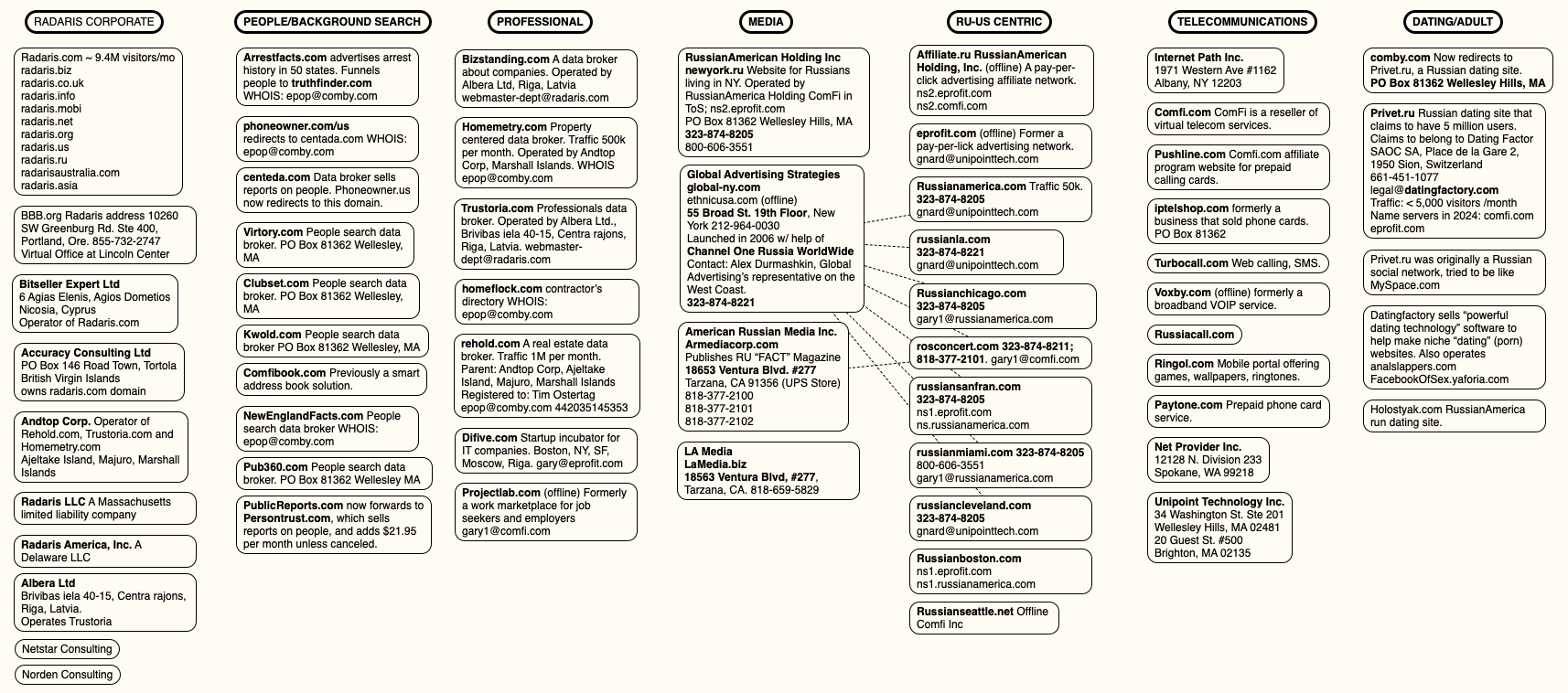
Beyond the courtroom drama, the litigation has provided a rare glimpse into the internal mechanics of the data broker industry. Through the discovery process, Atlas obtained more than 10,000 emails and documents confirming that a diverse portfolio of entities—including Radaris America, Inc., Bitseller Expert Limited, and Veripages Inc.—were all essentially the same operation. These companies shared administrative personnel, bank accounts, payment processors, and virtual office addresses.
The documents indicate that the Radaris family of sites, which includes at least 25 different people-search portals, shares technical and financial infrastructure. Furthermore, the records reveal a complex web of partnerships. Radaris.com and its sibling site, Veripages.com, reportedly generated significant monthly revenue through partnerships with marketing firms like the Lifetime Value Company. Perhaps more notably, the emails showed that the Radaris network also earned revenue from collaborations with Onerep, a service that purports to help users remove their data from the very sites that Radaris operates—a practice often described as "selling the cure to the disease."
The Future of Privacy Legislation
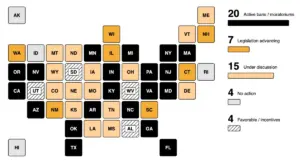
While the transfer of 14 domains to Atlas represents a tactical victory, the broader legal landscape remains uncertain. Daniel’s Law is currently facing constitutional challenges in federal court, with industry groups arguing that the statute is overly broad and violates First Amendment protections regarding the publication of public records. These cases are widely expected to reach the U.S. Supreme Court.
Meanwhile, while other states have begun to adopt their own versions of Daniel’s Law, the effectiveness of these measures remains a subject of intense debate. Privacy experts like Justin Sherman, author of the forthcoming book "The Middlemen," warn that state-level laws are often hampered by broad exemptions for "public" or "government" records. Everything from marriage certificates and property filings to criminal records and professional licenses remains fair game for data brokers to scrape and sell.
The lack of comprehensive federal privacy legislation has left a vacuum that is increasingly being filled by the data broker industry. Despite repeated warnings—including major data breaches that have exposed the personal information of hundreds of millions of Americans—lawmakers have struggled to pass meaningful, 21st-century privacy protections. As Sherman points out, the intense lobbying efforts of big tech, social media companies, and AI proponents have successfully stalled efforts to limit data scraping.
For now, the Radaris case stands as a stark illustration of the challenges inherent in reining in an industry that operates across borders and exploits every legal loophole available. While the domain transfer prevents Radaris from continuing business as usual under its primary name, the underlying issue—the systematic commercialization of personal data—remains a pervasive reality in the digital age. As public officials and private citizens alike continue to face the risks associated with this visibility, the debate over who controls personal information, and how, is likely to intensify long after the current legal dust settles.