










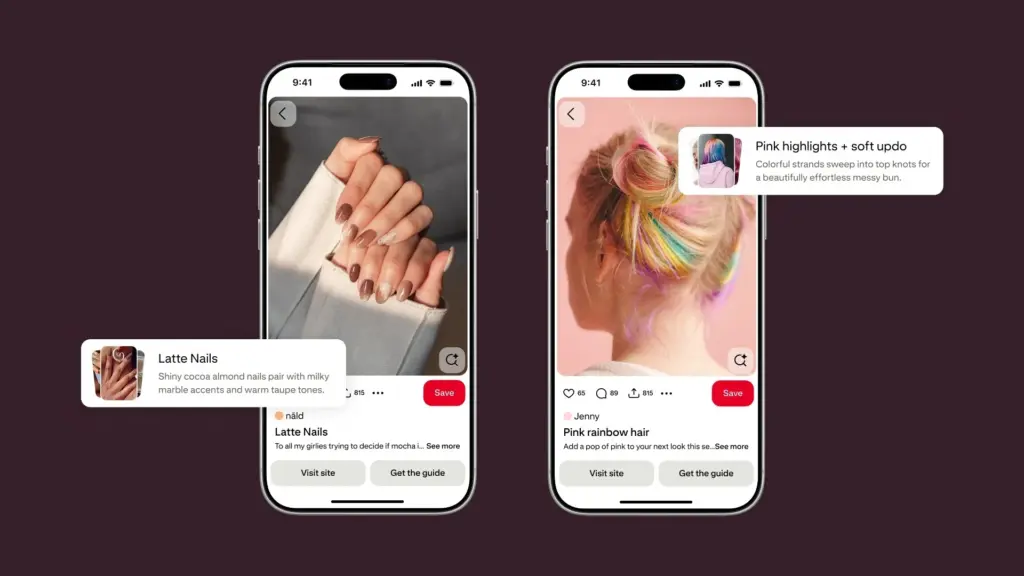
Pinterest is evolving its platform from a simple digital scrapbook into an active participant in the consumer beauty journey. On Tuesday, the company announced the launch of a new feature, "Beauty Guides," designed to leverage the platform’s proprietary artificial intelligence to transform static beauty inspiration into actionable, professional-grade plans. By tapping into its extensive library of hair and nail content, Pinterest aims to solve a long-standing frustration for many users: the disconnect between showing a stylist a photo and actually communicating the technical requirements to achieve that specific look.
Powered by the company’s internal "Pinterest Intelligence"—a sophisticated suite of visual intelligence and generative AI technologies—the new feature serves as a translator. It interprets the aesthetic elements of a saved Pin and converts them into the precise industry terminology that professional stylists, colorists, and nail technicians use daily. For the average consumer who might fall in love with a look on their feed without knowing the specific techniques required to create it, this tool provides the vocabulary necessary to have a productive consultation in the chair.
Bridging the Knowledge Gap in the Salon
For years, the standard practice for salon-goers has been to pull up their phones and show a stylist a saved image. While this provides a general sense of the desired aesthetic, it often leaves the stylist guessing regarding the specific methods, time, or maintenance required to replicate the style. A user might know they want a "lived-in" look, but they may not realize that the specific image they have saved requires a complex "balayage" technique, a "root melt," or a specific "almond" nail shape.
The "Beauty Guides" feature addresses this by effectively digitizing the consultation process. When a user interacts with a relevant Pin, the AI analyzes the visual data to identify the components of the style. It then generates a summary that includes the specific industry terms, such as "balayage," "root melt," or "teasy lights." By providing these terms to the user, Pinterest is empowering them to walk into a salon with the confidence of an industry insider. This shift transforms the user from a passive observer of trends into an informed client capable of discussing modifications and preferences with their stylist in a meaningful way.

Beyond mere terminology, the feature adds a layer of practical logistical planning. Beauty services are often significant investments of both time and money, and the uncertainty surrounding these factors can be a barrier for many consumers. The new guides are designed to offer estimated timeframes and price ranges based on the services identified in the inspiration photo. For a service like a high-end balayage—which can easily run into the hundreds of dollars and require several hours in the salon—having this data readily available before the appointment allows for better budgeting and scheduling. This transparency helps users manage their expectations and ensures that the transition from a digital image to a physical reality is as seamless as possible.
How the Feature Functions
The integration of this technology is designed to be intuitive, appearing naturally within the existing Pinterest user interface. When a user views a qualifying beauty-related Pin, a button labeled "Get the Guide" becomes available. Tapping this button triggers the generative AI, which constructs a tailored guide specific to that post.
The resulting output is comprehensive, covering the essential facets of the service: the specific technical request, the expected time investment, the estimated price range, and, perhaps most importantly, the ongoing maintenance requirements. The inclusion of maintenance details—such as the frequency of recommended touch-ups, toning sessions, or trims—is a significant addition. It acknowledges that beauty trends are not just about the initial application but about the long-term upkeep required to maintain the integrity and appearance of the style. By providing this information upfront, Pinterest is helping users make decisions that align with their lifestyle and their budget.
At launch, the feature is specifically tailored to address the most popular categories on the platform: hairstyles, hair colors, nail shapes, and nail finishes. By focusing on these high-volume search areas, Pinterest is targeting the core of its beauty-focused user base. The decision to prioritize these specific categories underscores the company’s strategy of focusing on high-intent search behavior. Users come to Pinterest to plan, and by providing these "actionable guides," the platform is validating its role as a critical planning tool rather than just a social media feed.

AI as a Utility for Daily Life
The introduction of Beauty Guides represents a broader, strategic pivot for Pinterest toward the practical application of AI. While much of the tech industry has been focused on generative AI as a tool for creating content or writing code, Pinterest’s approach highlights the utility of AI in organizing and interpreting the real world. By slotting this technology into a behavior that users were already performing—showing inspiration photos to professionals—the company has managed to make its AI integration feel both helpful and non-intrusive.
This move also signals a maturing of Pinterest’s "visual intelligence." By training its systems to recognize not just the general style of a photo but the specific technical processes required to achieve it, the platform is moving deeper into the value chain of its users’ interests. For the beauty industry, this could represent a subtle shift in the client-professional dynamic. As more consumers arrive at appointments armed with technical terminology and an understanding of the maintenance involved, the initial consultation process may become more efficient and collaborative.
As of the October 6, 2026, announcement, this feature is set to begin rolling out to users. It represents a small but tangible step in the ongoing integration of generative AI into the consumer experience. By prioritizing utility and transparency, Pinterest is attempting to solve a friction point that has existed in the beauty industry for as long as people have been using visual references to guide their personal style. As the platform continues to refine its AI capabilities, it is likely that this model—converting visual inspiration into actionable, data-backed plans—could be extended to other categories, such as home decor or fashion, where similar gaps between aspiration and implementation exist.
For now, the focus remains on the salon experience. By providing a bridge between the inspiration saved on a screen and the technical reality of the chair, Pinterest is attempting to solidify its position as an essential tool for personal planning, ensuring that when users save a look, they have the knowledge required to actually make it happen.