The U.S. Commodity Futures Trading Commission (CFTC) has launched a significant, formal effort to cement its position as the sole federal regulator of prediction markets, issuing new rules this week that aim to codify event contracts as "swaps." This regulatory maneuver represents a critical escalation in the ongoing jurisdictional battle between the federal agency and state-level gambling authorities, as both sides vie for oversight of platforms that allow users to bet on the outcomes of political elections, weather patterns, and sporting events.
On Friday, the CFTC announced an interim final rule designed to clarify the boundaries of its jurisdiction. By explicitly defining which types of activities fall under the agency’s umbrella as swaps—a classification that grants the CFTC federal oversight—and which types of wagers are excluded, the commission is attempting to build an impenetrable legal wall around companies like Kalshi and Polymarket. The agency’s move effectively seeks to remove these platforms from the reach of state gambling regulators, who have long argued that such markets are simply thinly veiled, illegal gambling operations.
Defining the Regulatory Perimeter
Under the new regulatory framework, the CFTC is walking a delicate tightrope. The agency is attempting to define "casino-style" gambling as a category distinct from the swaps it regulates. By doing so, the commission aims to address a primary criticism from state officials: that the CFTC’s expansive view of its own authority would inadvertently render all state-sanctioned sportsbooks and tribal casinos federally illegal.

The interim final rule, which takes effect immediately while remaining open for a public comment period, serves as a prophylactic measure against the arguments currently playing out in the nation’s highest courts. Simultaneously, the CFTC has proposed a related rule that would explicitly categorize event contracts—including those tied to politics, culture, and athletics—as swaps. This proposal is currently in a 30-day comment period, signaling the agency’s intent to expedite the process and solidify its legal standing before any potential Supreme Court intervention.
The speed at which these rules have been advanced is notable. The proposals were submitted for White House review less than two weeks ago, indicating a sense of urgency within the commission to stabilize the regulatory landscape. For the platforms themselves, the move is a welcome development. Companies like Kalshi have consistently positioned themselves as legitimate financial exchanges rather than gaming operations, and they have been lobbying for the CFTC to be their sole, primary watchdog. By aligning with the federal regulator, these firms hope to escape the fragmented and often hostile environment of state-by-state gambling licensing.
A High-Stakes Legal Tug-of-War
The friction between the CFTC and various states has moved beyond policy debates and into the courtroom. Several states, which maintain that they possess the sovereign authority to police betting activities within their borders, are currently embroiled in lawsuits against the commission. The core of their argument is that the CFTC is overstepping its statutory authority by classifying prediction market wagers as financial derivatives, thereby shielding platforms from the consumer protections and tax frameworks typically applied to gambling.
The legal landscape remains fractured. In recent months, federal appellate courts have issued conflicting rulings on the matter, with one decision favoring the CFTC’s interpretation and two others siding with the states’ claims of jurisdiction. This lack of uniformity has left market participants and regulators in a state of uncertainty, prompting calls for the Supreme Court to intervene and provide a final, binding interpretation of the law.
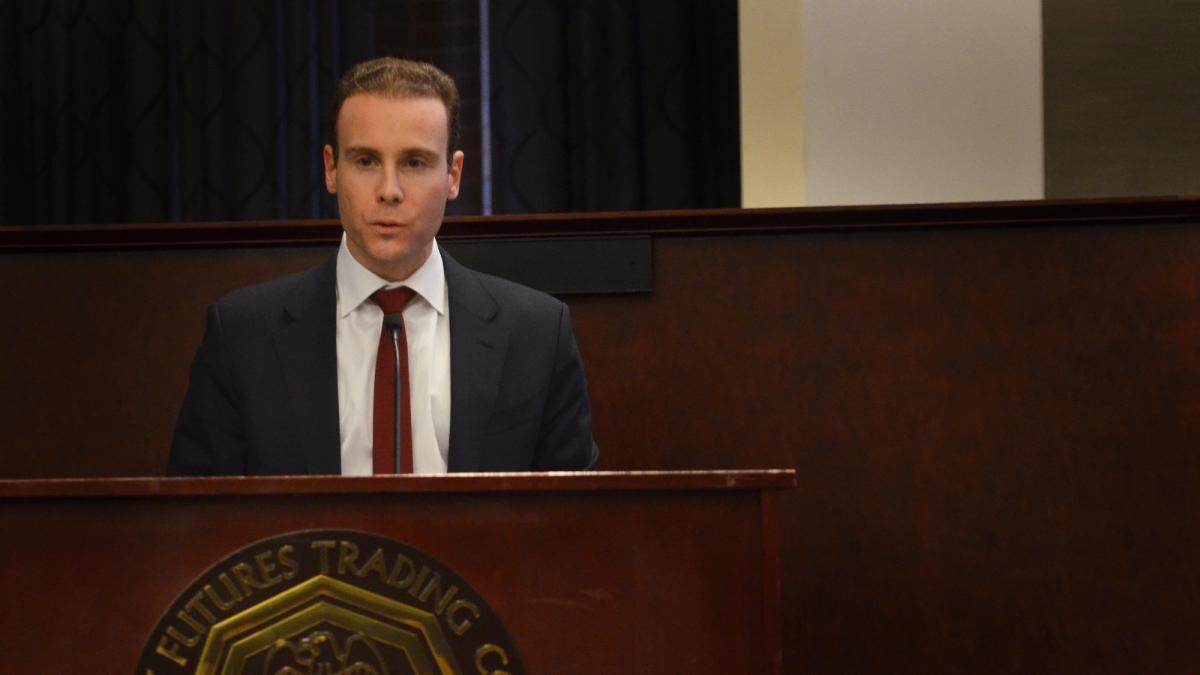
Industry observers suggest that the CFTC’s latest move is as much a litigation strategy as it is a policy shift. "We view this interim final rule as designed to improve the agency’s position in court as the states are arguing that the CFTC’s definition of a swap would make federally illegal any wager made at a state or tribal casino or sportsbook," explained Jaret Seiberg, a policy analyst at TD Cowen, in a note to clients on Friday. "Whether this actually works is a different question."
If the dispute does reach the Supreme Court, the CFTC will now be able to present a more robust, formalized regulatory posture. By demonstrating that it has already begun to implement a clear, tiered definition of what constitutes a swap versus traditional gambling, the agency hopes to persuade the judiciary that it has a sound, reasoned basis for its assertion of authority.
Regulatory Concentration at the CFTC
The ability of the CFTC to move with such speed and singular focus is, in part, a byproduct of the current political environment at the agency. CFTC Chairman Mike Selig is currently the sole commissioner at the agency, a position that grants him significant latitude to dictate policy and drive regulatory priorities without the need for a multi-member consensus.
This environment is not unique to the CFTC. The Securities and Exchange Commission (SEC) is facing a similar situation, with its five-member board currently reduced to only two commissioners. The current administration has largely refrained from appointing new members to these influential regulatory bodies, a decision that aligns with a broader, ongoing effort to limit the influence of Democratic appointees and streamline the operations of federal oversight agencies.
For now, the focus remains on the 30-day window for public comment regarding the proposal to formalize the classification of event contracts. The outcome of this period, and the subsequent responses from state attorneys general and industry advocates, will likely determine the intensity of the next phase of this battle.
As the legal challenges mount, the stakes for the nascent prediction market industry could not be higher. Should the CFTC succeed in its bid to define these contracts as swaps, the platforms will gain a uniform, federal regulatory path to operate across the United States. If the courts instead side with the states, the industry could face a patchwork of state-level prohibitions that could threaten the viability of the entire sector.
The agency’s strategy is a calculated gamble. By distinguishing its domain from the world of casino gaming, the CFTC is trying to prove it can regulate innovation without disrupting the established legal order of state-regulated gambling. Whether this distinction will satisfy the Supreme Court—or if it will be viewed as a regulatory overreach—remains the central, unanswered question in the evolution of American prediction markets. For now, the CFTC has made its position clear: it believes the future of these contracts rests firmly within its jurisdiction, and it is moving rapidly to ensure that belief becomes the law of the land.